
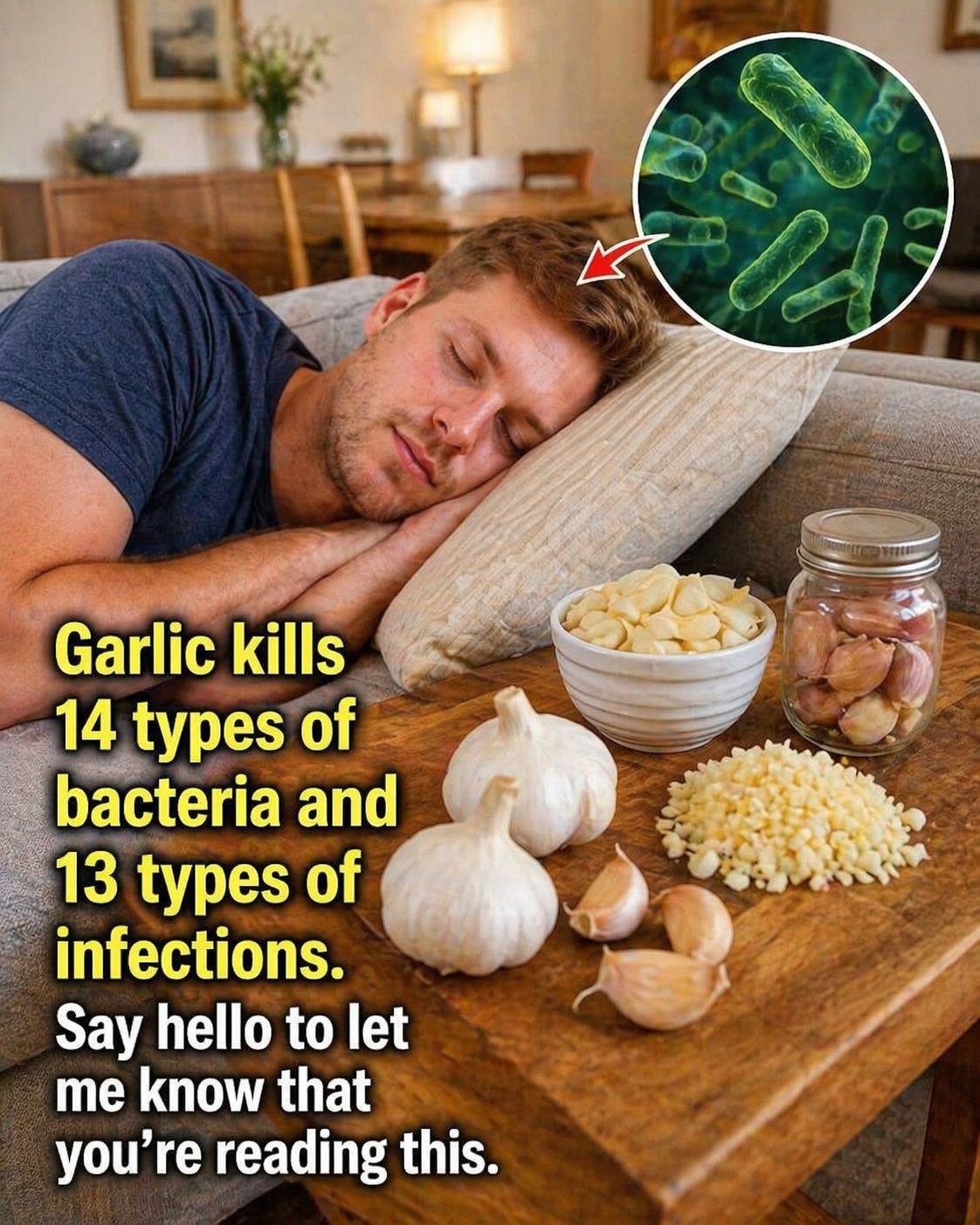
Garlic: The Natural Antibiotic that Fights Infections.
To continue receiving my recipes, you just need to say one thing… Thank you!
Garlic has long been studied for its antimicrobial properties, which is why it’s often called a “natural antibiotic.” Its main active compound, allicin, forms when garlic is chopped or crushed and has shown activity against certain bacteria, fungi, and viruses in laboratory studies.
What garlic may help with
Research suggests garlic can:
- Inhibit growth of some bacteria, including strains involved in foodborne illness
- Support immune function
- Have mild antifungal effects (such as against some yeasts)
- Potentially reduce severity or duration of common colds in some people
Important limits
Calling garlic an “antibiotic” can be misleading:
- It is not a replacement for prescribed antibiotics when treating serious bacterial infections.
- The amount of active compounds varies widely depending on the garlic type, preparation, cooking, and storage.
- Human clinical evidence is mixed and generally much weaker than for medical antibiotics.
Best ways to use garlic
To maximize allicin formation:
- Crush or chop fresh garlic.
- Let it sit for about 10 minutes before cooking.
- Use it raw or lightly cooked when possible.
Popular uses include:
- Adding raw garlic to dressings or yogurt sauces
- Mixing into soups near the end of cooking
- Consuming aged garlic extracts or supplements
Possible side effects
Large amounts of garlic may cause:
- Heartburn or stomach irritation
- Bad breath/body odor
- Increased bleeding risk, especially with blood thinners
People taking anticoagulants or preparing for surgery should be cautious with high-dose garlic supplements.
Bottom line
Garlic can support health and may have mild antimicrobial benefits, but it should be viewed as a helpful food—not a substitute for proper medical treatment when an infection is serious or persistent.