
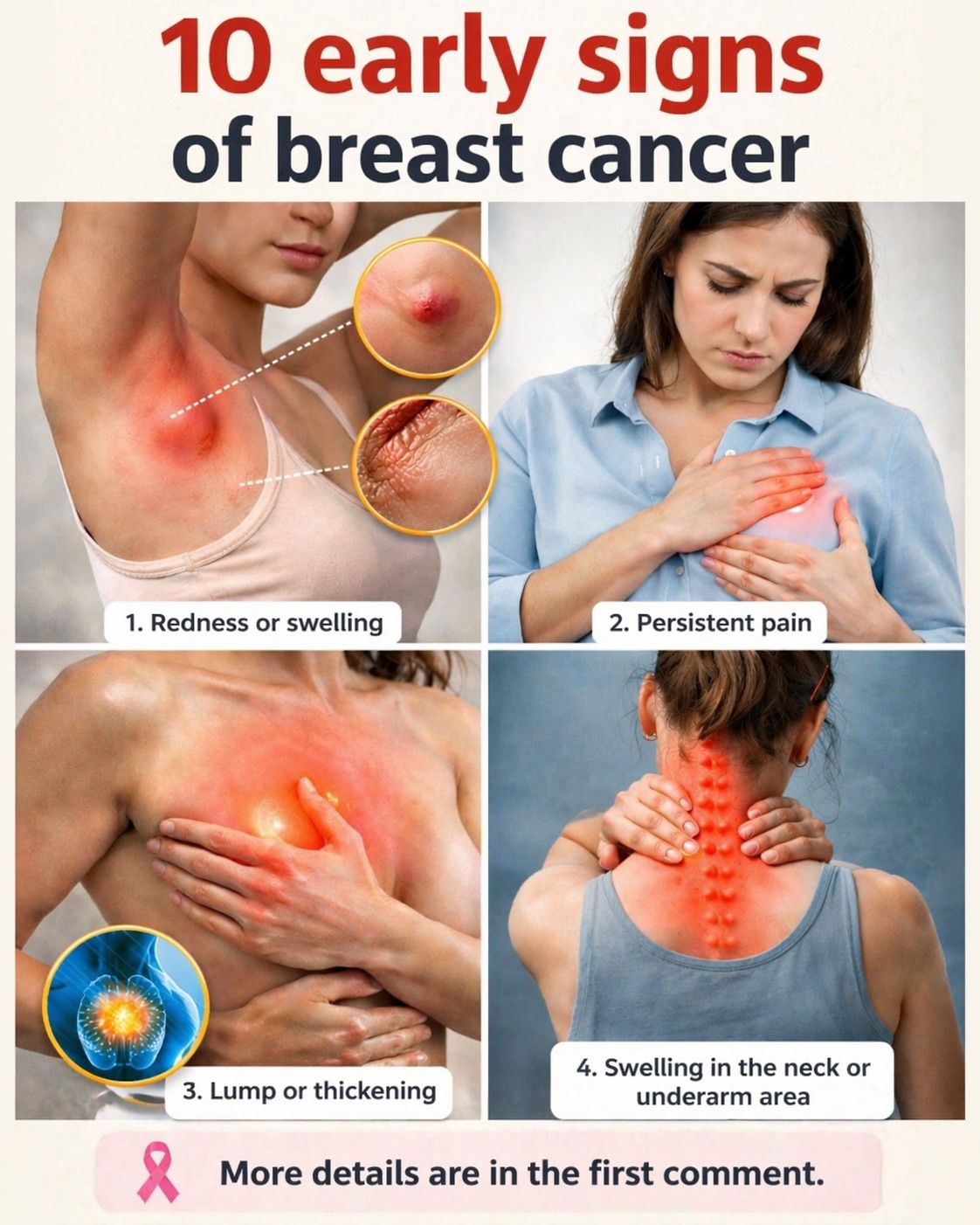
10 warning signs of breast cancer that should never be ignored under any circumstances, especially in women.
Here are 10 important warning signs of Breast Cancer that should be evaluated by a healthcare professional as soon as possible. Having one of these signs does not automatically mean cancer, but none should be ignored.
- A new lump in the breast or underarm
- Often hard, irregular, and painless, but some cancerous lumps can be soft or tender.
- Any persistent new lump deserves medical evaluation.
- Change in breast size or shape
- One breast suddenly becoming noticeably larger, swollen, or misshapen without explanation.
- Skin dimpling or puckering
- Skin that looks like an orange peel (“peau d’orange”) or develops dents/wrinkles can signal deeper tissue involvement.
- Nipple changes
- A nipple turning inward unexpectedly, flattening, or changing position.
- Nipple discharge — especially bloody
- Clear, bloody, or unusual discharge from one nipple when not breastfeeding should be checked promptly.
- Persistent breast or nipple pain
- Most breast pain is not cancer, but pain that is localized, persistent, and unexplained should not be dismissed.
- Redness, warmth, or thickening of the breast
- These can sometimes indicate Inflammatory Breast Cancer, a fast-growing type that may resemble an infection.
- Swelling in part or all of the breast
- Even without a distinct lump, unexplained swelling can be significant.
- Scaly, crusted, or peeling skin on the nipple
- Especially if associated with itching or irritation; this can rarely be linked to Paget Disease of the Breast.
- Swollen lymph nodes near the collarbone or armpit
- Enlarged nodes can sometimes appear before a breast lump is noticed.
Additional points:
- Men can also develop Breast Cancer, though it is much less common.
- Risk increases with age, family history, certain genetic mutations (such as BRCA1/BRCA2), obesity, alcohol use, and hormonal factors.
- Regular screening mammograms help detect many cancers early, sometimes before symptoms appear.
For authoritative guidance: