
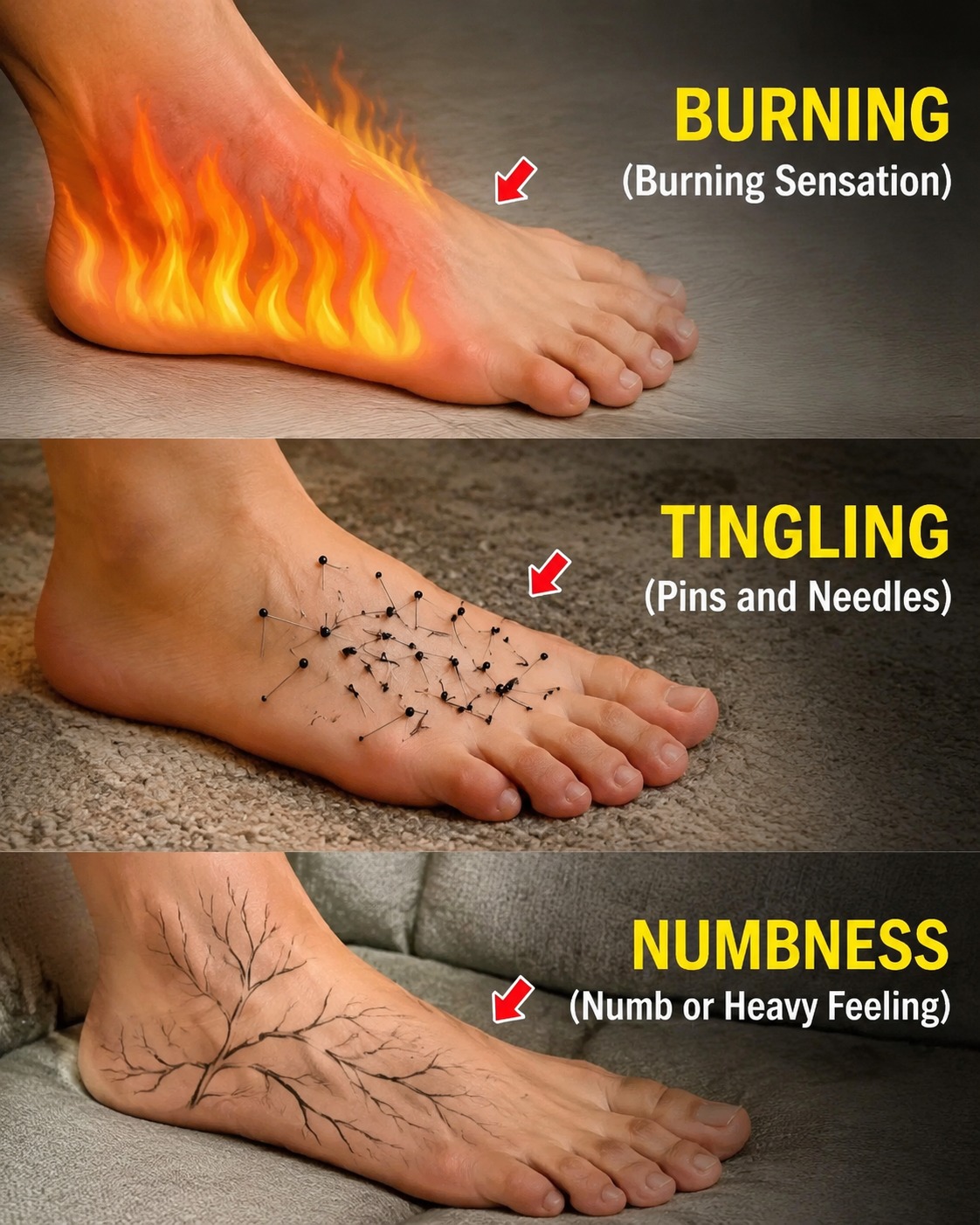
If you’ve ever woken up to a burning sensation in your soles that feels like walking on hot coals, or noticed that frustrating numbness and pins-and-needles tingling that makes every step feel uncertain, you know how quickly it can turn ordinary days into a struggle. These sensations don’t just stay in your feet—they can steal your sleep, make simple walks exhausting, and leave you second-guessing whether something more serious is going on. The constant distraction wears on your patience and your mood, turning small tasks into big challenges. Yet here’s the encouraging part: many people discover real relief once they understand the common triggers and take practical steps to support their nerve health. Stick with me until the end, because I’m sharing one often-overlooked daily habit that has helped countless readers feel more comfortable in their own skin.
What Burning, Numbness, and Tingling in the Feet Actually Feel Like
These symptoms fall under a medical term called paresthesia—basically, your nerves sending mixed or faulty signals. You might describe it as burning, electric shocks, numbness, or that classic “pins and needles” feeling. Sometimes the skin feels overly sensitive; other times you lose sensation entirely. Research from sources like the Mayo Clinic shows these sensations often start in the toes and can gradually move upward if the underlying issue isn’t addressed.
But here’s the thing—occasional tingling after sitting too long is usually harmless. When it becomes frequent, especially at night or without obvious cause, it deserves attention.
Common Causes Behind These Foot Sensations
Understanding why this happens is the first step toward feeling better. Peripheral neuropathy—nerve damage in the extremities—is one of the most frequent culprits, according to experts at Cleveland Clinic and WebMD.
Here are the leading reasons people experience burning, numbness, and tingling in their feet:
- Diabetes and high blood sugar: This is the top cause of peripheral neuropathy. Over time, elevated glucose damages small blood vessels and nerves, leading to those classic symptoms. Studies indicate that more than half of people with diabetes develop some form of neuropathy.
- Vitamin deficiencies: Especially B vitamins (B1, B6, B12). These nutrients are essential for healthy nerve function; without them, tingling and burning can appear.
- Poor circulation: Conditions like peripheral artery disease reduce blood flow, starving nerves of oxygen and nutrients.
- Nerve compression: From tight shoes, tarsal tunnel syndrome, sciatica, or even spinal issues that pinch nerves higher up.
- Other factors: Alcohol use, certain medications (including some chemotherapy drugs), infections, autoimmune conditions, thyroid problems, or even repetitive stress and injury.
But that’s not the full picture. Lifestyle habits—like prolonged sitting, poor posture, or wearing unsupportive shoes—can make symptoms flare up even faster.
Quick comparison of common triggers:
| Cause | Typical Symptoms | Who’s Most at Risk |
|---|---|---|
| Diabetic Neuropathy | Burning, numbness, worse at night | People with diabetes |
| Vitamin Deficiency | Tingling in both feet/hands | Older adults, poor diet |
| Nerve Compression | Tingling after standing/sitting | Office workers, athletes |
| Poor Circulation | Cold feet + numbness | Smokers, vascular issues |
When Should You See a Doctor?
Don’t wait until the discomfort becomes unbearable. Reach out to a healthcare professional if:
- Symptoms persist for weeks or keep getting worse
- You notice weakness, balance problems, or spreading sensations up your legs
- The burning or numbness interferes with daily life or sleep
- You have diabetes or other chronic conditions
Early evaluation can help identify treatable causes before they progress. A podiatrist or neurologist can perform simple tests to pinpoint the issue.
Actionable Tips You Can Start Today
The good news? You don’t have to wait passively for relief. Many people see improvement by focusing on gentle, consistent habits that support nerve and circulation health.
Here’s a simple 5-step plan you can try this week:
- Check your shoes and socks — Choose well-cushioned, supportive footwear with enough room for your toes. Avoid tight shoes that compress nerves.
- Incorporate daily movement — A 15–20 minute walk or gentle stretching improves blood flow without overdoing it. Low-impact activities like swimming or yoga are especially kind to sensitive feet.
- Support nerve nutrition — Eat foods rich in B vitamins (leafy greens, eggs, nuts, whole grains) and stay hydrated. Some people benefit from discussing vitamin levels with their doctor.
- Try temperature therapy — Warm (not hot) foot soaks with Epsom salts can relax muscles and ease discomfort for many. Alternate with cool packs if swelling is present—limit to 15 minutes.
- Practice foot massage — Spend 5 minutes nightly gently massaging your feet to boost circulation and calm overactive nerves.
But here’s what many people miss: consistency matters more than intensity. Small daily actions often deliver bigger results than occasional big efforts.
Lifestyle Changes That Make a Lasting Difference
Beyond quick tips, a few broader habits can help keep symptoms in check:
- Maintain healthy blood sugar if you have diabetes
- Quit or reduce smoking and alcohol, both of which harm nerves and circulation
- Practice good posture and take breaks from sitting every hour
- Manage stress—techniques like deep breathing or meditation can reduce how intensely you feel nerve sensations
Research supports regular exercise for lowering neuropathy discomfort and improving strength.
The Role of Professional Guidance
While home strategies help many people feel more comfortable, they work best alongside medical advice. Your doctor might recommend tests, physical therapy, or other supportive options tailored to your situation. The goal is always to address the root cause while managing symptoms effectively.
Conclusion: You Don’t Have to Live With Constant Foot Discomfort
Burning, numbness, and tingling in your feet can feel overwhelming, but they’re often manageable once you understand the “why” and take small, consistent steps. By listening to your body and combining smart lifestyle choices with professional input when needed, many people regain comfort and confidence in their daily movement.
Remember, every small change adds up. Start with one or two tips from this guide today—you might be surprised how much better your feet feel tomorrow.
FAQ
1. Is burning and tingling in the feet always serious?
Not always—temporary episodes from pressure or posture are usually harmless. But frequent or worsening symptoms can signal an underlying issue like neuropathy, so it’s wise to get checked if they persist.
2. Can diet really help reduce foot numbness and tingling?
Yes, a balanced diet rich in B vitamins, antioxidants, and proper hydration supports nerve health. While it’s not a standalone fix, good nutrition often complements other relief strategies.
3. What exercises are safest for people with tingling feet?
Gentle, low-impact options like walking, swimming, or seated stretches are usually safest. Always check with your doctor first, especially if you have diabetes or balance concerns.
Disclaimer: This article is for informational purposes only and is not a substitute for professional medical advice, diagnosis, or treatment. Always consult your healthcare provider before making changes to your health routine, especially if you have an existing medical condition. Individual results may vary.