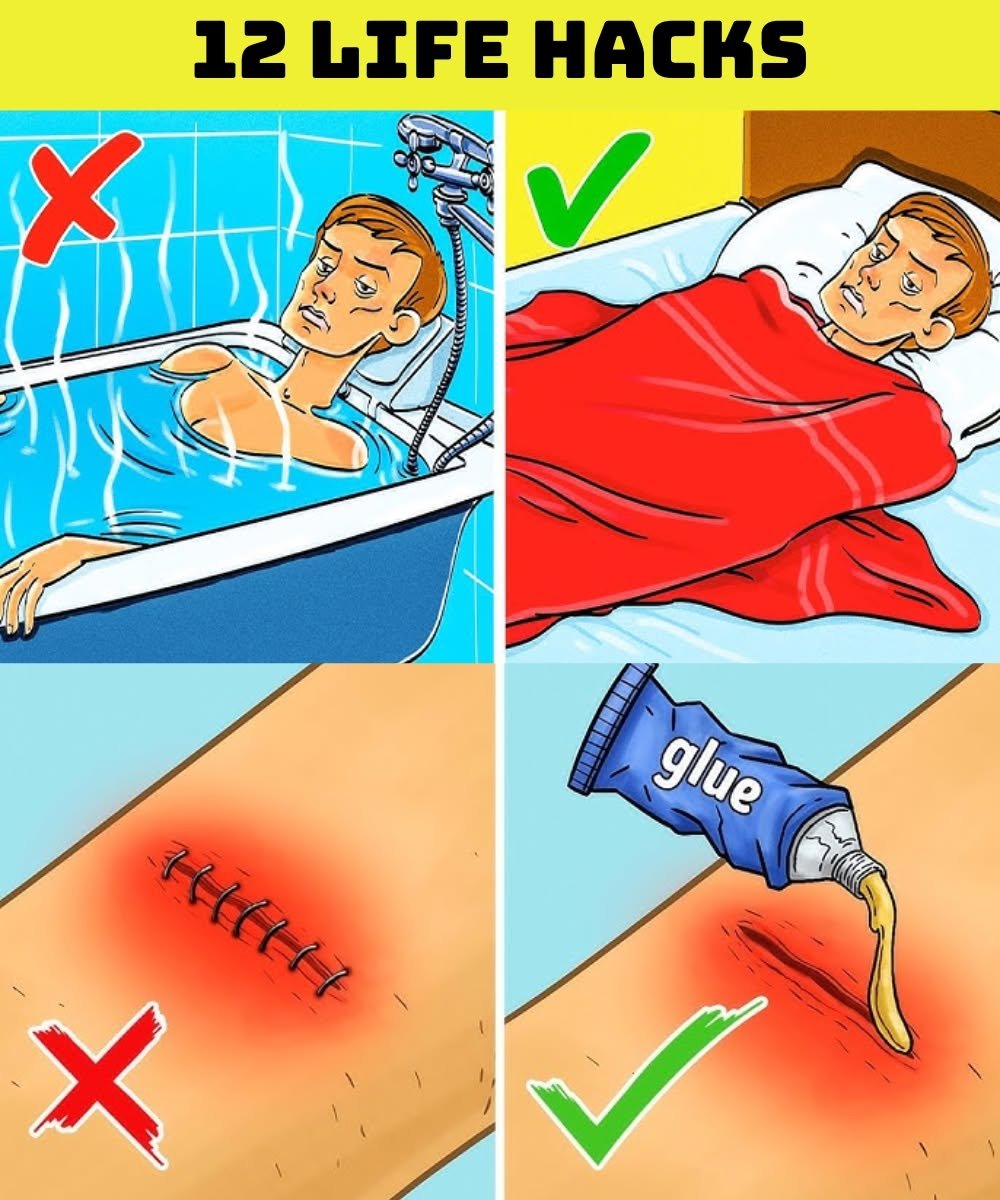
12 Emergency Life Hacks That Could Save Your Life: Essential First Aid Tips Everyone Should Know
12 Emergency Life Hacks That Could Save Your Life: Essential First Aid Tips Everyone Should Know
Emergencies happen when we least expect them. Whether it’s a burn in the kitchen, a sudden fainting episode, or an accidental injury, knowing how to respond in the first few minutes can make a significant difference. While the internet is full of home remedies and “quick fixes,” not all of them are safe. In fact, some common first-aid myths can make an injury worse.
Learning a few basic emergency skills can help you stay calm, protect yourself, and provide the right support until professional medical help arrives. Here are 12 practical life hacks that everyone should know.
1. Don’t Rub Your Eye If Something Gets Inside
Dust, eyelashes, or tiny particles can easily find their way into your eye. Your first instinct may be to rub it, but doing so can scratch the delicate surface of the eye.
What you should do:
- Wash your hands before touching your eye.
- Blink several times to allow natural tears to flush out the object.
- Rinse your eye with clean water or sterile saline solution.
- If needed, gently remove the particle with the corner of a clean, damp cloth.
Avoid:
- Rubbing your eye.
- Using tweezers or sharp objects.
- Trying to remove glass, metal, or anything embedded in the eye.
If the object won’t come out or you have severe pain, blurred vision, or bleeding, seek emergency medical care immediately.
2. Clean Cuts Properly Before Bandaging
Many people immediately apply ointment to every cut. While ointments have their place, using them too soon on a fresh wound isn’t always the best choice.
Proper first aid:
- Wash your hands.
- Rinse the wound under clean running water.
- Gently clean around it with mild soap.
- Pat dry with sterile gauze.
- Cover with a clean bandage.
Seek medical attention if the wound is deep, heavily contaminated, or won’t stop bleeding.
3. Never Use Alcohol or Vinegar to Reduce a Fever
A long-standing myth suggests rubbing alcohol or vinegar on the skin can quickly lower a fever.
Medical experts advise against this because:
- Alcohol can be absorbed through the skin.
- It may cause poisoning, especially in children.
- Vinegar does not effectively reduce body temperature.
Instead:
- Drink plenty of fluids.
- Wear lightweight clothing.
- Keep the room comfortably cool.
- Use fever-reducing medication only as directed by a healthcare professional.
Persistent high fever, confusion, difficulty breathing, or seizures require immediate medical attention.
4. Help Someone Who Has Fainted the Right Way
Watching someone collapse can be frightening.
Here’s what to do:
- Lay the person flat on their back.
- Raise their legs about 20–30 cm (8–12 inches) if there’s no sign of injury.
- Loosen tight clothing around the neck.
- Ensure fresh air is available.
Avoid:
- Splashing water on their face.
- Forcing them to sit or stand immediately.
- Giving coffee or energy drinks.
If they don’t regain consciousness within a minute or two, have chest pain, or were injured in the fall, call emergency services.
5. Cool Burns—Don’t Cover Them With Butter
Butter, toothpaste, cooking oil, and sour cream are common home remedies that should never be applied to burns.
These substances trap heat and may increase the risk of infection.
Correct treatment:
- Cool the burn under cool (not ice-cold) running water for about 20 minutes.
- Remove rings or tight clothing before swelling develops.
- Cover with a sterile, non-stick dressing.
Do not pop blisters, as they help protect the skin while it heals.
6. Never Try to Put a Dislocated Joint Back Yourself
A dislocated shoulder, finger, or knee can be extremely painful.
Trying to force it back into place can damage nerves, blood vessels, or ligaments.
Instead:
- Keep the joint still.
- Support it in the most comfortable position.
- Apply a cold pack wrapped in a towel.
- Seek urgent medical care.
7. Don’t Make Someone Vomit After Poisoning
Many people believe vomiting removes poison from the body.
In reality, inducing vomiting can make some poisonings more dangerous, especially if the substance is corrosive or could be inhaled into the lungs.
If poisoning is suspected:
- Call your local poison centre or emergency services immediately.
- Follow professional instructions.
- If possible, keep the product container available.
Never give food, milk, or home remedies unless instructed by a healthcare professional.
8. Rescue a Drowning Person Safely
A panicked drowning victim may unintentionally pull a rescuer underwater.
If you are not trained:
- Call emergency services immediately.
- Throw a flotation device if available.
- Reach with a pole or rope rather than entering the water.
If you must enter the water, approach from behind whenever possible and prioritise your own safety.
9. Leave Embedded Objects in Place
If a knife, metal rod, or other object is stuck in a wound, never pull it out.
The object may be slowing bleeding by putting pressure on damaged blood vessels.
Instead:
- Leave it in place.
- Stabilise it with bulky dressings.
- Apply pressure around—not on—the object if bleeding.
- Seek emergency medical care immediately.
10. Always Wrap Ice Before Applying It
Ice helps reduce swelling after bumps and bruises, but placing it directly on the skin can cause frost injury.
Safe method:
- Wrap ice or a cold pack in a towel.
- Apply for 15–20 minutes.
- Remove for at least 20 minutes before reapplying.
This helps reduce pain and swelling while protecting the skin.
11. Immobilise Suspected Fractures
If you think someone has broken a bone:
Do:
- Keep the injured area still.
- Support it with a splint if trained to do so.
- Immobilise the joints above and below the suspected fracture.
- Apply a cold pack wrapped in cloth to reduce swelling.
Avoid trying to straighten the limb.
Call emergency services if the bone is visibly deformed, protruding through the skin, or if severe pain or numbness is present.
12. Use Cold—Not Heat—for a Fresh Sprain
A newly sprained ankle or wrist becomes inflamed quickly.
Applying heat immediately after the injury can increase blood flow and worsen swelling.
Follow the RICE method:
- Rest: Stop using the injured area.
- Ice: Apply a wrapped cold pack for 15–20 minutes.
- Compression: Use an elastic bandage if appropriate.
- Elevation: Raise the injured limb above heart level when possible.
Heat may be helpful later during recovery, but not during the first 24–48 hours after most acute sprains.
When Should You Call Emergency Services?
Seek immediate medical help if someone has:
- Difficulty breathing
- Heavy or uncontrolled bleeding
- Severe burns
- Loss of consciousness
- Chest pain
- Stroke symptoms (such as facial drooping, arm weakness, or speech difficulties)
- Suspected poisoning
- Serious head or spinal injuries
- A seizure lasting several minutes or repeated seizures
When in doubt, it’s safer to seek professional medical advice than to rely on home remedies.
Final Thoughts
Knowing basic first aid isn’t just useful—it’s a skill that can help protect you, your family, and those around you. The first few minutes after an emergency are often the most important. Staying calm, avoiding common myths, and following evidence-based first-aid practices can reduce complications while waiting for medical professionals to take over.
Remember that first aid is meant to stabilise an emergency, not replace professional care. Consider taking a certified first-aid course to build confidence and prepare yourself for situations where quick action truly matters.