
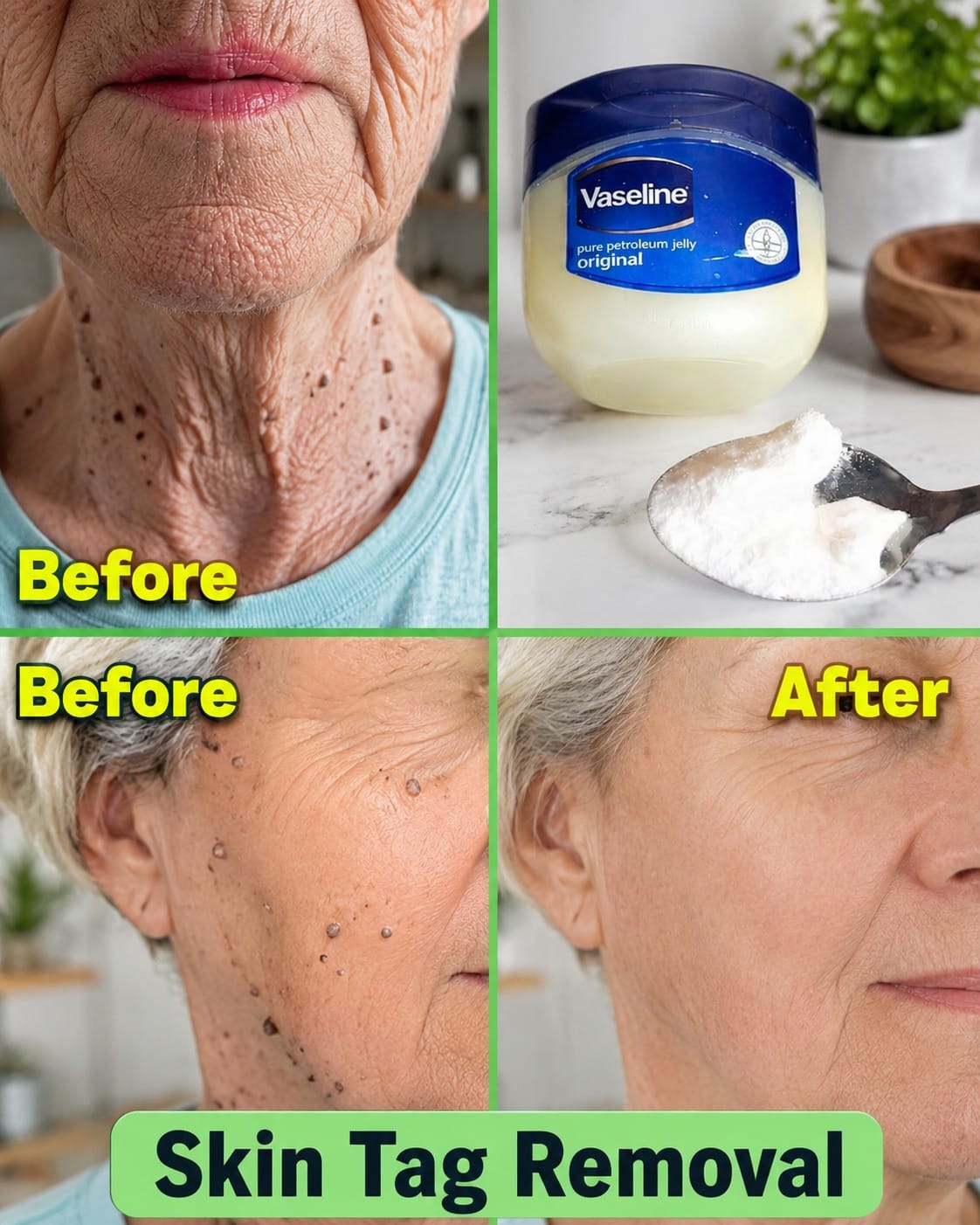
Vaseline does not make skin tags vanish. It seals the skin like a plastic wrap over a wound, and that’s the entire trick: it protects, it cushions, it locks out air.
That’s why the viral “overnight removal” claim keeps spreading in circles of people staring at the same annoying little growths in the mirror, usually on the neck, under the arms, or where a bra strap keeps grinding all day. The promise is seductive because skin tags feel personal — like your body has planted tiny, stubborn reminders in the exact spots that rub, sweat, and snag.
By evening, the tag catches on fabric. By morning, you’re checking it again with that same mix of irritation and hope, wondering why something so small can feel so impossible to ignore.
What the beauty-hack crowd won’t tell you is that a skin tag is not a stain on the surface. It’s living tissue with a tiny blood supply, and that means the body has to be coaxed, cut, frozen, or dried in a very specific way before it lets go.
The real story isn’t “what cream erases it.” It’s what cuts the fuel line.
The body’s tiny hitchhiker problem
Think of a skin tag like a weed tied to a sprinkler line. You can smear something on the top all day long, but if the water keeps feeding it underneath, it stays there.
That’s the reason petroleum jelly falls flat as a remover. It creates a barrier, not a shutdown. It’s a skin shield, not a scalpel, not a freezing blast, not a drying agent.
When friction keeps rubbing the same spot — collar, waistband, underarm seam, necklace, bra edge — the skin can overgrow in a little stalk. The first thing people notice is not pain. It’s the catch, the tug, the constant reminder every time clothing brushes the area.
And that’s where the frustration gets weaponized by bad advice. The body is already dealing with a mechanical problem, and the internet keeps offering a surface-level fix.
The cheapest-looking answer often sells best because it sounds effortless.
Why the overnight promise keeps fooling people
The overnight claim works because it feeds on impatience. Everyone wants the tag gone before the next shower, the next dinner, the next mirror check.
But a true removal process has to interrupt the tissue’s supply line. That means freezing it, snipping it, or drying it under the right conditions until it releases. Vaseline does none of that — it just sits there like a raincoat on a leaking pipe.
Without that supply cut, the tag doesn’t shrivel and fall away. It stays soft, attached, and annoyingly present.
That’s why the “one-night miracle” usually ends in disappointment, or worse, irritated skin that looks angrier than the original tag ever did.
And that’s the ugly contrast: when the wrong thing is used, the healthy skin gets punished while the tag survives.
Why the neck, underarms, and folds feel it first
For people with tags in high-friction zones, the problem is constant motion. Every turn of the head, every raised arm, every shirt change turns the area into a tiny battlefield.
It’s like leaving a paper clip in a drawer that gets slammed open fifty times a day. Eventually, something bends, snags, and refuses to stay neat.
When the tag is on the neck, you feel it with jewelry and collars. Under the arms, it gets rubbed by sweat and seams. In skin folds, it stays warm, compressed, and easy to irritate.
Once the area is protected from friction, new tags are less likely to keep showing up in the same cluster. Loose fabrics, dry skin, and less rubbing change the environment that keeps feeding the problem.
The shift people notice is simple: fewer snags, less checking, less of that tiny daily annoyance that keeps stealing attention.
Why confidence changes before the skin does
A skin tag is small, but the mental drag is not. People stop wearing certain necklines. They hesitate before raising an arm. They keep touching the spot as if the tag might disappear by being noticed hard enough.
That’s where the right approach matters. Freezing kits mimic a doctor’s office by shocking the tissue. Sterile snips remove it immediately. Some drying methods work slowly, but they work by changing the tissue itself — not by coating it in a glossy barrier.
Vaseline has a role, just not the role social media gives it. It protects skin after removal, helping the area stay calm and covered while it heals.
Used as a remover, it’s the wrong tool. Used around a treatment area, it can be useful. That difference is the whole game.
The supplement-style fantasy is always the same: one product, one night, no effort. Real skin doesn’t obey that script.
What actually deserves your attention
If a tag is changing color fast, bleeding, or feeling firm instead of soft, that’s not a DIY moment. That’s a stop-and-check moment.
For ordinary tags in ordinary spots, the safest path is still the boring one: proper removal, less friction, and no picking or twisting. It’s less glamorous than a viral jar-and-wait routine, but it stops the cycle without turning the surrounding skin into a wreck.
That’s the part people miss. The goal is not just getting rid of the bump. The goal is getting rid of it without leaving the skin more inflamed, more irritated, and more obvious than before.
One common habit ruins the whole process: putting a drying agent on the tag and forgetting that the healthy skin around it needs protection too.
That’s where the next layer matters — the pairing that keeps the surrounding skin from getting burned while the tag is treated.
This article is for informational purposes only and does not replace professional medical advice. Please consult your healthcare provider for personalized guidance.
Vaseline does not make skin tags vanish. It seals the skin like a plastic wrap over a wound, and that’s the entire trick: it protects, it cushions, it locks out air.
That’s why the viral “overnight removal” claim keeps spreading in circles of people staring at the same annoying little growths in the mirror, usually on the neck, under the arms, or where a bra strap keeps grinding all day. The promise is seductive because skin tags feel personal — like your body has planted tiny, stubborn reminders in the exact spots that rub, sweat, and snag.
By evening, the tag catches on fabric. By morning, you’re checking it again with that same mix of irritation and hope, wondering why something so small can feel so impossible to ignore.
What the beauty-hack crowd won’t tell you is that a skin tag is not a stain on the surface. It’s living tissue with a tiny blood supply, and that means the body has to be coaxed, cut, frozen, or dried in a very specific way before it lets go.
The real story isn’t “what cream erases it.” It’s what cuts the fuel line.
The body’s tiny hitchhiker problem
Think of a skin tag like a weed tied to a sprinkler line. You can smear something on the top all day long, but if the water keeps feeding it underneath, it stays there.
That’s the reason petroleum jelly falls flat as a remover. It creates a barrier, not a shutdown. It’s a skin shield, not a scalpel, not a freezing blast, not a drying agent.
When friction keeps rubbing the same spot — collar, waistband, underarm seam, necklace, bra edge — the skin can overgrow in a little stalk. The first thing people notice is not pain. It’s the catch, the tug, the constant reminder every time clothing brushes the area.
And that’s where the frustration gets weaponized by bad advice. The body is already dealing with a mechanical problem, and the internet keeps offering a surface-level fix.
The cheapest-looking answer often sells best because it sounds effortless.
Why the overnight promise keeps fooling people
The overnight claim works because it feeds on impatience. Everyone wants the tag gone before the next shower, the next dinner, the next mirror check.
But a true removal process has to interrupt the tissue’s supply line. That means freezing it, snipping it, or drying it under the right conditions until it releases. Vaseline does none of that — it just sits there like a raincoat on a leaking pipe.
Without that supply cut, the tag doesn’t shrivel and fall away. It stays soft, attached, and annoyingly present.
That’s why the “one-night miracle” usually ends in disappointment, or worse, irritated skin that looks angrier than the original tag ever did.
And that’s the ugly contrast: when the wrong thing is used, the healthy skin gets punished while the tag survives.
Why the neck, underarms, and folds feel it first
For people with tags in high-friction zones, the problem is constant motion. Every turn of the head, every raised arm, every shirt change turns the area into a tiny battlefield.
It’s like leaving a paper clip in a drawer that gets slammed open fifty times a day. Eventually, something bends, snags, and refuses to stay neat.
When the tag is on the neck, you feel it with jewelry and collars. Under the arms, it gets rubbed by sweat and seams. In skin folds, it stays warm, compressed, and easy to irritate.
Once the area is protected from friction, new tags are less likely to keep showing up in the same cluster. Loose fabrics, dry skin, and less rubbing change the environment that keeps feeding the problem.
The shift people notice is simple: fewer snags, less checking, less of that tiny daily annoyance that keeps stealing attention.
Why confidence changes before the skin does
A skin tag is small, but the mental drag is not. People stop wearing certain necklines. They hesitate before raising an arm. They keep touching the spot as if the tag might disappear by being noticed hard enough.
That’s where the right approach matters. Freezing kits mimic a doctor’s office by shocking the tissue. Sterile snips remove it immediately. Some drying methods work slowly, but they work by changing the tissue itself — not by coating it in a glossy barrier.
Vaseline has a role, just not the role social media gives it. It protects skin after removal, helping the area stay calm and covered while it heals.
Used as a remover, it’s the wrong tool. Used around a treatment area, it can be useful. That difference is the whole game.
The supplement-style fantasy is always the same: one product, one night, no effort. Real skin doesn’t obey that script.
What actually deserves your attention
If a tag is changing color fast, bleeding, or feeling firm instead of soft, that’s not a DIY moment. That’s a stop-and-check moment.
For ordinary tags in ordinary spots, the safest path is still the boring one: proper removal, less friction, and no picking or twisting. It’s less glamorous than a viral jar-and-wait routine, but it stops the cycle without turning the surrounding skin into a wreck.
That’s the part people miss. The goal is not just getting rid of the bump. The goal is getting rid of it without leaving the skin more inflamed, more irritated, and more obvious than before.
One common habit ruins the whole process: putting a drying agent on the tag and forgetting that the healthy skin around it needs protection too.
That’s where the next layer matters — the pairing that keeps the surrounding skin from getting burned while the tag is treated.
This article is for informational purposes only and does not replace professional medical advice. Please consult your healthcare provider for personalized guidance.