
top 12 Amlodipine Side Effects (Doctors Never Say This) | Side Effects Of Amlodipine
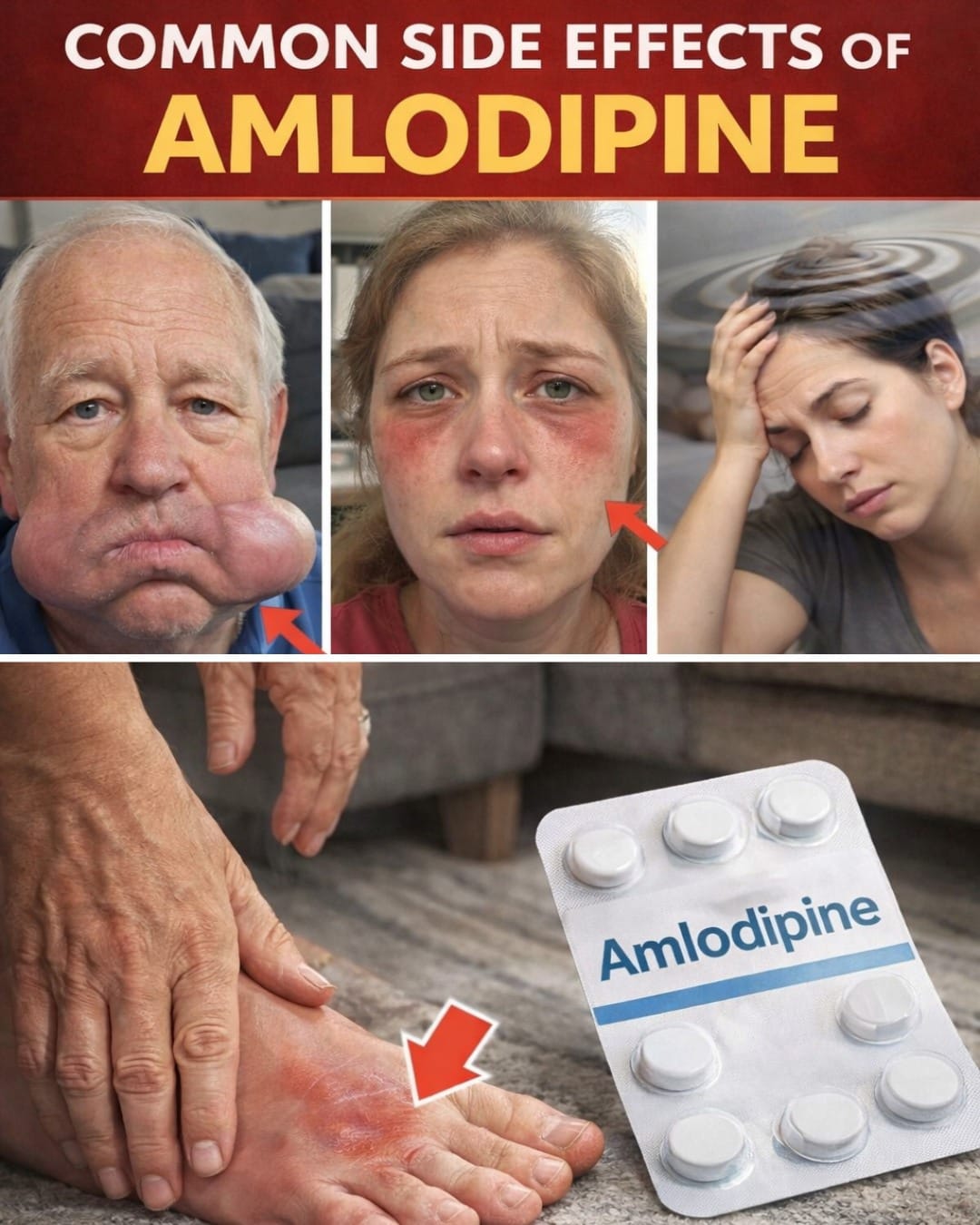
Here are 12 important side effects linked to Amlodipine that patients should know about. Some are common and mild, while others may need medical attention.
Top 12 Amlodipine Side Effects
- Swollen ankles or feet (edema)
This is the most common side effect. Fluid builds up in the lower legs and feet, especially at higher doses. (Healthline) - Dizziness or light-headedness
Amlodipine lowers blood pressure, which can sometimes make you feel faint when standing up quickly. (Mayo Clinic) - Headaches
Blood vessel widening may trigger headaches during the first days or weeks of treatment. (Healthline) - Flushing or facial redness
Warmth and redness in the face or neck happen because the medication relaxes blood vessels. (Mayo Clinic) - Heart palpitations or racing heartbeat
Some people notice pounding or irregular heartbeats after starting the medicine. (Healthline) - Fatigue or unusual tiredness
Lower blood pressure and changes in circulation can leave some patients feeling weak or sleepy. (Healthline) - Nausea or stomach discomfort
Mild digestive upset, constipation, or abdominal pain may occur. (Healthline) - Gum swelling (gingival hyperplasia)
A lesser-known effect where gum tissue becomes enlarged, especially with long-term use. Good dental hygiene helps reduce risk. (Healthline) - Shortness of breath or chest tightness
Rare, but important. If breathing becomes difficult or chest pain worsens, seek medical care promptly. (Mayo Clinic) - Low blood pressure (hypotension)
Too much blood pressure reduction can cause fainting, blurred vision, or weakness. (Drugs.com) - Allergic reactions or swelling of the face/tongue
Rare but serious. Emergency help is needed if swelling affects breathing or swallowing. (Healthline) - Rare liver or heart complications
Very uncommon cases include abnormal liver tests, worsening chest pain, arrhythmias, or even heart attack in high-risk patients. (Healthline)
When to Call a Doctor Immediately
Seek urgent medical care if you experience:
- Severe chest pain
- Difficulty breathing
- Fainting
- Rapid swelling of the face or throat
- Black stools or unusual bleeding
- Severe dizziness
Important Notes
- Many people take amlodipine safely for years with few problems.
- Side effects often improve after the body adjusts.
- Do not stop taking amlodipine suddenly without speaking to your doctor, especially if you use it for high blood pressure or angina. (Healthline)