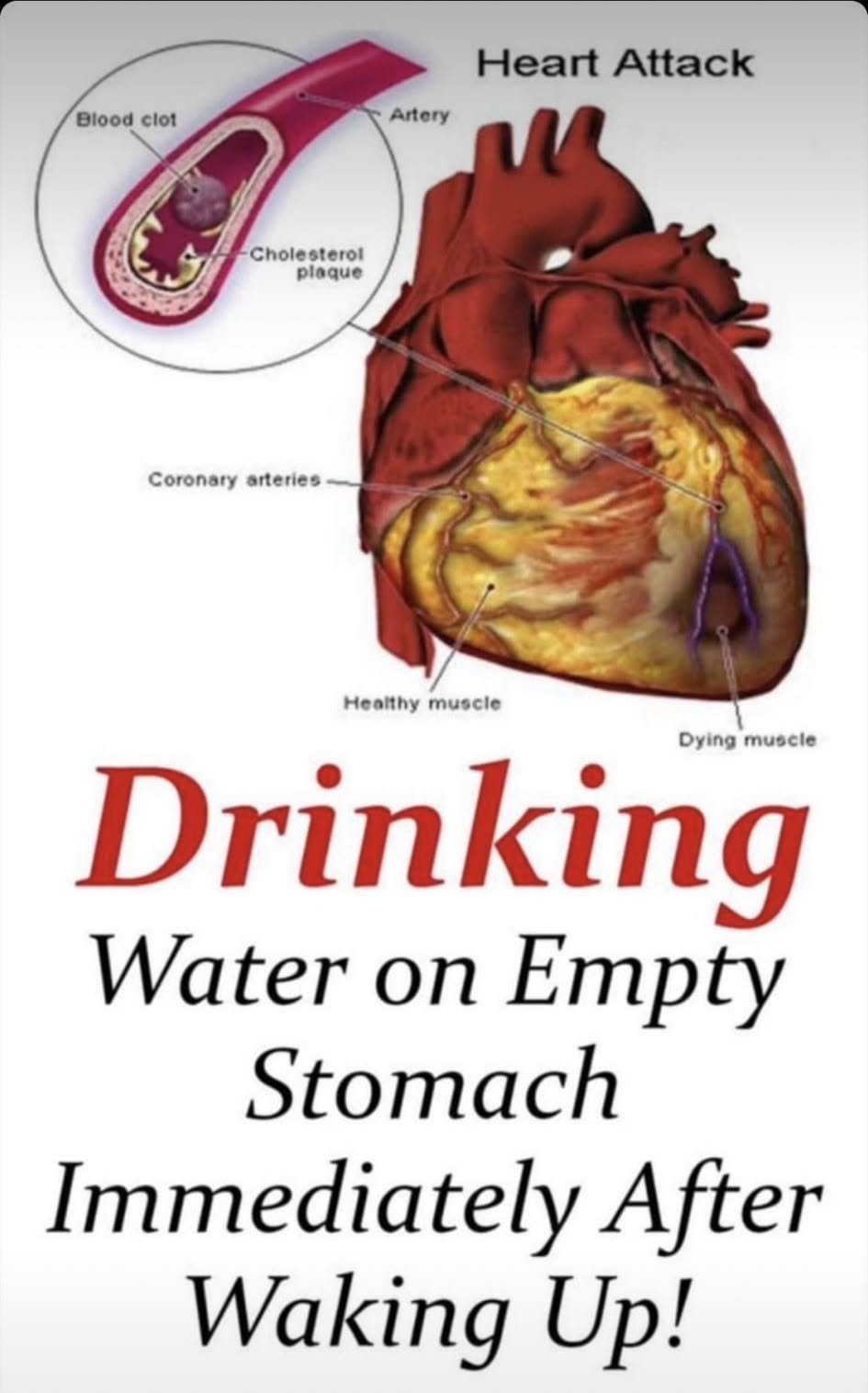
Drinking Water on Empty Stomach Immediately After Waking Up!
Morning Water – What’s Real vs. Hype 💧
1. What Happens When You Drink Water After Waking Up
After 6–8 hours of sleep, most people wake up mildly dehydrated because they haven’t had anything to drink overnight.
Drinking water in the morning can help:
- Rehydrate your body after sleep.
- Replace fluid losses from breathing and sweating overnight.
- Support normal digestion, especially if you haven’t consumed fluids for several hours.
- Improve alertness if mild dehydration is contributing to fatigue or headache.
- Support kidney function by helping maintain normal hydration throughout the day.
Many cultures—including practices sometimes referred to as “morning water therapy”—encourage drinking water after waking. While it’s a healthy habit, most claimed medical benefits have not been proven in clinical studies.
2. Viral Claims vs. What the Evidence Says
| Viral Claim | Evidence | Reality |
|---|---|---|
| “Prevents heart attacks” | No scientific evidence | Drinking water does not remove plaque, dissolve blood clots, or prevent heart attacks by itself. |
| “Cures diseases” | No evidence | Hydration supports normal body functions but is not a cure for disease. |
| “Healthy morning habit” | Supported | Starting the day well hydrated can contribute to overall health and well-being. |
Heart attacks are primarily caused by atherosclerosis (plaque buildup) and blood clots. Major risk factors include high blood pressure, high cholesterol, diabetes, smoking, obesity, physical inactivity, and family history.
3. A Simple Morning Water Routine
If you enjoy drinking water first thing in the morning:
- Drink 1–2 glasses (250–500 mL) of water after waking.
- Room-temperature or lukewarm water is fine, though cold water is also safe if you prefer it.
- Sip at a comfortable pace.
- Coffee or tea can still be part of your morning routine—they also contribute to your daily fluid intake.
Adding lemon is optional. It may improve flavor, but it has no proven detoxifying or fat-burning effects.
4. Who Should Be Careful
Some people should follow their healthcare provider’s advice regarding fluid intake, including those with:
- Kidney disease requiring fluid restrictions
- Heart failure
- Certain liver conditions
- Medical conditions that affect sodium balance
If you have acid reflux (GERD) or bloating, you may find that drinking large amounts of water quickly is uncomfortable. Smaller amounts may be easier to tolerate.
5. What Actually Supports Heart Health
Research consistently supports these habits:
- Stay well hydrated throughout the day.
- Eat a balanced diet rich in fruits, vegetables, whole grains, legumes, and healthy fats.
- Limit excess sodium, added sugars, and highly processed foods.
- Get at least 150 minutes of moderate-intensity physical activity each week, plus muscle-strengthening activities.
- Avoid smoking and limit alcohol.
- Maintain a healthy weight.
- Get adequate sleep.
- Have your blood pressure, cholesterol, and blood sugar checked as recommended by your healthcare provider.
Bottom Line
Drinking water after waking is a simple, healthy habit that helps restore hydration after a night’s sleep. It may improve comfort and support normal body functions, but it does not prevent heart attacks, detox the body, or cure diseases.
Disclaimer: This information is for educational purposes only and is not medical advice. If you have chest pain, symptoms of heart disease, or questions about fluid intake related to a medical condition, seek advice from a licensed healthcare professional or emergency medical services when appropriate.