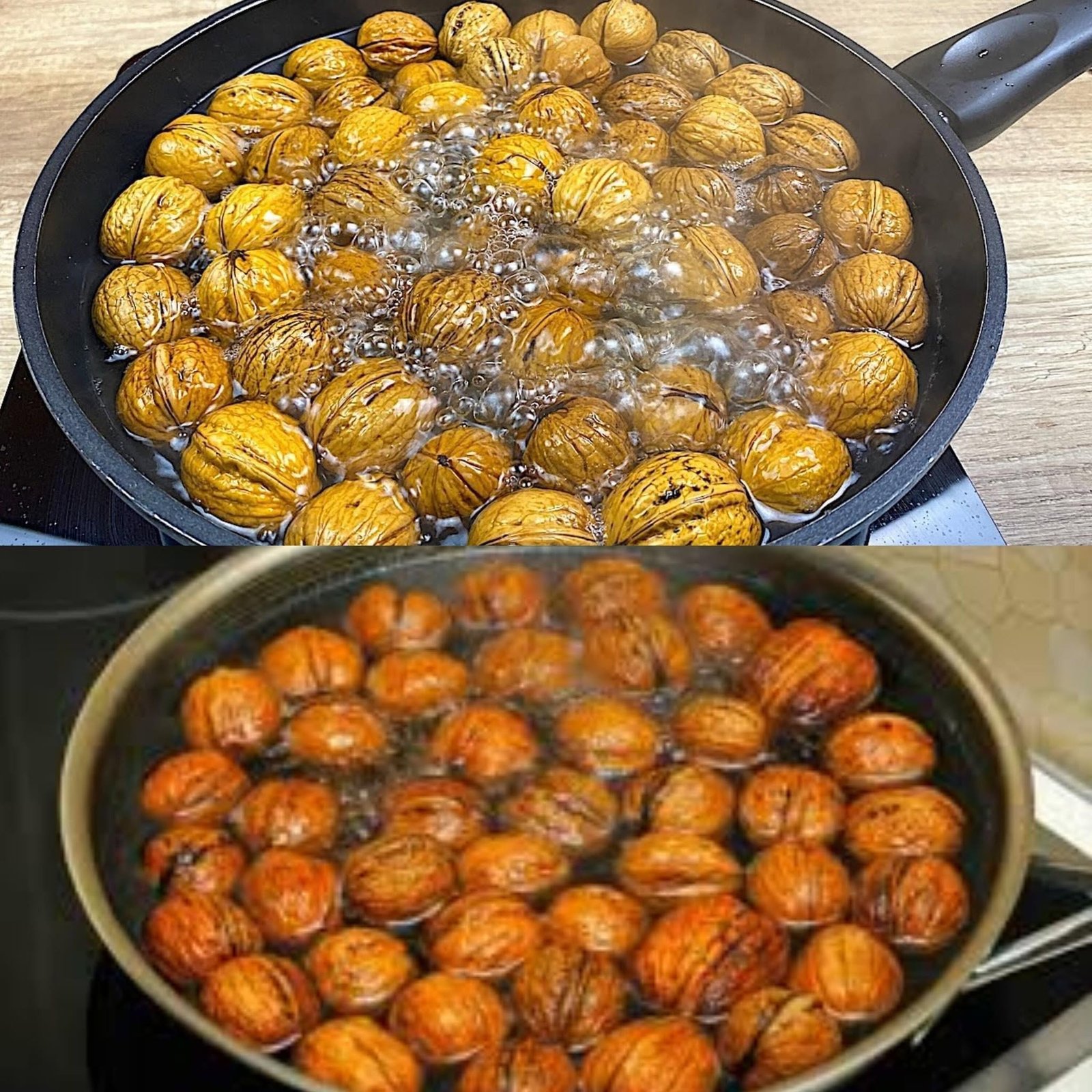
Why Boil Walnuts Before Cracking Them? 🌰
1. What Happens When You Boil Walnuts?
Boiling walnuts in their shells is an old kitchen trick that can make them easier to prepare. Here’s why people do it:
✔ Easier to crack
Boiling walnuts for 5–10 minutes can slightly soften the shell and loosen the thin membrane around the kernel, making it easier to remove larger, intact walnut halves.
✔ May reduce bitterness
The thin brown skin (pellicle) contains tannins and other polyphenols that contribute to bitterness. Boiling may reduce some of this bitterness, although the effect is usually modest.
✔ Cleans the shells
Boiling helps wash away dirt, dust, and surface residue before cracking the walnuts.
Why does the water turn brown?
That’s normal. Some tannins and natural pigments from the shells and walnut skin leach into the water during boiling.
2. Grandma’s Method
You’ll need:
- Whole walnuts in their shells
- Large pot
- Water
Directions:
- Rinse the walnuts thoroughly.
- Place them in a pot and cover completely with water.
- Bring the water to a gentle boil.
- Boil for 5–10 minutes.
- Drain and allow the walnuts to cool until they’re safe to handle.
- Crack them open—the kernels often come out in larger pieces.
Optional:
If you won’t be eating them right away, dry the kernels or the cracked nuts in a low oven (around 95–120°C / 200–250°F) for 20–40 minutes, or until completely dry, to help prevent mold during storage.
3. Walnut Nutrition
Boiling doesn’t make walnuts more nutritious—they’re already packed with beneficial nutrients, including:
- Heart-healthy unsaturated fats, including plant-based omega-3 (ALA)
- Protein
- Fiber
- Vitamin E
- Magnesium
- Copper
- Polyphenol antioxidants
Regular walnut consumption has been associated with heart health as part of an overall healthy diet.
4. What Boiling Won’t Do
Despite claims on social media, there is no scientific evidence that:
- Boiled walnuts cure diseases.
- Walnut water “detoxifies” the body.
- Walnut water melts fat or treats chronic illnesses.
The leftover boiling water is typically discarded because it’s bitter from dissolved tannins and has no proven medicinal benefit.
5. Safety Tips
- Don’t boil walnuts for too long, or the kernels can become overly soft.
- Dry thoroughly before storing to reduce the risk of mold.
- Store dried walnuts in an airtight container in a cool place.
- Anyone with a tree nut allergy should avoid walnuts completely.
- Use caution when draining hot water and handling freshly boiled walnuts.
Bottom Line
Boiling walnuts before cracking them is a genuine traditional kitchen technique—not a health hack. It can make walnuts easier to crack, help release larger kernels, and slightly reduce bitterness. While walnuts are highly nutritious, boiling them doesn’t create special medicinal properties, and drinking the leftover walnut water has no proven health benefits.
Disclaimer: This information is for educational purposes only and is not medical advice. Walnuts are a nutritious food, but they are not a treatment or cure for any disease. If you have food allergies or medical conditions, consult a qualified healthcare professional before making significant dietary changes.