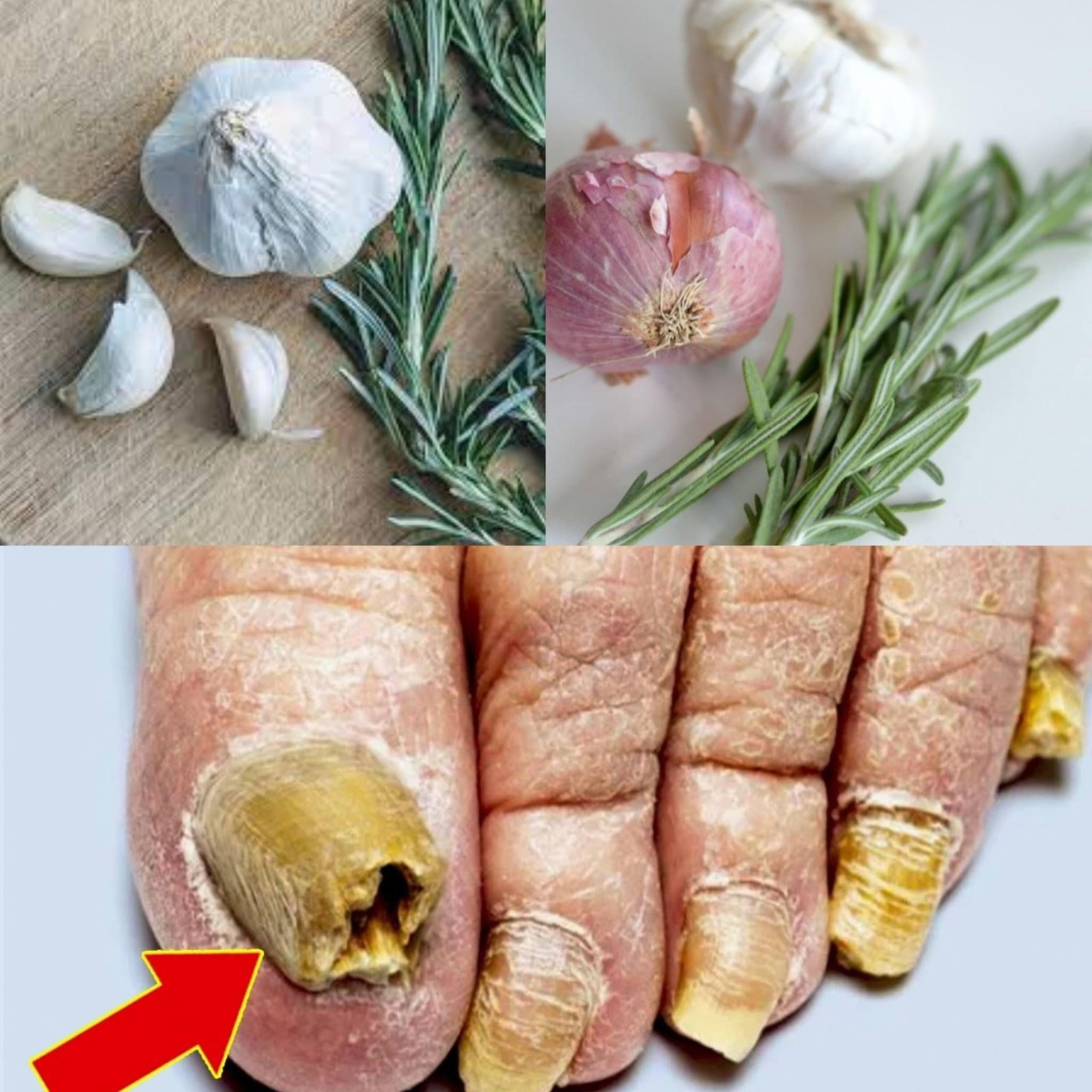
Garlic, Onion & Rosemary for Nail Fungus – Fact Check 🦶🧄
1. What These Ingredients Actually Do
Garlic
Garlic contains allicin, a compound that has shown antifungal activity in laboratory studies against certain fungi.
Onion
Onions contain sulfur-containing compounds and antioxidants. Some laboratory research suggests they may have antifungal properties, but evidence in humans is very limited.
Rosemary
Rosemary contains antioxidant and anti-inflammatory plant compounds. While some laboratory studies have explored antimicrobial effects, there is no good clinical evidence that rosemary treats nail fungus.
Reality
Laboratory (“test tube”) results do not necessarily translate into effective treatment for nail fungus. Toenails are thick, and the fungus lives beneath or within the nail, making it difficult for homemade remedies to reach the infection.
2. What These Remedies Won’t Do
There is no reliable clinical evidence that garlic, onion, or rosemary can:
- Eliminate nail fungus quickly.
- Clear thick, yellow, or long-standing fungal nails in a few days or weeks.
- Replace prescription antifungal medications when they are needed.
Advanced nail fungus usually requires medical evaluation and often prescription treatment.
3. If You Want to Try a Home Remedy
Some people choose to use garlic as a complementary home remedy while following medical treatment, although its effectiveness has not been proven.
A cautious approach:
- Crush 2–3 garlic cloves.
- Steep them in warm (not hot) water for about 10 minutes.
- Soak the affected nail for 10–15 minutes.
- Rinse and dry the area thoroughly afterward.
Limit use to once daily if you choose to try it.
Important: Stop immediately if you develop burning, redness, blistering, or irritation.
Never apply crushed raw garlic directly to the skin for prolonged periods or overnight. Raw garlic can cause chemical burns and skin irritation.
4. Treatments That Have Been Proven to Work
Depending on the severity of the infection, healthcare professionals may recommend:
- Prescription antifungal nail lacquers or topical medications
- Oral antifungal medications (such as terbinafine), when appropriate
- Nail trimming and thinning to improve treatment penetration
- In selected cases, laser therapy or nail removal, although evidence for laser treatment is still evolving
Treatment requires patience. Toenails often take 9–18 months to fully grow out, so visible improvement is gradual even when treatment is successful.
5. Prevention Tips
To reduce the risk of recurrence:
- Keep nails clean, dry, and trimmed.
- Change socks regularly.
- Wear breathable footwear.
- Avoid walking barefoot in public locker rooms and pools.
- Disinfect or replace contaminated nail clippers and footwear when appropriate.
- Do not share nail tools.
People with diabetes, poor circulation, or weakened immune systems should seek medical advice before attempting home treatments.
Bottom Line
Garlic contains compounds with antifungal activity in laboratory studies, but there is no strong clinical evidence that garlic, onion, or rosemary can cure nail fungus on their own. Viral claims promising a rapid or guaranteed cure are not supported by research.
Disclaimer: This information is for educational purposes only and is not medical advice. Home remedies have not been proven to cure nail fungus. If your nail is thick, painful, spreading, or you have diabetes or poor circulation, consult a licensed healthcare professional for diagnosis and treatment.