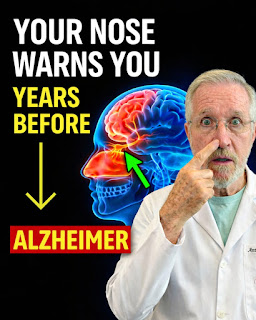
Your Nose May Warn You Years Before Alzheimer’s: Early Signs You Shouldn’t Ignore
When people think about Alzheimer’s disease, the first thing that comes to mind is memory loss—forgetting names, appointments, or where everyday items were placed. However, Alzheimer’s goes far beyond memory issues.
In fact, early warning signs can appear years before noticeable memory decline, and many of them are physical. Changes in smell, movement, and behavior may signal that something deeper is happening in the brain.
What Happens in the Brain with Alzheimer’s?
Alzheimer’s disease affects how brain cells communicate. Over time, harmful protein buildups disrupt neuron function, leading to gradual damage in different areas of the brain.
This doesn’t only impact memory. It can also affect:
- Movement and coordination
- Spatial awareness
- Sensory perception (especially smell)
That’s why the earliest symptoms are often overlooked or mistaken for normal aging.
7 Early Warning Signs You Should Pay Attention To
Recognizing these early signs can make a big difference in seeking timely medical advice.
1. Reduced or Lost Sense of Smell
One of the earliest indicators is a decline in the ability to smell. Everyday scents like coffee, food, or garbage may become harder to detect.
This happens because the part of the brain responsible for smell is often affected early.
2. Changes in Walking Pattern
A person may begin to walk more slowly, take shorter steps, or drag their feet. This is not always just weakness—it may reflect reduced brain coordination.
3. Difficulty with Simple Hand Tasks
Tasks like buttoning a shirt, tying shoelaces, or using keys may become challenging due to declining fine motor skills.
4. Trouble Judging Distance
Misjudging space can lead to dropping objects, bumping into things, or frequent tripping—even in familiar places.
5. Repeating Questions Frequently
A person may ask the same question repeatedly, even after receiving an answer, because they cannot retain recent information.
6. Misplacing Objects in Unusual Places
Items may be stored in inappropriate locations (e.g., keys in the refrigerator). The person might also suspect others of moving or stealing them.
7. Getting Lost in Familiar Places
One of the most concerning signs is becoming disoriented in well-known areas, such as one’s own neighborhood.
Important: It’s Not Always Alzheimer’s
While these symptoms can be alarming, they do not automatically mean Alzheimer’s.
Other conditions can cause similar signs, including:
- Vitamin B12 deficiency
- Thyroid disorders
- Stress or sleep disturbances
The key difference is that many of these conditions are treatable when properly diagnosed.
👉 That’s why medical evaluation is essential if you notice persistent changes.
How to Support Brain Health Naturally
Taking care of your brain doesn’t have to be complicated. Simple daily habits can help maintain cognitive function:
✔ Get Quality Sleep
Sleep is crucial for memory consolidation and brain repair.
✔ Keep Your Mind Active
Learn new skills, read, solve puzzles, or try new routines to stimulate your brain.
✔ Eat a Balanced Diet
Focus on natural, nutrient-rich foods and reduce excessive sugar intake.
✔ Stay Physically Active
Regular exercise improves blood flow to the brain and supports overall health.
Final Thoughts
Alzheimer’s is a progressive condition, but early awareness can make a meaningful difference. Paying attention to subtle changes—like a reduced sense of smell or coordination issues—may help you seek help sooner.
At the same time, not every symptom points to Alzheimer’s. Staying informed, calm, and proactive is the best approach.
Taking care of your brain today is an investment in your future quality of life.