What Do Red Dots on Your Skin Mean? Common Causes, Warning Signs, and When to See a Doctor
What Do Red Dots on Your Skin Mean? Common Causes, Warning Signs, and When to See a Doctor
What Do Red Dots on Your Skin Mean? Here’s What You Should Know
Have you ever noticed tiny red dots appearing on your skin and wondered what they are?
While it’s natural to feel concerned, not all red spots are a sign of a serious medical condition. Some are harmless and simply part of the aging process, while others may indicate an allergic reaction, irritation, or a health issue that deserves medical attention.
The key is to pay attention to their appearance, whether they change over time, and whether they occur with other symptoms.
1. Cherry Angiomas
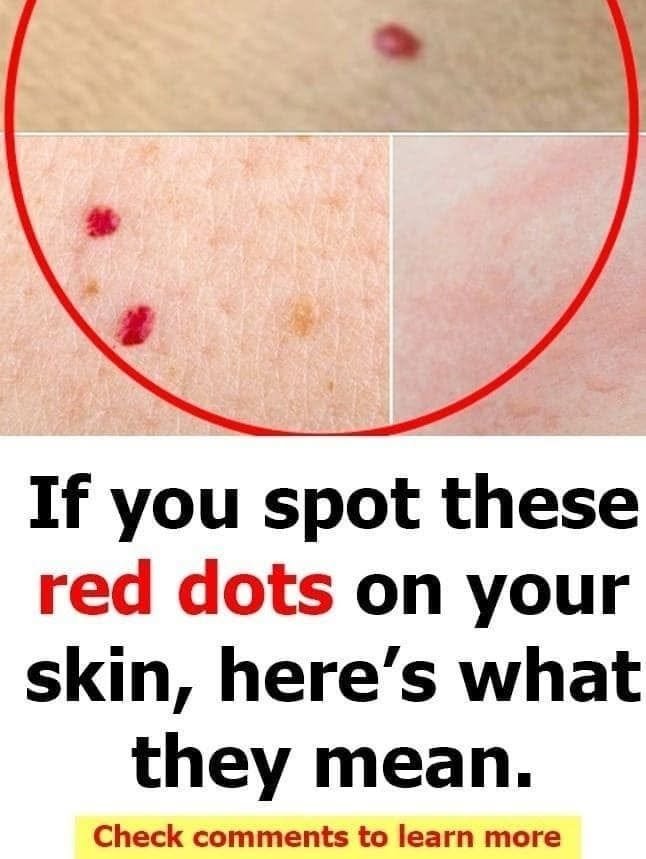
One of the most common causes of small, bright-red spots on the skin is cherry angiomas.
These tiny growths are made up of small blood vessels and are completely benign.
They typically:
- Appear bright red or dark red
- Are smooth and round
- Range from pinpoint size to several millimeters
- Become more common after age 30
- Usually do not cause pain or itching
Most cherry angiomas do not require treatment unless they bleed frequently or become bothersome for cosmetic reasons.
2. Petechiae
Petechiae are tiny red, purple, or brown spots caused by small amounts of bleeding under the skin.
Unlike a typical rash, petechiae usually do not fade when you press on them.
Possible causes include:
- Viral or bacterial infections
- Certain medications
- Physical strain such as severe coughing or vomiting
- Low platelet counts
- Blood-clotting disorders
If petechiae appear suddenly, spread rapidly, or occur with fever, weakness, or unusual bruising, seek prompt medical evaluation.
3. Heat Rash
Heat rash develops when sweat becomes trapped beneath the skin.
It commonly appears during:
- Hot weather
- Intense exercise
- High humidity
Symptoms may include:
- Small red bumps
- Mild itching
- Prickling sensation
Keeping the skin cool and dry usually helps heat rash improve within a few days.
4. Allergic Reactions
Your skin may develop small red spots after exposure to:
- New skincare products
- Soaps or detergents
- Cosmetics
- Foods
- Medications
- Plants or insect bites
Allergic rashes are often itchy and may improve after avoiding the trigger.
Seek emergency care if a rash occurs with difficulty breathing, facial swelling, or severe allergic symptoms.
5. Folliculitis
Folliculitis is inflammation of the hair follicles.
It may occur after:
- Shaving
- Sweating
- Friction from clothing
- Bacterial or fungal infections
The bumps often resemble small pimples and may be tender or itchy.
6. Keratosis Pilaris
Often called “chicken skin,” keratosis pilaris causes tiny rough bumps that can appear red or skin-colored.
It commonly affects the:
- Upper arms
- Thighs
- Buttocks
- Cheeks
Although harmless, moisturizing regularly may improve its appearance.
7. Insect Bites
Mosquitoes, fleas, bed bugs, and other insects can leave small red bumps that itch or swell.
Most insect bites improve within a few days with simple home care.
When Should You See a Doctor?
Many red spots are harmless, but medical evaluation is recommended if they:
- Appear suddenly without an obvious cause
- Spread rapidly
- Do not fade when pressed
- Bleed easily
- Become painful or infected
- Are accompanied by fever, severe fatigue, unexplained bruising, or weight loss
- Persist for several weeks without improvement
Early evaluation can help identify the underlying cause and ensure appropriate treatment if needed.
How to Protect Your Skin
Healthy skin habits may reduce irritation and support overall skin health:
- Wear sunscreen daily.
- Stay hydrated.
- Moisturize regularly.
- Avoid scratching irritated skin.
- Use gentle, fragrance-free skincare products.
- Monitor new or changing skin spots.
Frequently Asked Questions
Are all red dots on the skin dangerous?
No. Many causes, such as cherry angiomas or heat rash, are harmless. However, some conditions require medical evaluation, especially if the spots appear suddenly or are accompanied by other symptoms.
Do cherry angiomas go away on their own?
Cherry angiomas usually remain once they develop. They are harmless and typically do not require treatment unless they bleed or are removed for cosmetic reasons.
How can I tell if red spots are petechiae?
Petechiae are very small spots that generally do not turn white or fade when pressed. Because they can have several causes, they should be evaluated if they appear unexpectedly or occur with other concerning symptoms.
Final Thoughts
Small red dots on the skin can have many different causes, ranging from harmless cherry angiomas to conditions that require medical attention. While most are not serious, it’s important to pay attention to changes in size, color, number, or associated symptoms.
If you’re unsure about any new or changing skin spots, a healthcare professional or dermatologist can provide an accurate diagnosis and recommend appropriate treatment when necessary.
Medical Disclaimer: This article is for informational purposes only and should not be used as a substitute for professional medical advice, diagnosis, or treatment. If you develop concerning skin changes or symptoms, consult a qualified healthcare provider.