Turmeric for Teeth Whitening: Can This Natural Remedy Really Brighten Your Smile?
Turmeric for Teeth Whitening: Can This Natural Remedy Really Brighten Your Smile?
A bright, healthy-looking smile is something many people want. That’s why natural teeth-whitening remedies—from coconut oil pulling to charcoal and turmeric—continue to attract attention online.
Turmeric is especially interesting because it contains curcumin, a plant compound known for its antioxidant and anti-inflammatory properties.
But there’s an important question: Can turmeric actually whiten your teeth?
The short answer is: not in the same way as professional whitening products. Turmeric may have properties that support oral health, but there is limited evidence that applying turmeric directly to the teeth produces significant whitening.
Let’s separate the facts from the viral claims.
🌿 Why Is Turmeric Popular in Oral Care?
Turmeric has been used traditionally for centuries. Its main active compound, curcumin, has been studied for its potential:
- Antioxidant properties
- Anti-inflammatory effects
- Antimicrobial activity
Because inflammation and bacteria can contribute to gum problems and plaque buildup, turmeric has attracted interest as a possible complementary ingredient in oral care.
However, supporting gum health is different from actually bleaching tooth enamel.
🦷 Can Turmeric Whiten Teeth?
There is currently no strong evidence showing that turmeric is an effective tooth-whitening treatment.
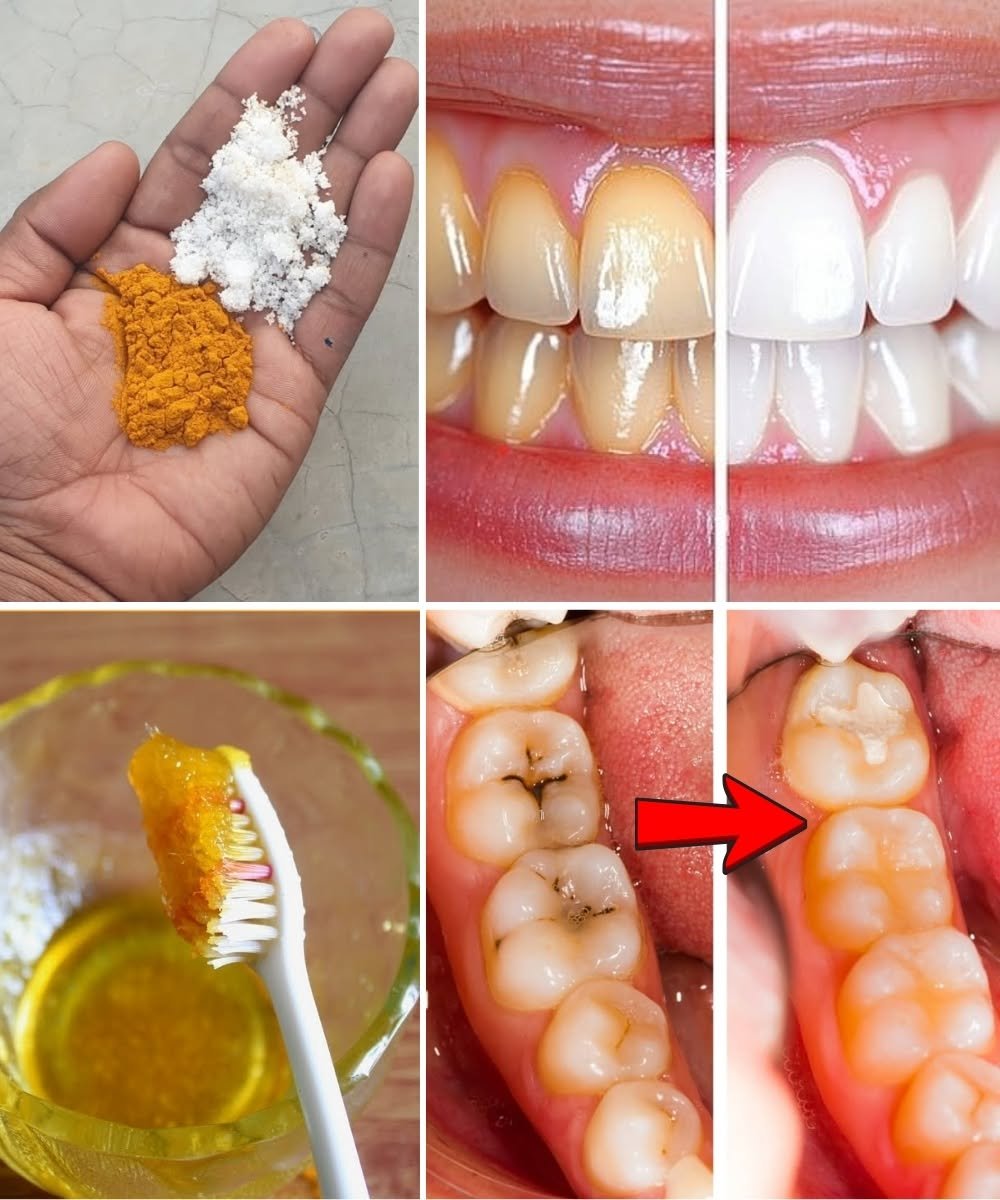
In fact, turmeric itself is intensely yellow, so applying it directly to teeth may temporarily leave yellow residue or discoloration on the teeth or around the mouth.
Some people may notice that their teeth look cleaner after using a homemade mixture, but this does not necessarily mean the turmeric has whitened the enamel.
Surface stains can also vary depending on lighting, brushing, and the condition of the teeth.
What turmeric may help with
Turmeric may potentially support oral health because of its anti-inflammatory and antimicrobial properties.
What it cannot reliably do
Turmeric cannot:
❌ Rebuild damaged enamel
❌ Repair cavities
❌ Remove deep internal tooth discoloration
❌ Replace professional dental treatment
❌ Provide the same whitening effect as proven whitening products
So if a social-media post promises dramatically whiter teeth after one application, it’s best to be skeptical.
🪥 What About Turmeric and Coconut Oil?
One popular homemade combination is turmeric mixed with coconut oil.
The idea is that coconut oil provides a smooth base while turmeric provides plant compounds that may support oral hygiene.
However, this mixture should not be considered a proven whitening treatment.
If you choose to experiment with turmeric, avoid aggressive brushing or scrubbing. Your enamel is the protective outer layer of the tooth, and excessive abrasion can contribute to sensitivity and surface damage.
⚠️ Be Careful With Salt and Baking Soda
Some viral recipes recommend mixing turmeric with salt or baking soda and vigorously scrubbing the teeth.
This is not a good approach.
Salt and baking soda can be abrasive, and aggressive scrubbing may gradually damage enamel or irritate the gums.
Once enamel is significantly worn away, the body cannot simply grow it back.
For that reason, gentle brushing with a soft-bristled toothbrush is much safer than aggressively scrubbing teeth with homemade powders.
🌟 What Actually Helps Keep Teeth Looking Whiter?
If your goal is a naturally brighter smile, proven daily habits matter much more than kitchen remedies.
1. Brush Twice a Day
Use fluoride toothpaste and a soft-bristled toothbrush. Brush gently for about two minutes each time.
2. Floss Daily
Flossing removes food particles and plaque from areas your toothbrush cannot reach.
3. Limit Stain-Causing Foods and Drinks
Coffee, tea, red wine, tobacco, and some strongly colored foods can contribute to surface staining.
You don’t necessarily have to eliminate them completely. Good oral hygiene and rinsing with water afterward can help.
4. Consider Whitening Toothpaste
A reputable whitening toothpaste can help remove some surface stains. Choose one designed to be gentle on enamel.
5. Get Professional Dental Cleanings
Professional cleaning can remove hardened plaque and certain external stains that regular brushing cannot.
6. Ask a Dentist About Whitening
If you want a noticeably whiter smile, dentist-supervised whitening or other evidence-based whitening products are generally more predictable than homemade remedies.
🔍 Don’t Believe Every “Before and After” Photo
Online images can be misleading.
Dramatic differences may result from:
- Different lighting
- Camera settings
- Photo editing
- Professional whitening
- Different angles
- Teeth being professionally cleaned before the “after” photograph
A natural remedy should not be judged solely by viral photographs.
🚨 When Discoloration May Need Dental Attention
Not every dark or yellow area is simply a stain.
If you notice:
- A dark spot that doesn’t disappear with brushing
- Tooth pain or sensitivity
- A visible hole in a tooth
- Bleeding or swollen gums
- A sudden change in tooth color
- Persistent bad breath
it’s better to have the problem evaluated by a dentist.
A cavity, infection, enamel damage, or another dental condition requires appropriate treatment—not a whitening remedy.
🌿 Final Verdict: Is Turmeric Worth Trying?
Turmeric is an interesting natural ingredient with antioxidant and anti-inflammatory properties, but it should not be promoted as a proven teeth-whitening treatment.
If you enjoy natural approaches, the safest strategy is to keep turmeric as part of your normal diet rather than relying on it to transform your smile.
For a brighter smile, focus on the basics:
✅ Brush twice daily with fluoride toothpaste
✅ Floss every day
✅ Use a soft toothbrush
✅ Limit tobacco and frequent staining drinks
✅ Have regular dental checkups
✅ Choose evidence-based whitening methods when needed
Final Thought
A healthy smile is more important than an artificially bright one.
Natural remedies can be interesting, but when it comes to your teeth, gentle care and proven dental practices will always beat viral DIY hacks.
Disclaimer: This article is for general informational purposes and does not replace professional dental advice. If you have tooth pain, cavities, gum problems, or persistent discoloration, consult a qualified dentist.