If you have these 9 symptoms in your feet , it’s a sign that…
If you have these 9 symptoms in your feet , it’s a sign that…
9 Changes in Your Feet That May Be Linked to Liver Problems
We often blame swollen or uncomfortable feet on a long day, standing too much, or uncomfortable shoes. And in many cases, that’s exactly what is happening.
However, some changes involving the feet and lower legs can occur in people with liver disease, particularly when liver damage has become more advanced. Swelling, itching, easy bruising, and changes in skin color can sometimes accompany cirrhosis and other liver conditions.
It’s important to remember that these signs are not specific to liver disease. Foot and ankle swelling, for example, can have many causes. The appearance of one of these symptoms does not mean that you have a liver problem.
Still, knowing what to watch for can help you recognize when it’s worth talking with a healthcare professional.
1. Swollen Feet or Ankles
Persistent swelling in the feet, ankles, or lower legs is known as edema.
Edema can occur with advanced liver disease and cirrhosis. When the liver is significantly damaged, several changes—including portal hypertension and reduced production of proteins such as albumin—can contribute to fluid accumulation in the legs and feet.
But swollen feet are extremely common and can also result from prolonged standing, certain medications, heart or kidney conditions, venous problems, and other causes.
Persistent or unexplained swelling should be evaluated rather than automatically attributed to the liver.
2. Persistent Itchy Skin
Persistent itching, medically called pruritus, can occur with certain liver and bile-duct disorders.
Itching may be particularly noticeable when there is a problem with bile flow. Conditions such as primary biliary cholangitis can cause significant itching, sometimes before other symptoms become obvious.
If the soles of your feet are repeatedly itchy—especially if the itching is widespread or difficult to explain—it’s worth discussing with a healthcare professional.
Itching alone, however, does not prove that a liver problem is present.
3. Easy or Unexplained Bruising
Finding bruises without remembering an injury can have many possible explanations.
With advanced liver disease, however, people may bruise or bleed more easily. Severe liver dysfunction can affect the production of proteins involved in blood clotting, while cirrhosis can also cause changes in blood cells and the spleen.
If you’re suddenly developing frequent or unusually large bruises, don’t assume they’re simply caused by aging. A healthcare professional can help determine the cause.
4. Redness of the Skin
Some people with cirrhosis develop redness of the palms, known as palmar erythema. This is a recognized finding associated with liver disease, although it is not specific to liver problems.
The original claim that unusually red soles are a reliable sign of liver disease is much less established.
So if you notice redness on your feet, consider other possible explanations—including skin irritation, infection, inflammation, or circulation problems—rather than assuming it is caused by the liver.
5. Changes in the Nails
Certain nail changes can occur in people with chronic liver disease. Examples described in medical references include pale nails or changes in the appearance of the nails.
However, ridges, discoloration, or changes in nail shape can have many other causes, including nutritional problems, aging, trauma, fungal infections, and other medical conditions.
Nail changes by themselves are therefore not enough to diagnose liver disease.
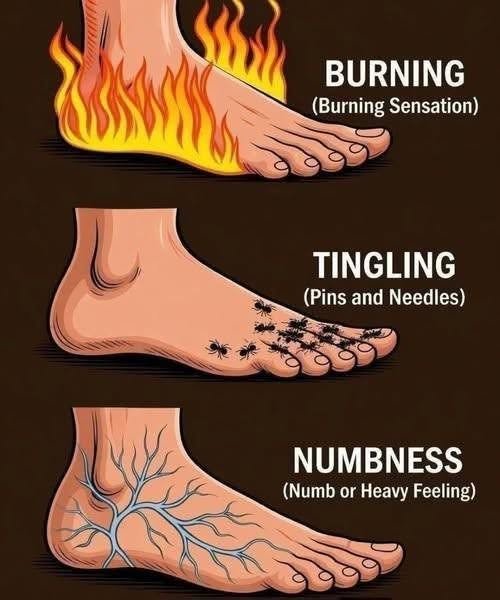
6. Burning or Uncomfortable Feet
A burning sensation in the feet is sometimes associated with peripheral neuropathy, a condition involving nerve damage.
However, peripheral neuropathy has many possible causes, including diabetes, vitamin deficiencies, alcohol use, certain medications, and other neurological or metabolic conditions.
While neurological complications can occur with severe liver disease, burning feet should not automatically be considered a sign of liver dysfunction.
If burning, tingling, numbness, or pain persists, a healthcare professional can help identify the underlying cause.
7. Dry or Cracked Heels
Dry skin and cracked heels are extremely common.
They can result from dry weather, frequent bathing, footwear, skin conditions, dehydration, or simply the natural loss of skin moisture.
Although people with liver disease can experience various skin symptoms, dry or cracked heels are not considered a specific warning sign of liver disease.
Treat persistent cracking as a skin concern and seek medical advice if it is severe, painful, infected, or doesn’t improve with appropriate care.
8. Yellowing of the Skin or Nails
One of the more recognizable signs associated with liver and bile-flow problems is jaundice, which causes the skin or the whites of the eyes to become yellow.
Jaundice occurs when bilirubin builds up in the body. A diseased liver may have difficulty processing and removing bilirubin effectively.
A yellow appearance can sometimes be easier to notice in the whites of the eyes than in the skin.
If you develop unexplained yellowing—especially together with dark urine, abdominal swelling, severe itching, or other symptoms—seek medical evaluation.
9. Swelling and Visible Veins
Advanced liver disease can cause portal hypertension, increased pressure in the veins that carry blood through the liver.
Portal hypertension can contribute to fluid accumulation in the legs and abdomen and can cause other changes in the body’s circulation.
However, visible veins on the tops of the feet are common and are not, by themselves, evidence of portal hypertension.
Prominent veins can be related to genetics, low body fat, age, exercise, temperature, or ordinary changes in circulation.
Other Liver-Related Warning Signs to Know
The feet aren’t the only place where symptoms may appear.
Depending on the underlying condition and how advanced it is, liver disease may also cause:
- Persistent fatigue or weakness
- Loss of appetite
- Unexplained weight loss
- Nausea
- Itchy skin
- Easy bruising or bleeding
- Swelling of the legs, ankles, or feet
- Abdominal swelling from fluid accumulation
- Yellowing of the skin or eyes
- Dark urine
- Confusion or difficulty thinking
Importantly, early liver disease may cause few or no symptoms. Symptoms can become more noticeable only after significant liver damage has occurred.
When Should You See a Doctor?
Don’t try to diagnose liver disease by looking at your feet alone.
If you have persistent or unexplained swelling, itching, unusual bruising, jaundice, abdominal swelling, or other concerning symptoms, speak with a healthcare professional.
Doctors can evaluate your medical history, perform a physical examination, and order blood tests or imaging studies when appropriate. Liver function and damage can be assessed using several different tests rather than a single symptom.
The Bottom Line
Your feet can sometimes show changes that occur alongside liver disease, particularly swelling, itching, or other changes associated with advanced liver problems. But many common foot symptoms have nothing to do with the liver.
The most important takeaway is not to panic when you notice a change—and not to ignore persistent symptoms either.
If something seems unusual, especially when several symptoms occur together, a proper medical evaluation is far more useful than trying to identify liver disease from a single sign.
Your feet may provide clues, but only appropriate medical evaluation can determine whether a liver problem is actually present.