Red Onion for Enlarged Prostate Pressure: The Simple Meal Habit Men Over 50 Keep Overlooking
Frequent nighttime trips to the bathroom can wear a man down fast. So can the feeling that your bladder never fully empties, or the pressure that makes every bathroom visit stressful. When these symptoms start to take over daily life, it is easy to search for a fast fix and believe any bold claim that sounds natural and simple. The truth is, prostate-related urinary symptoms deserve real attention, and the right food habits may help support comfort over time. There is one everyday kitchen food that has earned attention for its plant compounds, and the way it is used matters more than most people realize. The surprising part comes later.
Why enlarged prostate symptoms feel so disruptive
As men get older, the prostate can enlarge and begin pressing on the urethra, the tube that carries urine out of the body. That pressure can lead to a weak stream, hesitancy, dribbling, or waking up multiple times at night. It is not just inconvenient; it can affect sleep, confidence, and quality of life.
Many people assume these symptoms are caused by “bad water,” stress, or simply aging. In reality, several factors can contribute, including hormonal changes, inflammation, and family history. Research also shows that lifestyle patterns, including diet, body weight, and physical activity, may influence urinary comfort and overall prostate health.
Important reality check: no food should be expected to make enlarged prostate symptoms disappear in minutes. But some foods contain compounds that may support healthy inflammation balance and general urinary wellness when used consistently.
The food blend people keep talking about
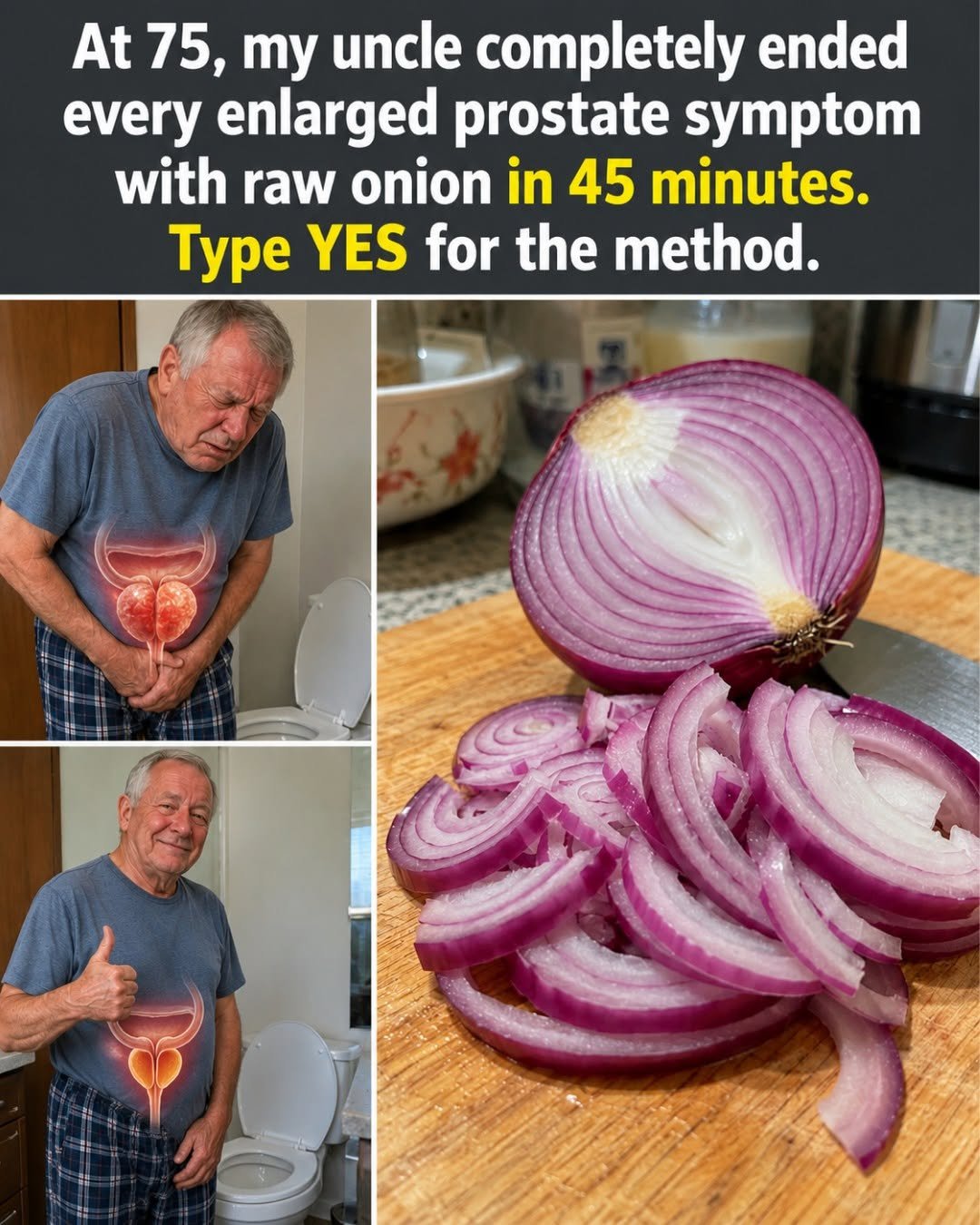
Here is the part that gets attention: a simple kitchen blend built around a thinly sliced red bulb vegetable, with optional additions of olive oil and a small squeeze of citrus juice. This combination is popular because it is easy, inexpensive, and fits into an ordinary meal without sounding like a “medicine recipe.”
Why does this matter? Because the goal is not a miracle. The goal is to support the body with a food pattern that may be easier to maintain than complicated supplements or extreme diets. And that is where the real value begins.
What each ingredient may contribute
Red bulb vegetable: This is the main ingredient. It contains fiber and natural plant compounds, including quercetin, which has been studied for its antioxidant activity. Antioxidants help protect cells from oxidative stress, a process linked with many health concerns.
Olive oil: This optional addition can improve taste and help the meal feel more satisfying. It also fits well into a heart-friendly eating pattern, which matters because prostate health and cardiovascular health often overlap in older adults.
Citrus juice: A small amount can brighten the flavor and make the dish easier to eat. It does not “treat” prostate issues, but it may help some people stick with the habit consistently.
Here is the key point: the benefit comes from the pattern, not a dramatic one-time effect. That is why claims about instant relief should be treated carefully.
Why this method gets attention
Studies on plant-rich diets suggest that foods high in antioxidants and fiber may support healthy aging and overall urinary function. Quercetin, in particular, has been studied for its potential role in reducing inflammation-related pathways. That does not mean it is a cure, and it does not mean everyone will feel a difference. But it does explain why this food keeps appearing in health conversations.
Another reason this method is popular is practical: it is simple enough to use regularly. When a habit is easy, people are more likely to keep doing it. And consistency matters far more than dramatic promises.
Simple recipe and how to use it
Ingredients:
- Half of a small red bulb vegetable, thinly sliced
- 1 teaspoon olive oil, optional
- A small squeeze of citrus juice, optional
Preparation: Slice the vegetable thinly so it is easier to chew and digest. If desired, toss it lightly with olive oil and a small amount of citrus juice. Serve it fresh alongside a normal meal.
Timing: Many people prefer it with lunch or dinner because it is easier on the stomach when paired with other foods. A small portion is enough to start. There is no need to overdo it.
How to use it: Add it to salads, grain bowls, sandwiches, or cooked meals if raw texture feels too strong. If raw causes stomach discomfort, use a smaller amount or choose a gentler preparation method.
This is where people often misunderstand the method: it is a supportive food habit, not a rapid symptom fix.
What benefits are realistic in context
Used as part of a balanced diet, this food may help support:
- Overall antioxidant intake
- Dietary fiber intake
- Heart-friendly eating patterns
- General wellness in men over 50
- A more consistent, nutrient-rich meal routine
Those are realistic benefits. What is not realistic is expecting it to instantly restore normal urination or shrink an enlarged prostate in less than an hour. If symptoms are bothersome, ongoing, or worsening, medical evaluation is important.
Common mistakes people make
1. Expecting instant results. Food support works gradually, not like a switch.
2. Eating too much at once. A large amount may cause digestive discomfort and make the habit harder to keep.
3. Ignoring other symptoms. Blood in the urine, fever, severe pain, or inability to urinate are not “wait and see” issues.
4. Treating food as a replacement for care. Nutrition can support health, but it does not replace proper diagnosis or treatment.
5. Forgetting the bigger picture. Sleep, hydration, movement, and regular checkups all matter too.
Who this approach may fit best
This simple food habit may be most useful for men who want to improve meal quality without adding complicated routines. It may also suit people who already enjoy savory, fresh foods and want a practical way to increase plant intake.
It is less suitable for anyone with strong digestive sensitivity to raw foods. And it is not appropriate as a stand-alone approach for urinary blockage, severe pain, or sudden changes in urination.
If prostate symptoms are mild, this can be one small part of a healthier daily pattern. If symptoms are significant, the smarter move is to combine lifestyle changes with professional guidance.
FAQ
Does this food cure enlarged prostate symptoms?
No. It may support a healthy diet, but it does not cure prostate enlargement or guarantee symptom relief.
How often can it be eaten?
It can be included in meals regularly in moderate amounts, as long as it agrees with your digestion and overall diet.
When should a doctor be contacted?
Seek medical help if urination becomes difficult or impossible, if pain is severe, or if there is blood in the urine or other urgent symptoms.
Conclusion
The idea behind this simple meal habit is not magic. It is about using a familiar kitchen food with plant compounds, fiber, and a practical preparation style that can fit into real life. That makes it more sustainable than extreme claims and far more honest than promises of instant relief. For men dealing with enlarged prostate pressure, the best results usually come from steady habits, not viral shortcuts.
Keep the focus on consistency, not hype. Pair smart eating with proper medical care, and you give your body the best chance to stay comfortable over time.
Disclaimer: This article is for educational purposes only and is not a substitute for professional medical advice, diagnosis, or treatment. If urinary symptoms are severe, sudden, or worsening, please consult a qualified healthcare professional promptly.