Papaya Leaves for Hair and Scalp Care: What They May Do—and What They Cannot Do
Papaya Leaves for Hair and Scalp Care: What They May Do—and What They Cannot Do
This is why home remedies such as papaya leaves attract so much attention. They are inexpensive, natural, and often described online as a way to “reset the scalp” or stop hair loss quickly.
The more realistic view is this: papaya leaves may contain plant compounds and enzymes that can be useful in scalp cleansing, but there is no good evidence that they can stop hair loss rapidly or regrow lost hair on their own.
A healthier scalp can support better hair care, but scalp cleanliness and true hair loss are not the same problem.
Why the scalp can start feeling uncomfortable
The scalp is skin, and like other skin, it can become irritated.
Common causes include:
- excess oil
- sweat
- dandruff
- product buildup
- tight hairstyles
- harsh shampoos
- frequent heat styling
- scratching
- skin conditions such as seborrheic dermatitis
When the scalp is irritated, you may notice:
- itching
- flaking
- tenderness
- oiliness
- a heavy feeling at the roots
- increased breakage
These problems can make hair look thinner, even if the follicles themselves are still functioning normally.
What papaya leaves actually contain
Papaya leaves contain several naturally occurring compounds, including:
- papain and related enzymes
- polyphenols
- flavonoids
- other plant antioxidants
These compounds have been studied mostly in laboratory settings for antimicrobial, antioxidant, and anti-inflammatory properties.
That sounds promising, but it does not mean papaya leaves are a proven hair-growth treatment.
The research on direct use for human scalp care is still limited.
Can papaya leaves stop hair loss?
There is no reliable clinical evidence showing that papaya leaves can stop androgenetic hair loss, female-pattern thinning, or other common causes of hair loss.
Hair loss can be caused by many different factors, including:
- genetics
- hormonal changes
- thyroid problems
- iron deficiency
- stress
- illness
- rapid weight loss
- some medications
- scalp inflammation
- autoimmune conditions
A scalp rinse cannot correct all of these.
That is why it is important not to confuse a cleaner scalp with actual reversal of hair loss.
Where papaya leaves may be more useful
The more reasonable role for papaya leaves is as a gentle scalp-care ingredient.
Because they contain natural enzymes and plant compounds, they may help some people feel that the scalp is cleaner or less greasy.
This may be especially noticeable if the main issue is buildup from:
- styling products
- heavy oils
- sweat
- infrequent washing
But even here, the effect is mostly about cleansing and comfort, not follicle regeneration.
Why hair can look better when the scalp is cleaner
Hair at the roots can become coated with oil, dead skin, and styling residue.
When that buildup is reduced, hair may:
- feel lighter
- look less flat
- appear shinier
- separate more easily
- feel cleaner for longer
This can create the impression of “thicker” hair.
But the number of hair follicles has not suddenly increased.
The improvement is mostly cosmetic and related to the condition of the scalp and hair shaft.
Women and widening part lines
Women often notice thinning first along the part line or crown.
This can happen for several reasons, including:
- female-pattern hair loss
- hormonal changes
- menopause
- iron deficiency
- thyroid problems
- stress-related shedding
- traction from tight hairstyles
If the part is gradually widening, a scalp rinse should not be the only strategy.
Early evaluation can be helpful because some causes of hair loss respond better when addressed sooner.
Men and thinning at the crown or temples
Men commonly notice hair loss around:
- the temples
- the crown
- the frontal hairline
This is often related to androgenetic alopecia.
Papaya leaves do not block the hormonal pathway responsible for this type of hair loss in a proven way.
They may make the scalp feel cleaner, but they should not be presented as a substitute for evidence-based treatments.
Can papaya leaves help with dandruff or itching?
Possibly, but evidence is limited.
Some people may find that a gentle botanical rinse reduces surface oil or buildup.
However, persistent dandruff or itching may be caused by conditions such as:
- seborrheic dermatitis
- eczema
- psoriasis
- fungal overgrowth
- contact dermatitis
These conditions often need targeted treatment.
If the scalp is very red, painful, crusted, or persistently itchy, medical evaluation is more useful than repeated home remedies.
A safer way to try a papaya leaf rinse
If you want to experiment with papaya leaves, keep the preparation mild.
Simple rinse
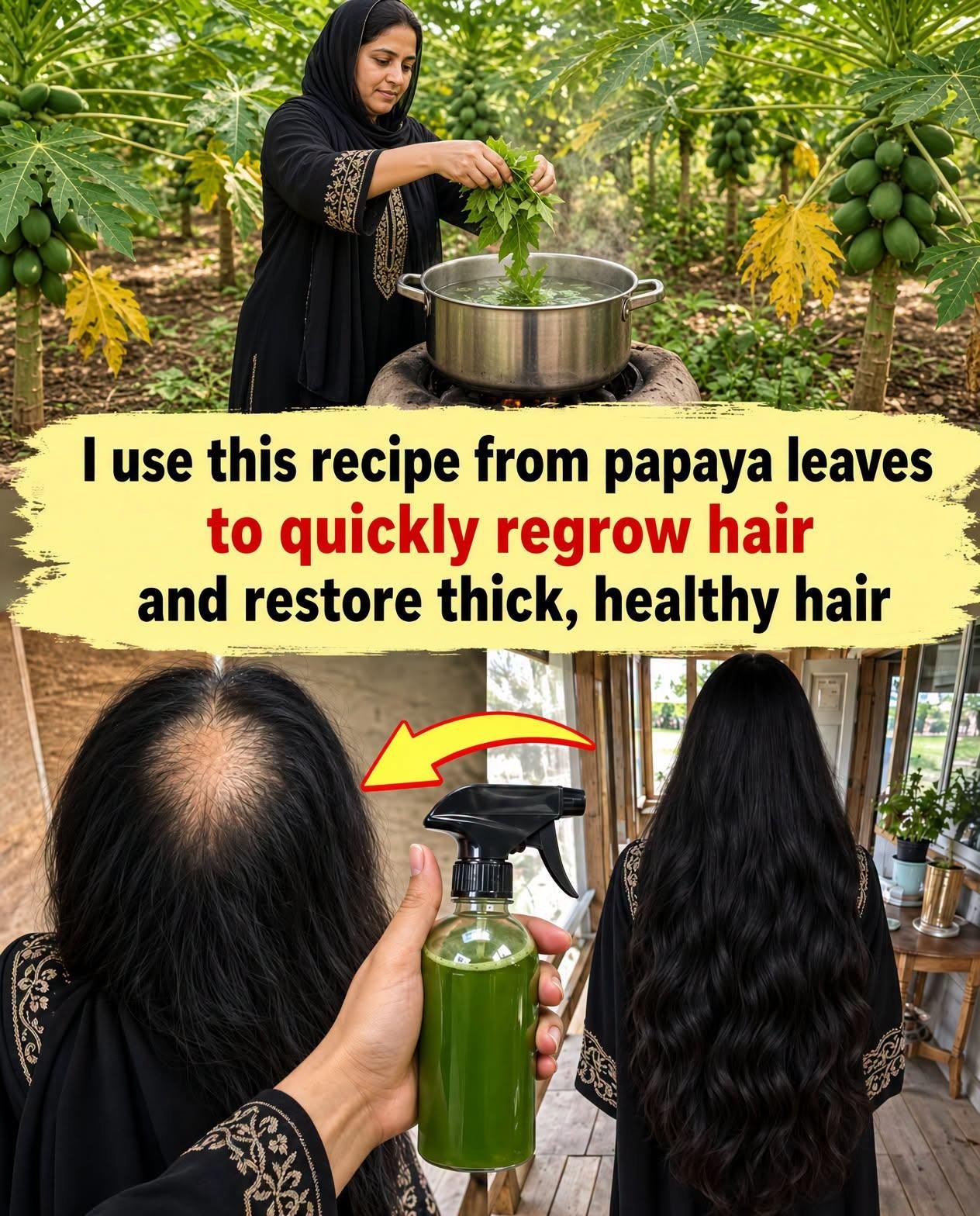
- Wash fresh papaya leaves thoroughly.
- Simmer a small amount in clean water for several minutes.
- Allow the liquid to cool completely.
- Strain it carefully.
- Apply a small amount to the scalp after washing.
- Leave it on briefly, then rinse with clean water.
Do not make the solution extremely concentrated.
And do not assume that stronger means better.
Always patch test first
Plant ingredients can irritate the skin.
Before applying a homemade rinse over the entire scalp, test a small amount behind the ear or on a small area of skin.
Stop using it if you develop:
- burning
- redness
- swelling
- significant itching
- rash
A sensitive scalp may react even to natural ingredients.
Avoid harsh combinations
One of the biggest problems with home remedies is combining too many strong ingredients.
Avoid mixing papaya leaves with:
- undiluted alcohol
- lemon juice
- baking soda
- concentrated essential oils
- strong vinegar solutions
These can disrupt the scalp barrier and make irritation worse.
The scalp should be treated like delicate skin, not like a surface that needs to be aggressively scrubbed.
Why scalp irritation can increase shedding
Inflamed skin can make hair care more difficult.
Constant itching and scratching can damage hair shafts and contribute to breakage.
In some scalp conditions, inflammation can also affect the environment around follicles.
This is one reason soothing the scalp can be useful.
But reducing irritation is still different from treating the underlying cause of hair loss.
What actually supports healthy hair growth
Hair growth depends on a combination of factors.
Important foundations include:
- adequate protein
- iron
- zinc
- vitamin D
- essential fatty acids
- enough calories
- good sleep
- stress management
- gentle hair care
Protein sources include:
- eggs
- fish
- yogurt
- beans
- lentils
- tofu
- poultry
Iron-rich foods include:
- lean meat
- legumes
- spinach
- fortified foods
If hair shedding is significant, laboratory testing may sometimes be appropriate.
When hair loss deserves medical attention
Consider speaking with a healthcare professional if you notice:
- sudden heavy shedding
- bald patches
- widening part line
- receding hairline
- scalp pain
- scarring
- persistent redness
- severe dandruff
- hair loss after illness or major weight loss
- thinning that continues for several months
These clues can help identify whether the problem is temporary or requires specific treatment.
A simple scalp-care routine
For many people, the basics are more helpful than complicated remedies.
Try:
- washing regularly with a gentle shampoo
- avoiding very hot water
- limiting tight hairstyles
- reducing repeated heat styling
- avoiding excessive scratching
- using conditioner on the hair lengths
- keeping the scalp clean without over-washing
If you use papaya leaf rinse, think of it as an optional addition, not the foundation of the routine.
What results are realistic?
A realistic benefit might be:
- less greasy buildup
- a cleaner scalp feel
- less heaviness at the roots
- softer hair
- reduced itch in some people
What is not realistic:
- regrowing a receded hairline in days
- stopping genetic hair loss immediately
- reversing bald spots
- “reactivating” dormant follicles overnight
Setting realistic expectations helps prevent disappointment and delays in proper treatment.
Final thoughts
Papaya leaves may be an interesting natural ingredient for scalp cleansing, but they are not a proven cure for hair loss.
Their most reasonable role is as part of a gentle scalp-care routine, especially for people dealing with oiliness or product buildup.
For true hair thinning, the more important question is why the hair is being lost.
Once the cause is understood, the right combination of nutrition, scalp care, and evidence-based treatment becomes much clearer.
Frequently Asked Questions
Can papaya leaves make hair grow faster?
There is not enough human evidence to confirm this.
Can papaya leaves stop hair shedding?
Not reliably. Hair shedding has many causes, and a scalp rinse cannot address all of them.
Are papaya leaves safe for the scalp?
They may be tolerated by some people, but irritation is possible. Patch testing is recommended.
Can I use papaya leaves every day?
Daily use is usually unnecessary. Frequent use may irritate sensitive skin.
What is more important than a herbal rinse?
Identifying the cause of hair loss, maintaining good nutrition, using gentle hair care, and seeking medical evaluation when thinning is persistent.
Disclaimer: This article is for general educational purposes only and does not replace professional medical or dermatological advice. Persistent or sudden hair loss, scalp pain, patchy baldness, or significant inflammation should be evaluated by a qualified healthcare professional.