
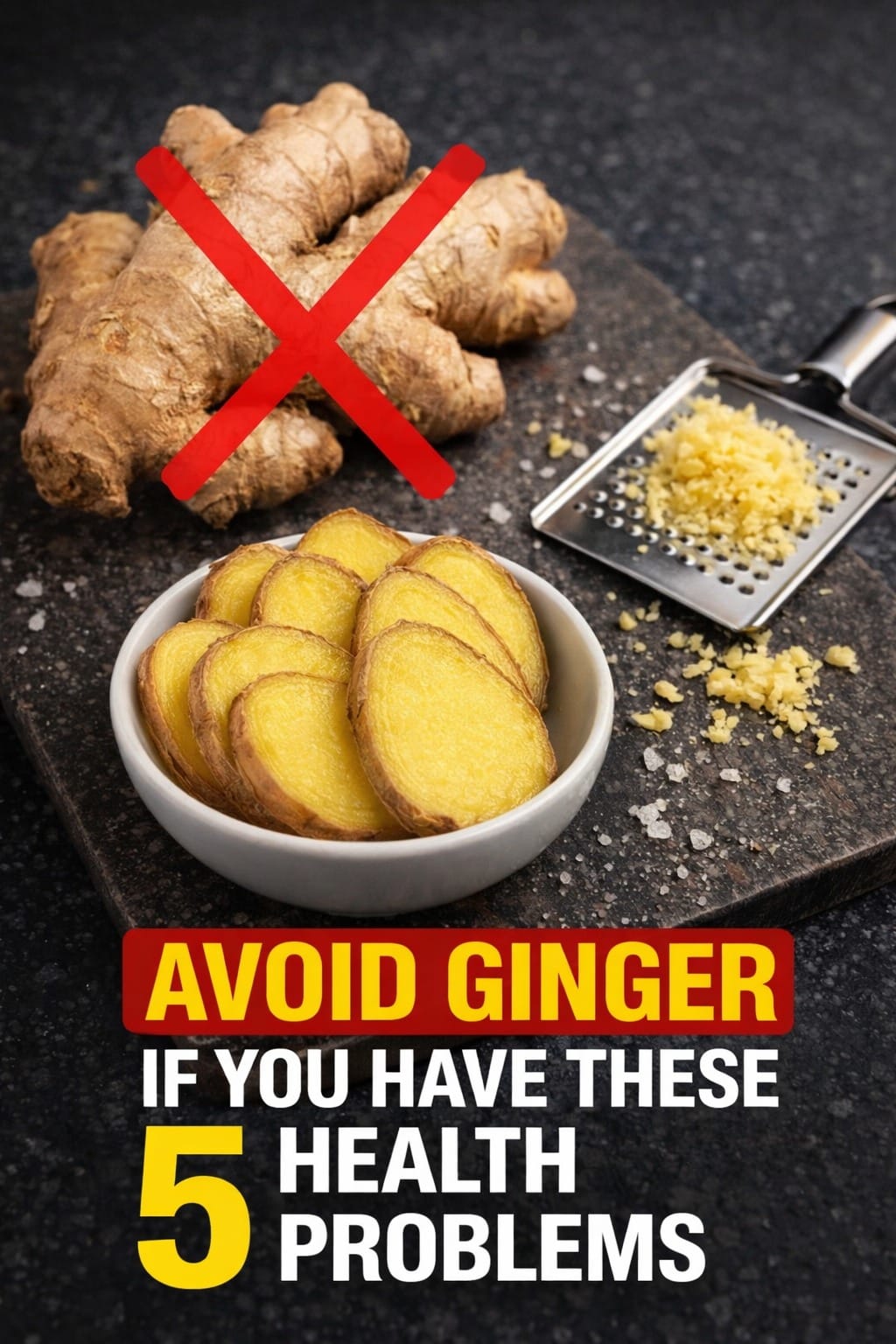
Ginger is healthy for most people — but not everyone. In certain conditions it can thin your blood, drop your sugar, or worsen symptoms you’d never expect. The 5 cases where you should be careful are just below…👇1s
That teaser is partly true, but it leaves out the important context: ginger is safe for most healthy people in normal food amounts. The main concerns are usually with high-dose ginger supplements, shots, extracts, or daily medicinal use.
The 5 situations where extra caution makes sense are:
- If you take blood thinners
Ginger may slow blood clotting and could increase bleeding risk with medicines like warfarin, apixaban, rivaroxaban, clopidogrel, or even high-dose aspirin. (Drugs.com) - If you have diabetes or take blood sugar medication
Ginger can lower blood glucose, so combining it with insulin or diabetes drugs may increase the risk of hypoglycemia. (Drugs.com) - Before surgery or dental procedures
Many doctors recommend stopping ginger supplements 1–2 weeks before surgery because of possible bleeding effects. (WebMD) - If you have gallstones or gallbladder disease
Ginger may increase bile flow, which can aggravate symptoms in some people. (Memorial Sloan Kettering Cancer Center) - If you take blood pressure or certain heart medications
Ginger may lower blood pressure and, in high amounts, could amplify the effect of antihypertensive drugs. (WebMD)
A few important clarifications:
- Cooking with ginger, ginger tea, or occasional use is usually fine for most people.
- The higher risks are mainly linked to concentrated supplements or very large daily doses.
- Common side effects from too much ginger are heartburn, stomach upset, gas, or diarrhea. (Drugs.com)