
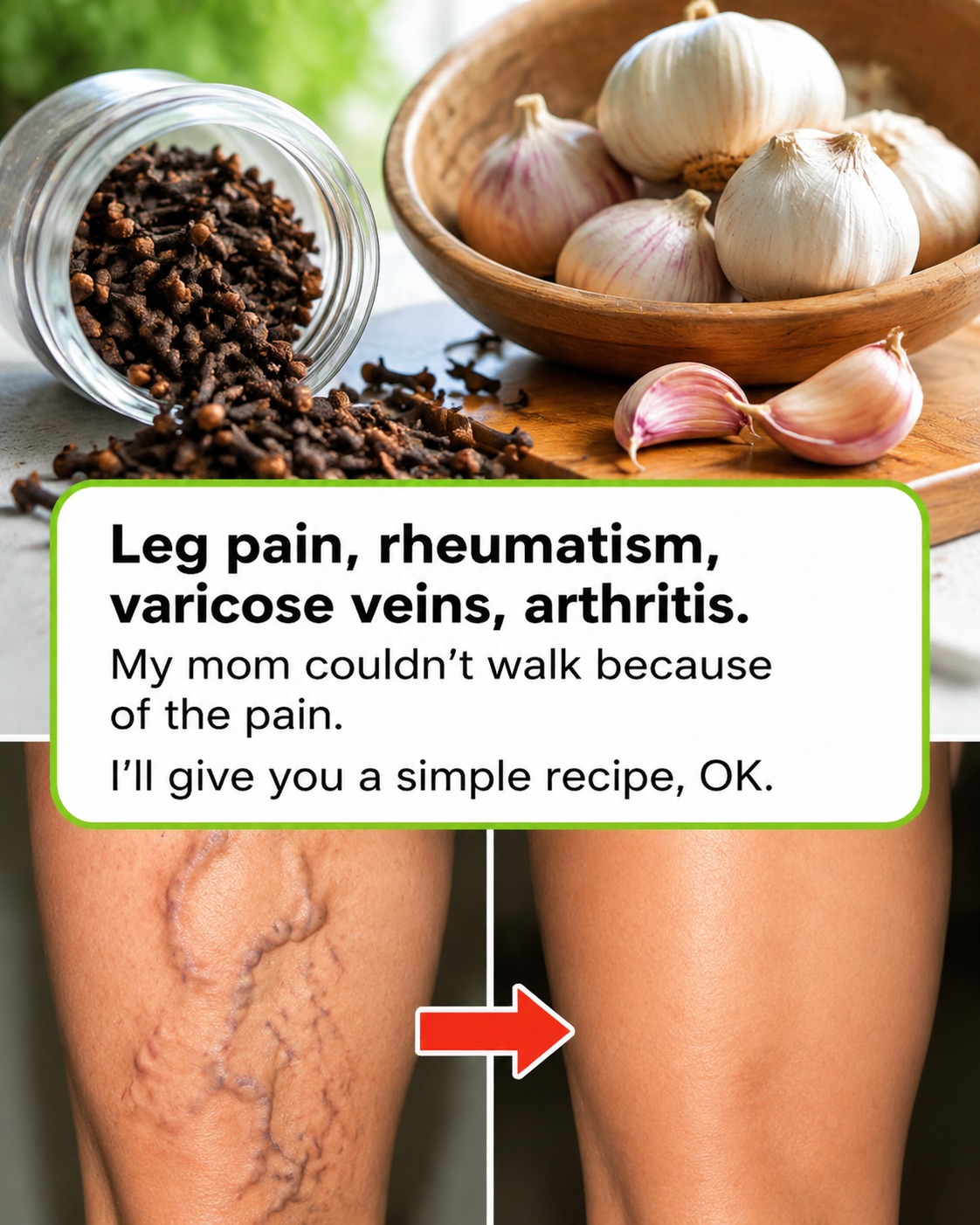
Garlic and clove oil hits the same two problems that keep people trapped in a miserable loop: the grinding ache of arthritis and the heavy, swollen drag of varicose veins. One makes every step feel like sandpaper inside the joints. The other turns your legs into lead pipes by evening.
That combination is brutal because it doesn’t just hurt while you move. It steals your sleep, ruins your patience, and makes even standing at the sink feel like a chore with a punishment attached.
Here’s what the system never bothers to say out loud: your legs are not failing because they’re “old.” They’re fighting a traffic jam of stagnant circulation, inflamed tissue, and tight, irritated vessels that keep screaming for relief.
The real shock is that garlic and clove oil doesn’t act like a random kitchen experiment. It behaves like a pressure-release valve for tissue that’s been under siege.
Why the pain feels worse at night
By late afternoon, the swelling has already started to build. Your ankles look thicker, your calves feel stuffed, and the joints in your knees or hands have that hot, stubborn stiffness that makes you move like you’re sixty pounds heavier than you are.
Then night comes, and the body gets loud. The throbbing doesn’t fade with rest; it sharpens, as if every irritated nerve has finally been given a microphone.
Think of inflamed joints and varicose veins like a kinked garden hose wrapped in rust. Water still tries to move through, but the pressure backs up, the hose strains, and the whole line feels angry.
Garlic brings allicin, a sharp, sulfur-rich compound that acts like a molecular broom. Clove brings eugenol, a fire-smothering compound that goes after the raw, irritated sensation that makes movement feel punishing.
That’s why this pairing has survived for generations. Not because it’s trendy. Because it attacks two different pieces of the same disaster: sluggish flow and irritated tissue.
Why the legs feel lighter first
The first thing people notice is not some dramatic movie-scene miracle. It’s the small, almost suspicious shift where the legs stop feeling quite so packed with cement.
That heaviness after a day on your feet can make the stairs feel steeper and the couch feel farther away. When circulation improves and tissue irritation settles down, the body stops sending that constant “I’m under strain” message.
Garlic and clove oil works like clearing sludge from a drain line. The pipes don’t become brand new, but the backup eases, the pressure drops, and the whole system stops groaning every time you put weight on it.
The supplement industry would go bankrupt if people knew what was sitting in the produce aisle. No glossy bottle. No celebrity campaign. Just two blunt, pungent ingredients that don’t care about branding.
That’s why nobody built a Super Bowl ad around a garlic clove. There’s no logo to sell, only a body that finally starts getting the raw biological fuel it’s been missing.
Why stiff joints stop dictating the morning
Arthritis has a cruel way of announcing itself before the day even starts. You swing your legs out of bed and the knees complain. Your fingers feel thick. Your first few steps sound like old hinges dragged across concrete.
That’s what happens when fire-smothering compounds are absent and the tissue stays irritated. The joint lining remains cranky, the surrounding muscles tighten defensively, and the body acts like every movement is a threat.
Garlic and clove oil changes the atmosphere around those joints. It doesn’t just coat the skin; it nudges the local environment toward less irritation and more comfortable motion.
Think of a door that’s been squealing for months because the hinge is dry and gritty. You can slam it harder, or you can oil the hinge and let the whole thing move without that ugly metal-on-metal protest.
After a few days of consistency, the shift shows up in how the morning begins. The body doesn’t lurch into motion so violently. The first walk to the kitchen feels less like a negotiation with pain.
Why women notice the swelling differently
For many women, varicose veins are not just a cosmetic annoyance. They’re a daily reminder that the legs feel puffy, tired, and strangely overworked before the day is even over.
By late afternoon, shoes can feel tighter, calves can feel tight as drumskins, and the skin over those ropey veins can seem irritated or stretched thin. That’s not “just aging.” That is circulation falling behind and tissue paying the bill.
When garlic and clove oil is massaged in, it supports a hot river of fresh blood surging into dormant tissue instead of letting everything pool and stagnate. That matters because dead-ended circulation is what turns legs into aching columns.
And that’s why the ugly truth gets buried: the cheapest fix gets the least airtime.
Picture coming home, kicking off your shoes, and realizing the usual end-of-day ballooning isn’t shouting as loudly. The legs still worked all day, but they don’t feel like they’ve been stuffed full of wet sand.
Why men feel the shift in a different place
Men often ignore the first warning signs until the body forces the issue. A knee that winces on the stairs. A calf that feels tight after standing. A joint that locks up after sitting too long in the truck or at a desk.
Garlic and clove oil hits that pattern by reducing the internal flame and helping circulation move where it has been sluggish. The result is not flashy. It is functional. It’s the difference between lumbering through the day and moving like your body is actually cooperating.
Think of a machine running with dirty gears. It still moves, but every turn costs extra effort and creates more heat. Clear the grit, and the same machine suddenly sounds less angry and runs with less drag.
That’s the part nobody told you because it doesn’t sell well: the body often wants simple support, not more chemical complexity. It wants the blockage eased, the heat lowered, and the flow restored.
The part that wrecks the whole process
One common habit neutralizes the entire ritual before it has a chance to do anything: slapping the oil on cold skin and rushing through the massage like you’re trying to finish a chore.
When the tissue is cold and the application is weak, the ingredients sit on the surface like grease on a plate. Warm the hands first, work the oil in with real pressure, and let the skin actually receive it.
Pair that with a warm towel, and the whole experience shifts from “I tried something” to “the body is finally responding.”
The next piece is even more important: the mineral that helps this process feel less like a bandage and more like a reset.
This article is for informational purposes only and does not replace professional medical advice. Please consult your healthcare provider for personalized guidance.