
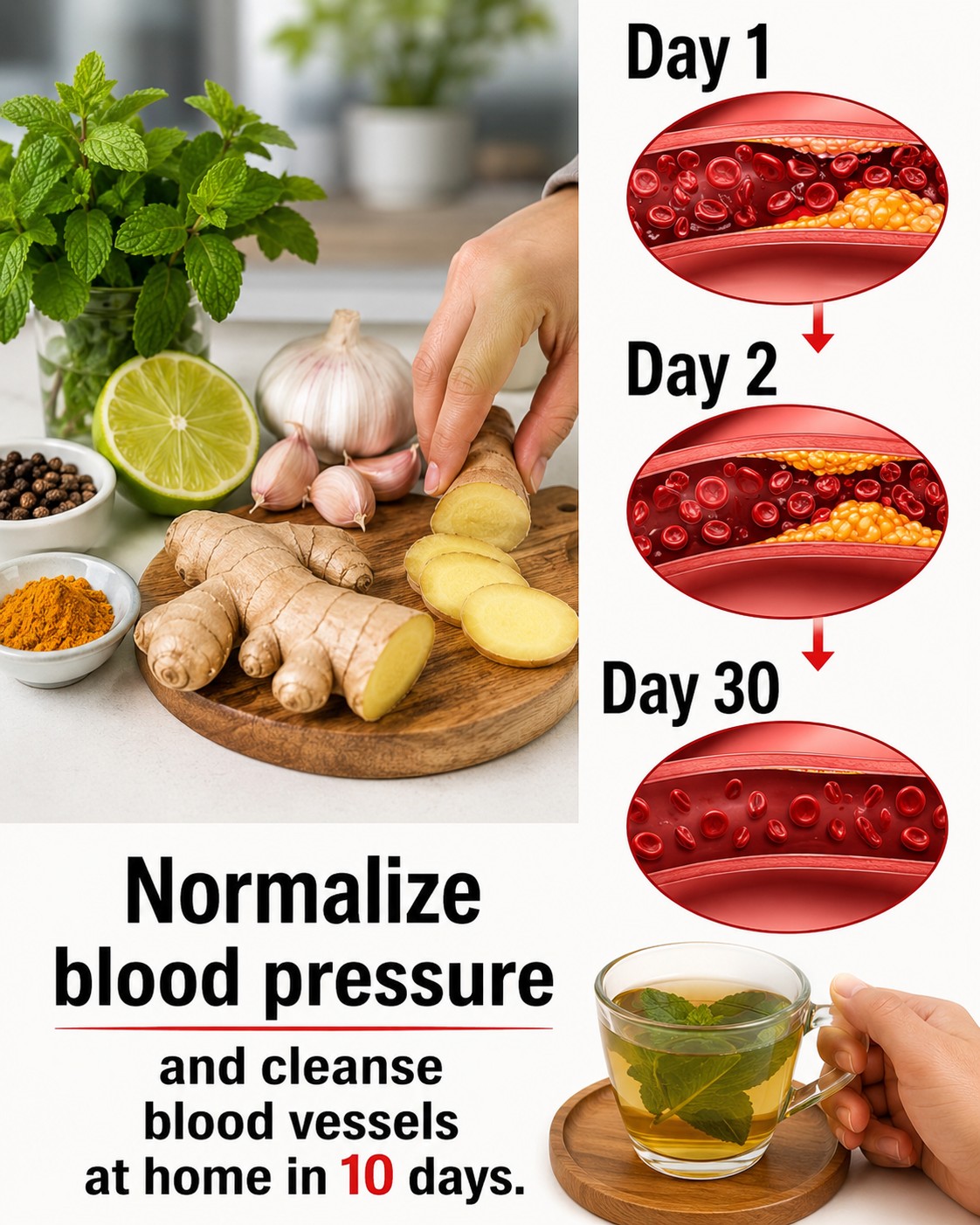
Garlic, ginger, turmeric, and leafy greens hit the bloodstream like a cleanup crew with a grudge. The post promises to unclog arteries, normalize blood pressure, and cleanse blood vessels at home — and that’s exactly the lane this belongs in.
What’s really being sold here isn’t a salad. It’s a pressure release inside the pipes that carry every ounce of oxygen to your brain, your heart, and the tired muscles dragging you through the day.
When those vessels stiffen, the body starts acting like a house with half-crushed plumbing. The faucet still runs, but the flow is weak, noisy, and never quite enough.
That’s when the warning signs creep in. The head feels tight by afternoon. The chest feels heavy on a climb. The legs feel like they’re hauling sandbags instead of blood.
And the ugly part? Most people blame age, stress, or “just getting older,” while the real problem keeps hardening in the background.
The Bloodstream Cleanup Nobody Built a Commercial Around
The real engine here is what you could call the Vascular Flush Protocol. It’s the shift that happens when the body gets raw biological fuel that helps relax constricted vessels, strip away oxidative grime, and push fresher circulation through tissue that’s been starved for too long.
Think of your arteries like a garden hose that’s been kinked, lined with sticky residue, and left baking in the sun. Water still moves through it, but not cleanly, not freely, and not with the force it used to have.
That’s what high-pressure blood flow feels like inside the body. The system is working harder just to deliver the same result, and every beat has to fight through resistance.
Garlic enters like a wrench to the clamp. Its compounds push back against the buildup that makes vessels feel tight and sluggish, while turmeric brings fire-smothering compounds that help quiet the internal irritation that keeps the lining angry.
Ginger adds another layer. It wakes up circulation like opening a window in a stale room, sending a hot river of fresh blood toward tissue that’s been running on fumes.
The first thing people notice is not some dramatic movie-scene miracle. It’s the smaller stuff: less of that heavy, pinned-down feeling in the body, less of the late-day drag, less of the sense that every task costs too much effort.
And nobody told you because nobody can slap a logo on a clove of garlic and charge you $79 a month.
Why the Pressure Shows Up in the Head, Chest, and Legs
When circulation gets sticky, the body doesn’t complain in one neat place. It leaks the problem everywhere.
In the head, it can feel like a vise slowly tightening behind the eyes. In the chest, it feels like the engine is idling too high just to keep up. In the legs, it shows up as that dead-weight ache after standing too long or walking too far.
Leafy greens change that picture by flooding tired, shriveled cells with vital moisture and raw biological fuel that helps vessels relax. They work like opening a series of narrowed side streets so traffic can finally move instead of bottlenecking at every corner.
Berries bring in sludge-clearing compounds that help sweep up the rust-like damage building on vessel walls. That matters because damaged vessels behave like old copper pipes coated in grime — the water still runs, but the path is rough and the pressure goes up.
Now picture breakfast on a morning when your body isn’t fighting itself. You stand up without that throbbing pulse in your temples. You move through the kitchen without feeling like your chest is carrying a weight vest.
That’s the payoff: not hype, but relief.
Why the Heart Feels the Shift First
The heart is the pump that never clocks out. When arteries are rigid and cluttered, it has to slam harder just to move blood through the system.
Fatty fish like salmon bring cellular ammunition that helps calm the internal flame and keep the bloodstream from turning into a thick, irritated mess. Nuts and seeds add magnesium and healthy fats, the kind of raw fuel that supports smoother flow instead of more friction.
Think of the heart like a motor trying to turn over in winter. Give it clean oil, and it hums. Feed it sludge, and it grinds.
That’s why a plate built around these foods can feel different from a plate built around processed junk. One keeps the engine coughing. The other helps the engine breathe.
The $100-billion wellness machine barely whispers about this because there’s no patent hiding in a lemon, a handful of greens, or a clove of garlic. The cheapest fix gets the least airtime.
Why the Blood Vessels Start Acting Younger
Turmeric, garlic, berries, and green tea don’t just sit there looking healthy. They push back against the oxidative damage that makes vessel walls brittle, sticky, and slow.
Without that kind of support, the inner lining of the arteries starts behaving like a road after years of potholes and winter salt. Every mile is rougher. Every turn is tighter. Every delivery takes more effort.
Green tea adds another layer of rust-stripping agents that help the system stay cleaner over time. It’s like swapping out dirty windshield fluid for a clear rinse that lets the whole machine see and move better.
After a few days of consistency, the shift shows up in the ordinary moments. The walk to the mailbox feels less punishing. The afternoon slump stops hitting like a truck. The body stops sounding like it’s under siege.
The Daily Habit That Can Wreck the Whole Thing
One common kitchen habit kills the advantage before it starts: drowning these foods in sugar, heavy sauces, and excess salt.
That turns a vessel-friendly meal into a pressure bomb. It’s like scrubbing a floor and then dumping mud back on it before the water dries.
Keep the preparation simple. Keep the pairings clean. Garlic with greens. Turmeric with a little fat. Berries without the syrup bath. That’s how the body gets the signal instead of the sabotage.
And the next layer is even more powerful: there’s a mineral pairing that helps these foods hit harder inside the bloodstream, especially when circulation has been running hot for years.
This article is for informational purposes only and does not replace professional medical advice. Please consult your healthcare provider for personalized guidance.