Discover the Natural Power of Guava Leaves for a Fresher, Healthier Smile
Discover the Natural Power of Guava Leaves for a Fresher, Healthier Smile
A healthy smile begins with good oral hygiene, but traditional plant-based remedies have also attracted attention for their potential role in supporting mouth health. One such natural ingredient is the humble guava leaf.
Used in traditional wellness practices for generations, guava leaves contain plant compounds such as flavonoids, polyphenols and tannins. Researchers have investigated these compounds for their antioxidant and antimicrobial properties, including their possible effects on bacteria associated with gum health.
One simple way to explore this traditional ingredient is by preparing a homemade guava leaf rinse using fresh leaves and water. Although it should not replace conventional dental care, it may be an interesting complementary addition to an oral hygiene routine.
Why Are Guava Leaves Used for Oral Care?
Guava leaves come from the guava tree (Psidium guajava), a tropical plant widely grown in many parts of the world.
Their natural compounds have attracted scientific interest because some laboratory and small clinical studies suggest that guava leaf extracts may help reduce certain oral bacteria and support gum health.
A small randomized clinical trial published in 2019 investigated a formulated guava leaf mouthwash in people with gingivitis. The researchers reported improvements in certain gum-health and plaque measurements when it was used alongside professional dental cleaning. However, further research is needed to establish its effectiveness and long-term safety.
Importantly, a professionally formulated extract is not the same as a homemade preparation made by boiling fresh leaves.
Ingredients for a Simple Guava Leaf Rinse
You will need:
- 5–7 fresh guava leaves – preferably young, healthy-looking leaves.
- 1 cup of clean water – approximately 240 ml.
- A small saucepan – for boiling the leaves.
- A clean strainer – for removing the leaves.
- A clean cup or small glass jar – for storing the cooled preparation.
Choose leaves from a clean source and wash them thoroughly under running water before use.
How to Prepare Guava Leaf Rinse at Home
Step 1: Wash the Leaves
Take 5–7 fresh guava leaves and rinse them carefully under clean running water.
Remove any visible dirt, damaged sections or insects. Clean leaves are important when preparing anything intended for use in the mouth.
Step 2: Crush the Leaves Gently
Tear the leaves into smaller pieces using clean hands.
Lightly crushing them helps expose more of their surface area to the water during preparation.
Step 3: Simmer the Leaves
Place the prepared leaves in a small saucepan and add one cup of water.
Bring the mixture to a gentle simmer and continue heating for approximately 10 minutes.
The water may gradually develop a light green or yellowish colour as some plant compounds are released.
Step 4: Allow It to Cool
Remove the saucepan from the heat and allow the preparation to cool completely.
Strain the liquid to remove the leaves and transfer it into a clean container.
Never use the preparation while it is hot, as this could irritate or burn the delicate tissues inside your mouth.
How to Use Guava Leaf Rinse
Once the preparation has cooled:
- Take a small amount of the liquid.
- Gently swish it around your mouth.
- Spit it out rather than swallowing it.
- Stop using it if you experience irritation or discomfort.
There is no scientifically established dosage or recommended frequency for homemade guava leaf rinses. Avoid excessive use, and prepare a fresh batch rather than keeping homemade liquid for extended periods.
Can Guava Leaves Help Whiten Teeth?
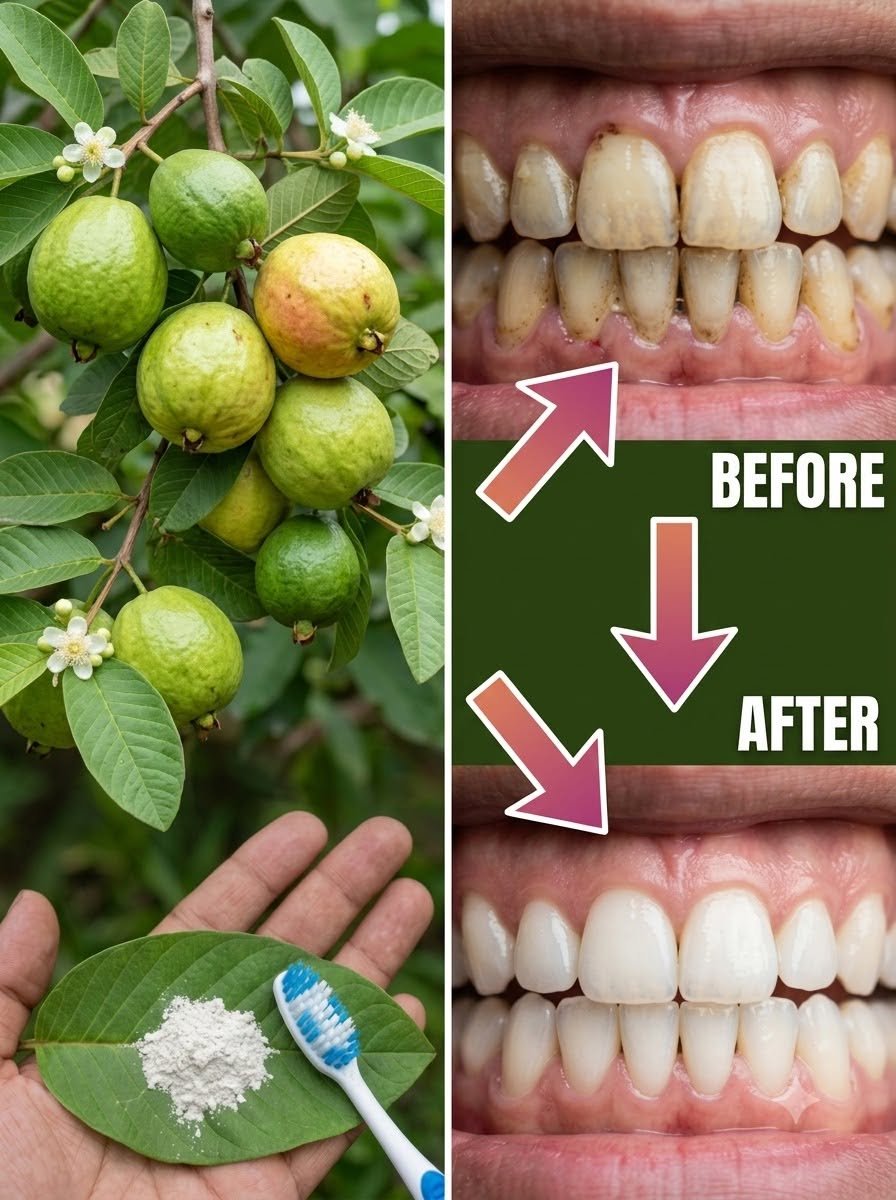
Guava leaves are sometimes promoted online as a natural teeth-whitening remedy. However, there is currently insufficient clinical evidence that a homemade guava leaf rinse can whiten teeth or remove stubborn stains.
Tooth discoloration can result from several factors, including coffee, tea, tobacco, ageing and changes within the tooth itself.
For a brighter smile, consider:
- Brushing twice daily with fluoride toothpaste.
- Cleaning between your teeth every day.
- Limiting frequent consumption of staining drinks.
- Visiting a dentist for professional cleaning when needed.
- Discussing safe whitening options with a dental professional.
Avoid rubbing crushed leaves, salt or other abrasive ingredients directly against your teeth, as this may damage enamel or irritate your gums.
Other Benefits Being Investigated
Guava leaves contain several naturally occurring compounds that scientists continue to study.
Antioxidant properties: Guava leaves contain flavonoids and other plant compounds that demonstrate antioxidant activity in laboratory research.
Antimicrobial activity: Certain guava leaf extracts have shown activity against microorganisms in laboratory studies. Researchers are investigating whether these properties could have applications in oral hygiene.
Potential gum-health support: Preliminary clinical research suggests that specially formulated guava leaf mouthwashes may offer benefits as an additional measure for people with gingivitis.
These findings are promising but should not be interpreted as proof that homemade guava preparations can treat gum disease, tooth decay or dental infections.
Important Tips for Safe Use
Before incorporating a homemade herbal rinse into your routine, keep these precautions in mind:
- Always wash guava leaves thoroughly.
- Use clean utensils and containers.
- Allow the preparation to cool completely.
- Do not swallow the homemade rinse.
- Avoid adding coarse salt or abrasive ingredients.
- Do not use it to treat toothaches, cavities or swollen gums.
- Discard leftover preparation rather than storing it for several days.
- Discontinue use if you experience an allergic reaction or irritation.
If you have persistent bad breath, bleeding gums, tooth sensitivity, swelling or dental pain, arrange an examination with your dentist.
A Simple Addition to Your Oral-Care Routine
Guava leaves are an interesting traditional ingredient that has attracted scientific attention for its naturally occurring plant compounds. Preparing a mild rinse at home is relatively simple, requiring only fresh leaves and water.
However, the most reliable way to maintain healthy teeth and gums remains consistent oral hygiene.
Brush twice daily for two minutes using fluoride toothpaste, clean between your teeth every day and visit your dentist regularly. A homemade guava leaf rinse, if tolerated, should only be considered an optional complementary practice.
Remember: Natural ingredients can have biological effects, but natural does not automatically mean safe or effective. Guava leaves may be worth studying for their potential oral-health benefits, but they cannot replace proven dental care.
Frequently Asked Questions
1. How many guava leaves should I use?
The traditional preparation described here uses approximately 5–7 fresh guava leaves for one cup of water. This is a household recipe, not a clinically established dosage.
2. How long should I boil guava leaves?
You can gently simmer the leaves for approximately 10 minutes before allowing the liquid to cool and straining it.
3. Can I add salt to guava leaf rinse?
Salt is not necessary for this preparation. Avoid using salt as a tooth scrub because abrasive rubbing may irritate the gums and damage tooth surfaces.
4. Can guava leaves permanently whiten teeth?
There is insufficient scientific evidence that guava leaves permanently whiten teeth. Professional dental whitening is a more established option.
5. Can guava leaves replace toothpaste or mouthwash?
No. A homemade guava leaf rinse does not provide the established cavity-protection benefits of fluoride toothpaste and should not replace regular brushing or flossing.
6. Is guava leaf rinse suitable for everyday use?
Its ideal frequency and long-term safety have not been established. Speak with your dentist before using homemade herbal preparations regularly, particularly if you have existing dental problems.
7. Can guava leaves cure bleeding gums?
No. Bleeding gums can be a sign of gingivitis or other gum disease. Proper dental assessment and treatment are important.