Aspirin on Your Skin? What to Know Before Trying This Viral Home Beauty Trick
Aspirin on Your Skin? What to Know Before Trying This Viral Home Beauty Trick
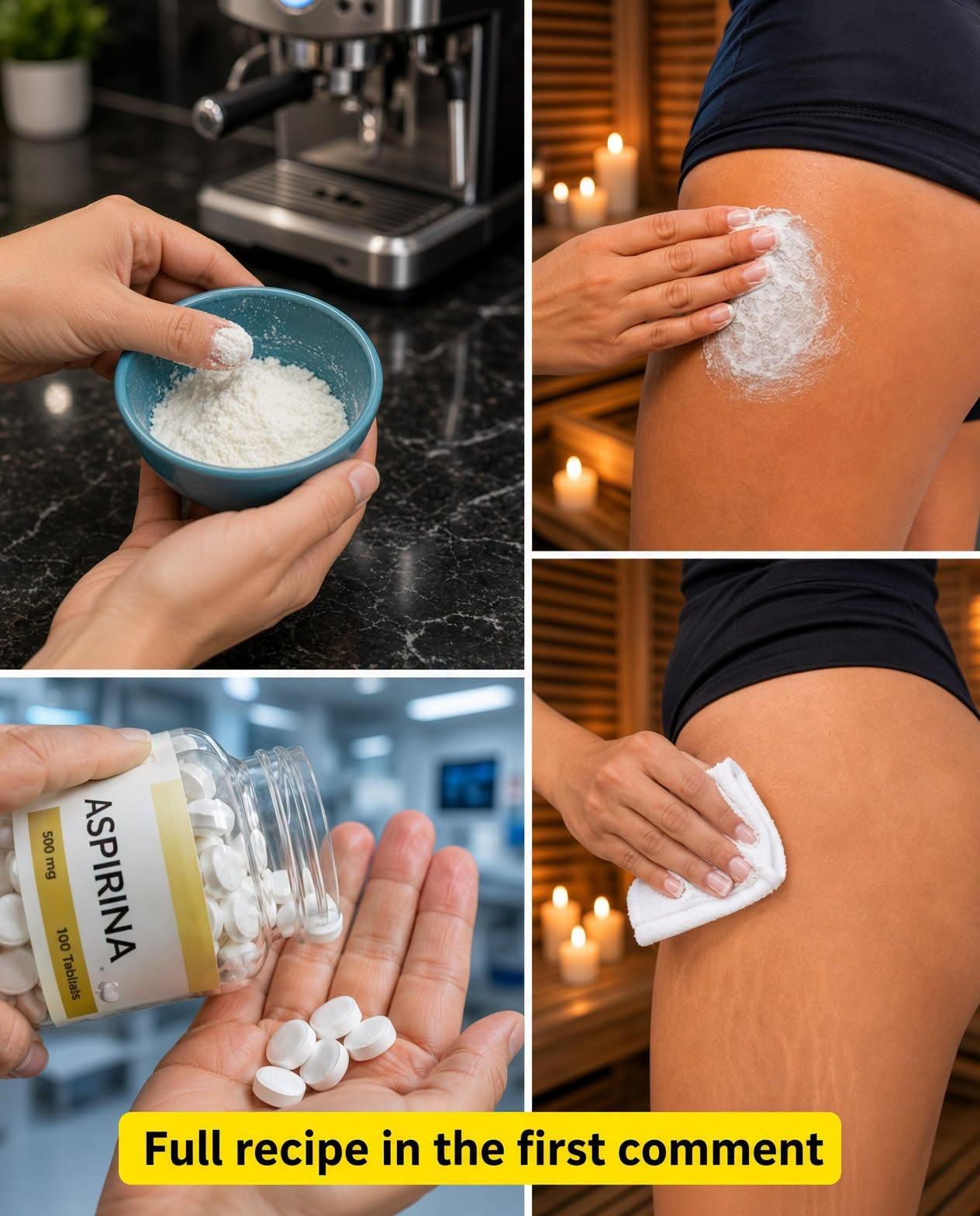
Home beauty remedies have been passed from one generation to another for decades. Today, social media has given many of these ideas a second life, including one particularly curious trend: crushing aspirin and applying it directly to the skin.
Some posts suggest that aspirin mixtures can smooth rough skin, improve the appearance of marks, or make areas such as the legs and buttocks look more even. The idea sounds simple and inexpensive, but simple does not automatically mean gentle.
Aspirin is a medicine designed for specific medical uses. It is not formulated as a cosmetic exfoliant, and applying homemade aspirin mixtures to the skin can cause irritation, especially when combined with acidic or abrasive ingredients.
So, before reaching into the medicine cabinet, here is what is worth knowing.
Why Do People Put Aspirin on Their Skin?
Aspirin contains acetylsalicylic acid, a compound related to the salicylate family. This connection is one reason aspirin is sometimes confused with salicylic acid, a well-known ingredient found in professionally formulated skincare products.
However, they are not interchangeable skincare ingredients.
Commercial salicylic-acid products are formulated at controlled concentrations and designed specifically for topical application. Crushing an aspirin tablet and mixing it with household ingredients does not provide the same predictable concentration, pH, or safety profile.
That distinction becomes particularly important for sensitive, dry, or mature skin.
⚠️ What Could Go Wrong?
The skin has a natural protective barrier that helps retain moisture while protecting the body from environmental irritants. Harsh DIY mixtures can disturb this barrier.
Depending on the person’s skin and the ingredients used, homemade aspirin treatments may contribute to:
- Dryness or tightness
- Redness
- Stinging or burning
- Flaking
- Itching
- Increased sensitivity
- Irritant or allergic skin reactions
If aspirin is mixed with ingredients such as lemon juice, alcohol, or baking soda, irritation may become even more likely.
A tingling or burning sensation should not automatically be interpreted as evidence that a treatment is “working.”
Can Aspirin Remove Stretch Marks or Cellulite?
This is where online claims often become much stronger than the available evidence.
There is no good evidence that a homemade aspirin paste can erase stretch marks, remove cellulite, or permanently repair deep skin changes.
Someone may notice that their skin temporarily feels smoother after using an exfoliating mixture. Surface exfoliation can sometimes change the texture or appearance of skin for a short period, but that is very different from altering stretch marks or the underlying structure associated with cellulite.
Extra caution is therefore sensible with dramatic before-and-after promises.
Aspirin vs. Gentler Skincare Options
Instead of experimenting with crushed tablets, consider products that were actually developed for use on skin.
| Instead of… | Consider… |
|---|---|
| Aspirin mixed with lemon | A fragrance-free moisturiser |
| Rubbing alcohol | A gentle, fragrance-free cleanser |
| Daily aggressive scrubbing | Occasional gentle exfoliation |
| Baking-soda mixtures | A barrier-supporting body lotion |
| Harsh DIY acids | Properly formulated skincare products |
Ingredients such as ceramides, glycerin, colloidal oatmeal, and appropriate moisturising agents can help support the skin barrier without relying on aggressive homemade mixtures.
🌿 A Simple Routine for Smoother-Looking Skin
Healthy-looking skin usually responds better to consistency than to extreme treatments.
Start with gentle cleansing. Very hot water and harsh soaps can remove some of the skin’s natural oils, so lukewarm water and a mild cleanser are often more comfortable.
After showering, apply moisturiser while the skin is still slightly damp. This can help retain moisture and reduce the dry, rough feeling that becomes more common with age.
Exfoliation doesn’t need to be aggressive either. If you choose to exfoliate, start gently and pay attention to how your skin responds rather than assuming that more frequent exfoliation produces faster results.
And don’t forget sun protection. Areas such as the legs, shoulders, arms, and chest can receive substantial UV exposure during everyday activities. Protecting exposed skin can help limit sun-related changes in pigmentation and texture.
Everyday Habits Matter Too
Skincare isn’t only about what you put on your body.
Adequate sleep, a varied diet, appropriate hydration, avoiding smoking, protecting yourself from excessive sun exposure, and using gentle skincare products all contribute to overall skin health.
No single cream or homemade mixture can replace those fundamentals.
🚫 When Should You Stop a DIY Treatment?
If you’ve already tried an aspirin mixture or another homemade treatment, stop using it if you develop significant burning, persistent itching, swelling, marked redness, blistering, pain, or severe peeling.
Gently rinse the product away and avoid applying additional irritating ingredients to the area.
Seek medical advice if the reaction is severe, spreads, involves the eyes or face, causes difficulty breathing, or does not improve.
People with known aspirin or salicylate sensitivity should be particularly cautious about experimenting with aspirin-containing DIY skincare.
What About Mature Skin?
Skin naturally changes with age. It may become drier, thinner, and less able to retain moisture than it once was.
That doesn’t necessarily mean it needs stronger treatment. In many cases, a simpler and gentler routine becomes more valuable.
A mild cleanser, regular moisturising, sun protection, and carefully selected skincare products can often provide a more sensible foundation than constantly switching between viral remedies.
The Bottom Line
Aspirin has legitimate uses as a medicine, but that doesn’t make crushed aspirin an ideal skincare ingredient.
Although viral recipes may promise smoother legs, fewer marks, or dramatic changes to cellulite, these claims should be approached cautiously. Homemade mixtures can irritate the skin, and stronger does not necessarily mean better.
For everyday skincare, focus instead on gentle cleansing, regular moisturising, sensible sun protection, and products specifically formulated for the skin.
Sometimes the most effective beauty routine isn’t the most surprising one—it’s simply the one your skin can comfortably tolerate over time.