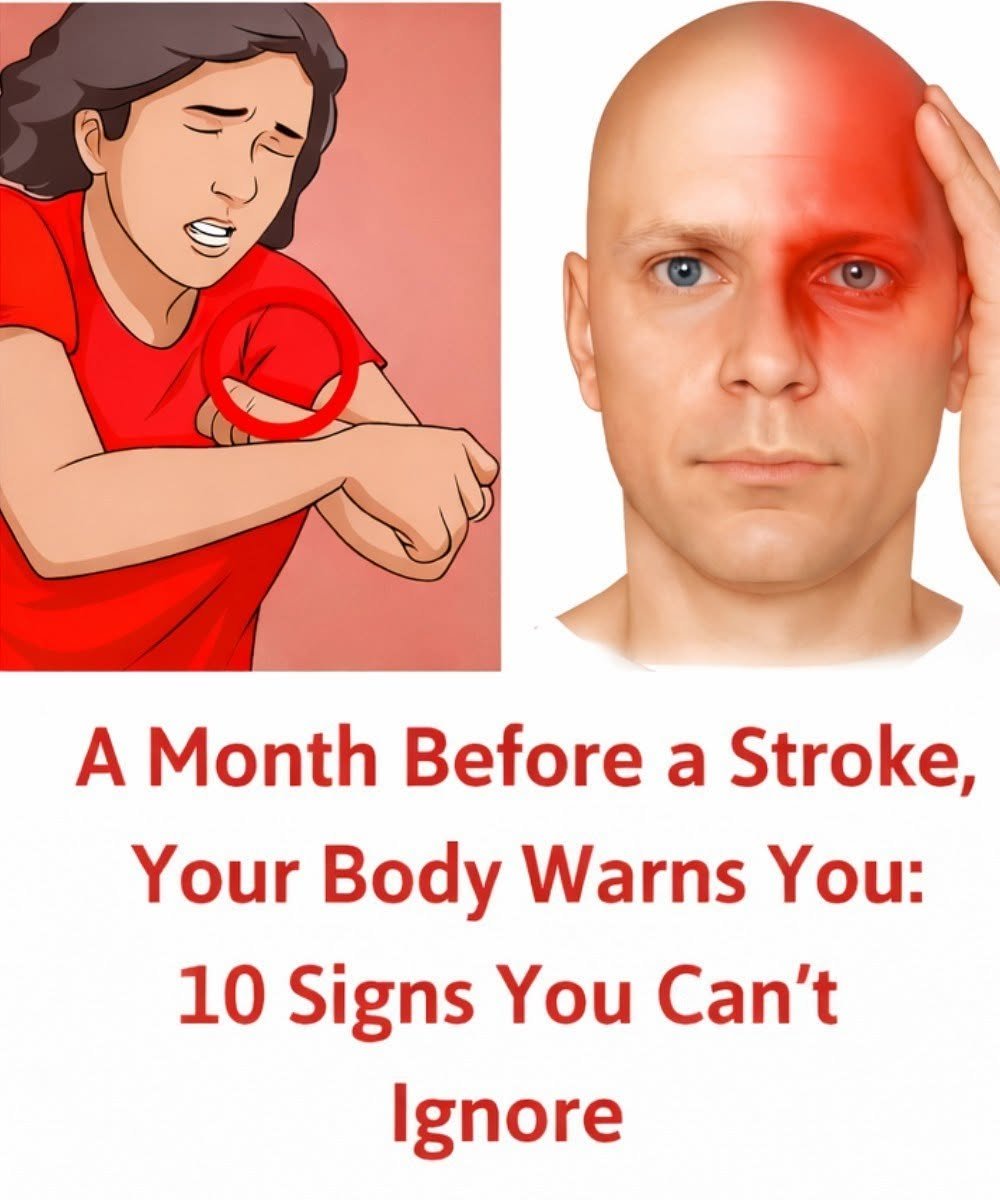
A month before a stroke, your body warns you: 10 signs not to ignor
A month before a stroke, your body warns you: 10 signs not to ignor
5 Warning Signs of a Stroke You Should Never Ignore
Introduction
A stroke can happen suddenly, and recognizing its warning signs may help save a life. Symptoms can affect vision, speech, movement, balance, and the ability to understand what is happening. In some cases, they begin mildly or disappear after a short time, leading people to assume that everything is fine.
However, sudden stroke symptoms require immediate medical attention, even if they improve or disappear. Temporary symptoms may indicate a transient ischemic attack (TIA), sometimes called a mini-stroke, which can signal an increased risk of a future
Knowing what to look for can help you recognize a medical emergency in yourself, a family member, or someone nearby. Here are five important warning signs to understand and the steps to take if they occur.
1. Sudden Changes in Vision
Sudden blurred vision, double vision, or partial or complete loss of sight in one or both eyes can be a sign of a stroke. Some people may suddenly struggle to read, recognize objects clearly, or see normally while walking.
Because vision problems can also result from other medical conditions, it is not always possible to identify the cause based on symptoms alone. However, a sudden change in vision—especially when accompanied by dizziness, weakness, or speech difficulties—should never be ignored.
Even if your vision returns to normal after a few minutes, urgent medical assessment is important. A temporary episode may be associated with a TIA or another condition that needs prompt treatment.
2. Slurred Speech or Sudden Confusion
Suddenly struggling to speak, forming unclear words, or having difficulty understanding what another person is saying can indicate a stroke. Someone may use the wrong words, speak in an unusual way, or seem confused during a familiar conversation.
These changes may be particularly noticeable to family members or friends. A person experiencing a stroke may not realize that their speech has changed, so the observations of someone nearby can be important.
One common way to recognize a possible stroke is to ask the person to repeat a simple sentence. If their speech sounds slurred or unusual, treat it as an emergency—but do not delay calling for help to complete a test.
3. Numbness or Weakness, Especially on One Side
Sudden numbness or weakness in the face, arm, or leg is another major stroke warning sign, particularly when it affects one side of the body.
You might notice that one side of the face droops, one arm feels unusually weak, or walking suddenly becomes difficult. Some people initially assume the sensation comes from fatigue, a pinched nerve, or sleeping in an awkward position.
The important distinction is the sudden onset. Unexplained one-sided weakness or numbness can indicate a serious neurological problem and needs emergency assessment.
If you are with someone who may be having a stroke, you can ask them to smile and raise both arms while help is being called. An uneven smile or one arm drifting downward can be a warning sign. A normal result does not rule out a stroke.
4. Sudden Dizziness or Loss of Balance
Sudden dizziness, difficulty walking, loss of coordination, or trouble maintaining balance can also occur during a stroke. A person may suddenly feel unsteady, veer to one side, or struggle to stand or walk normally.
Dizziness has many possible causes, including conditions that are not strokes. However, sudden balance problems are especially concerning when they occur alongside vision changes, weakness, numbness, or difficulty speaking.
It is important not to assume that dizziness is harmless simply because it occurs without pain. Some strokes affect areas of the brain involved in balance and coordination.
5. A Sudden, Severe Headache
A sudden, extremely severe headache with no known cause can be another warning sign of a serious neurological emergency, including certain types of stroke.
The headache may feel dramatically different from headaches a person has experienced before. Depending on the underlying cause, it may occur with vomiting, confusion, vision changes, weakness, or other neurological symptoms.
Not every severe headache is caused by a stroke, but a sudden, unusually intense headache should not be dismissed or treated as an ordinary headache without assessment.
How to Recognize a Stroke: Remember B.E. F.A.S.T.
The B.E. F.A.S.T. method is a useful way to remember several major stroke warning signs.
- B — Balance: Is there sudden dizziness, loss of balance, or difficulty walking?
- E — Eyes: Is there sudden blurred vision, double vision, or loss of sight?
- F — Face: Does one side of the face droop when the person smiles?
- A — Arms: Is one arm weak, numb, or drifting downward?
- S — Speech: Is speech slurred, unusual, or difficult to understand?
- T — Time: Call emergency services immediately if any of these signs appear.
What Should You Do If Stroke Symptoms Appear?
Time matters during a stroke because prompt treatment can reduce brain damage and improve outcomes.
- Call emergency services immediately. In the United States, call 911. In other countries, use the local emergency number.
- Note when the symptoms began. If you do not know the exact time, record when the person was last known to be well.
- Do not wait for symptoms to disappear. Temporary improvement does not rule out a TIA or stroke.
- Do not drive yourself or the affected person to the hospital. An ambulance allows emergency personnel to begin appropriate care and alert the receiving medical team.
- Follow the emergency operator’s instructions. Do not give medication, food, or drink unless instructed by a qualified medical professional.
Can Stroke Symptoms Disappear and Still Be Dangerous?
Yes. Symptoms that resolve after a few minutes may indicate a transient ischemic attack, or TIA. A TIA occurs when blood flow to part of the brain is temporarily interrupted.
Although the symptoms may disappear, a TIA is a medical emergency and can signal an increased risk of a future stroke. It is not possible to reliably distinguish a TIA from a stroke based on symptoms alone, so urgent medical evaluation is necessary.
Do not wait for symptoms to return before seeking help.
Can You Reduce Your Risk of a Stroke?
Not every stroke can be prevented, but managing important risk factors can reduce the likelihood of having one.
Helpful steps include:
- Monitor blood pressure: High blood pressure is an important stroke risk factor. Work with a healthcare professional to manage it.
- Manage diabetes and cholesterol: Follow your treatment plan and attend recommended medical appointments.
- Avoid smoking: Smoking increases cardiovascular risk.
- Stay physically active: Choose regular physical activity appropriate for your health and abilities.
- Follow a balanced eating pattern: Emphasize vegetables, fruits, whole grains, and other nutritious foods.
- Take prescribed medications as directed: Do not stop or change medication without consulting your healthcare professional.
Your personal risk depends on several factors, including age, medical history, heart health, and family history. A healthcare professional can help you identify the steps most appropriate for you.
Frequently Asked Questions
What are the first warning signs of a stroke?
Common signs include sudden facial drooping, weakness or numbness on one side, difficulty speaking or understanding speech, vision changes, dizziness, loss of balance, and a sudden severe headache with no known cause.
Can a stroke happen without warning?
Yes. Stroke symptoms can begin suddenly, without any noticeable advance warning. Some people experience a TIA before a later stroke, but many do not experience a recognized warning episode.
How long do stroke symptoms last?
Stroke symptoms may persist, while TIA symptoms may resolve within minutes or longer. The duration alone cannot establish whether an episode was a TIA or a stroke. Any sudden possible stroke symptoms require urgent assessment, even if they disappear.
Can dizziness alone be a sign of a stroke?
Yes, sudden dizziness or loss of balance can occur with a stroke, although many other conditions can cause these symptoms. Seek emergency help if the dizziness is sudden, severe, unexplained, or accompanied by other neurological changes.
What is the difference between a stroke and a TIA?
A stroke involves an interruption of blood supply to the brain or bleeding in the brain that causes neurological injury. A TIA causes temporary stroke-like symptoms due to a temporary interruption of blood flow. Both require urgent medical assessment because their symptoms can overlap.
What should I do if someone has stroke symptoms that disappear?
Call emergency services and explain what happened. Symptoms that disappear can indicate a TIA and still require urgent evaluation. Do not assume the danger has passed.
Final Thoughts
Recognizing stroke symptoms can make a critical difference. Sudden vision changes, slurred speech, one-sided weakness, loss of balance, and an unexplained severe headache should never be ignored.
Remember B.E. F.A.S.T., act quickly, and seek emergency help when possible stroke symptoms appear—even if they improve. Prompt medical evaluation can help determine the cause and ensure that appropriate treatment is not delayed.
Medical disclaimer: This article is for general educational purposes and does not replace professional medical advice, diagnosis, or treatment. Suspected stroke symptoms require emergency medical assessment.