
If Your Neck Is Starting to Sag, Don’t Ignore It: Here’s Why It Happens
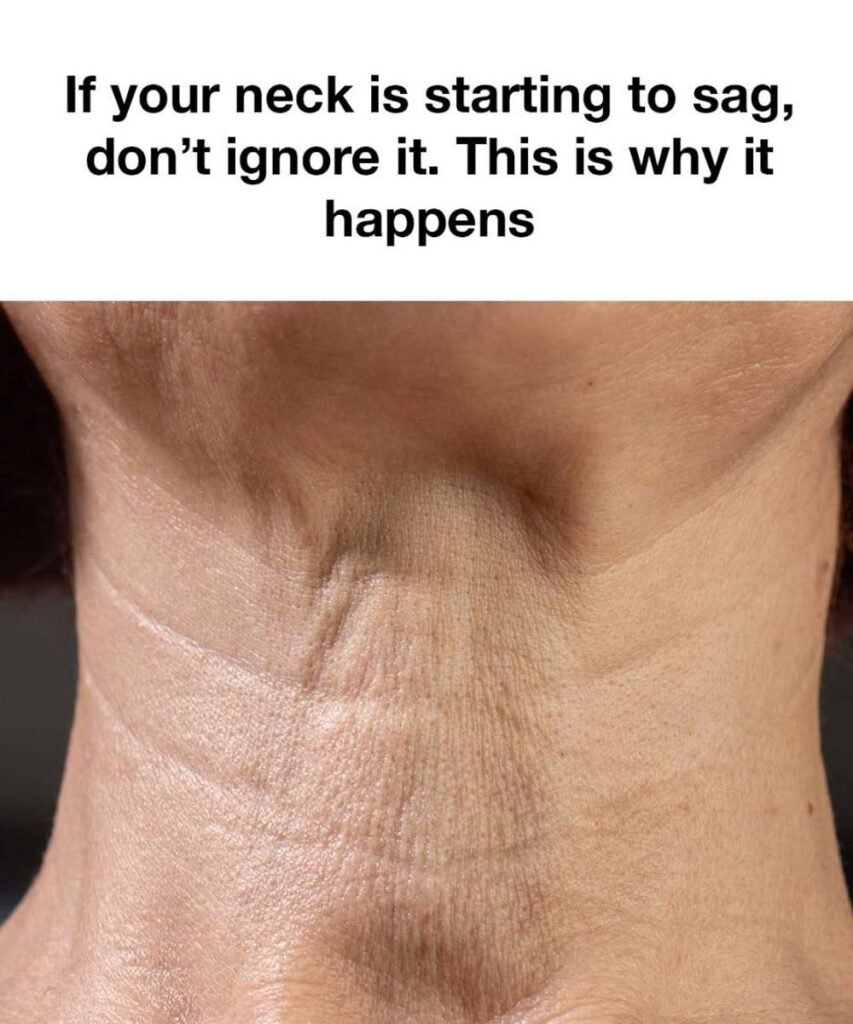
As we get older, our bodies naturally change, and one common sign of aging is sagging skin around the neck. Often called “turkey neck,” this happens because the skin loses firmness over time.
The good news is that understanding the causes can help you take better care of your skin and slow down the aging process.
1. The Anatomy of the Neck
The neck contains muscles, skin, and connective tissue that work together to support movement and appearance.
The platysma muscle runs from the chest to the jaw. As we age, this muscle can weaken, making the neck appear loose or saggy.
The skin on the neck is also thinner than facial skin, making it more vulnerable to aging.
2. Aging and Loss of Collagen
One of the biggest reasons for neck sagging is the natural aging process.
As we age:
- Collagen production decreases.
- Elastin fibers become weaker.
- Skin loses moisture and elasticity.
- Wrinkles and loose skin become more noticeable.
After age 40, collagen production naturally declines each year, contributing to visible skin changes.
3. Sun Damage
Too much sun exposure speeds up skin aging.
Ultraviolet (UV) rays damage collagen and elastin, leading to:
- Fine lines
- Wrinkles
- Sagging skin
- Age spots
Protect Your Neck
- Wear sunscreen (SPF 30 or higher)
- Wear hats or protective clothing
- Avoid prolonged sun exposure
4. Genetics
Your genes also influence how your skin ages.
Some people naturally produce more collagen and maintain firmer skin longer, while others may notice sagging earlier in life.
Although genetics can’t be changed, healthy skincare habits can help support your skin.
5. Weight Changes
Frequent weight gain and loss can stretch the skin.
Rapid weight loss may leave excess loose skin, especially around the neck.
Maintaining a stable, healthy weight can help preserve skin firmness.
6. Stay Hydrated
Hydrated skin looks healthier and more elastic.
Helpful habits include:
- Drink enough water daily.
- Use a moisturizer regularly.
- Look for products containing:
- Hyaluronic Acid
- Glycerin
- Ceramides
7. Viral Neck Tightening Hacks
Social media is full of DIY neck-tightening tips such as:
- Facial yoga
- Jade rollers
- Gua Sha tools
- Homemade face masks
While some people enjoy these methods, scientific evidence supporting long-term results is limited.
8. Neck Exercises
Simple neck exercises may help strengthen muscles and improve posture.
Examples include:
- Chin tucks
- Neck stretches
- Gentle resistance exercises
Consistency is important, and results may take several weeks.
9. Skincare Products
Some skincare products are designed to improve skin firmness.
Look for ingredients such as:
- Retinol
- Peptides
- Vitamin C
- Niacinamide
- Antioxidants
Using these products consistently may help improve the appearance of aging skin.
10. Professional Treatments
If home care isn’t enough, a dermatologist may recommend treatments such as:
- Laser therapy
- Radiofrequency treatment
- Ultrasound skin tightening
- Microneedling
- Neck lift surgery (for severe sagging)
Your healthcare provider can recommend the most suitable option based on your needs.
11. Healthy Lifestyle Habits
Daily habits play an important role in skin health.
Tips for Healthier Skin
- Eat plenty of fruits and vegetables.
- Choose foods rich in vitamins C and E.
- Include healthy fats like omega-3s.
- Exercise regularly.
- Get enough sleep.
- Avoid smoking.
- Limit alcohol consumption.
- Manage stress.
Final Thoughts
Neck sagging is a normal part of aging, but several factors—including sun exposure, collagen loss, genetics, and lifestyle habits—can affect how quickly it develops.
Protecting your skin, maintaining healthy habits, and speaking with a dermatologist if you have concerns can help keep your neck looking healthier for longer.
Disclaimer: This article is for informational purposes only and is not medical advice. Always consult a qualified healthcare professional or dermatologist for diagnosis and treatment recommendations.