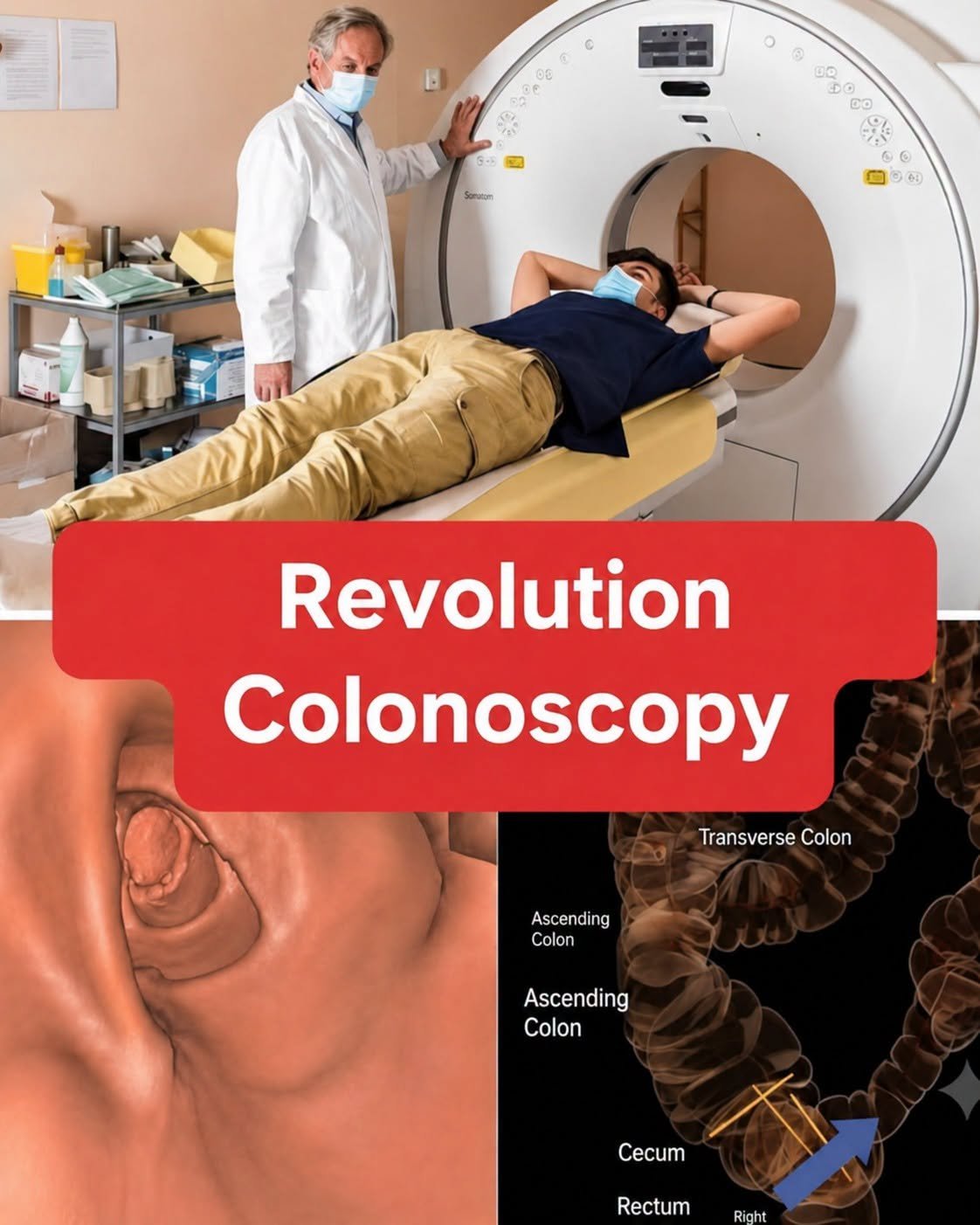
New Advances in Colon Screening: A Less Invasive Alternative to Traditional Colonoscopy
New Advances in Colon Screening: A Less Invasive Alternative to Traditional Colonoscopy
For many people, however, the thought of undergoing a traditional colonoscopy can feel intimidating because the procedure is invasive and requires the insertion of a flexible scope into the colon. Fortunately, medical technology continues to evolve, offering newer imaging techniques that may be appropriate for certain patients.
One of these innovations is virtual colonoscopy, also known as CT colonography.
What Is a Colonoscopy?
A traditional colonoscopy is a diagnostic procedure that allows healthcare professionals to examine the inside lining of the large intestine (colon) using a flexible tube equipped with a tiny camera.
This examination helps doctors detect:
- Colon polyps
- Inflammation
- Ulcers
- Bleeding
- Narrowing of the intestine
- Early signs of colorectal cancer
One of its greatest advantages is that suspicious polyps can often be removed immediately during the same procedure, helping reduce the risk of future cancer development.
Why Colon Cancer Screening Is Important
Colorectal cancer often develops slowly over several years. In many cases, small polyps form first before becoming cancerous.
Routine screening can help identify these growths while they are still small and easier to treat.
Many healthcare systems recommend screening beginning around age 45–50 for adults at average risk, although recommendations vary depending on individual risk factors and family history.
People may also be referred for colonoscopy after a positive fecal occult blood test (FOBT) or fecal immunochemical test (FIT), which can detect hidden blood in the stool.
Introducing Virtual Colonoscopy
Virtual colonoscopy, or CT colonography, is a non-invasive imaging technique that creates detailed, three-dimensional images of the colon using computed tomography (CT) scans instead of an endoscope.
Rather than inserting a camera throughout the colon, specialized software reconstructs hundreds of CT images into a virtual view of the colon’s inner surface.
This allows physicians to examine much of the colon while avoiding the use of a traditional colonoscope in selected situations.
How Does a Virtual Colonoscopy Work?
The procedure generally includes the following steps:
- Bowel preparation similar to traditional colonoscopy.
- A small tube is gently inserted into the rectum to introduce air or carbon dioxide, helping expand the colon.
- A CT scanner captures images while the patient briefly holds their breath.
- Advanced computer software reconstructs detailed 3D images for review by a radiologist.
The scan itself usually takes only a few minutes.
Potential Advantages of Virtual Colonoscopy
For appropriate candidates, virtual colonoscopy may offer several benefits:
Less Invasive
No long endoscope travels through the entire colon, making the procedure less invasive.
Quick Examination
The imaging process is generally completed within minutes.
Detailed 3D Imaging
Computer reconstruction provides comprehensive views of the colon that may help identify certain abnormalities.
Helpful in Selected Cases
Virtual colonoscopy may be considered when a conventional colonoscopy cannot be completed because of anatomical challenges, narrowing of the bowel, or other medical reasons.
When Might Virtual Colonoscopy Be Recommended?
Healthcare providers may consider CT colonography for:
- Adults eligible for colorectal cancer screening
- Individuals unable to complete a standard colonoscopy
- Patients with certain bowel narrowing or obstruction where traditional examination is difficult
- Follow-up evaluation in selected clinical situations
The decision always depends on the individual’s medical history and physician recommendation.
Limitations to Consider
Although virtual colonoscopy offers important advantages, it also has limitations.
Unlike traditional colonoscopy, it cannot:
- Remove polyps
- Perform biopsies
- Collect tissue samples for laboratory analysis
If an abnormal growth is identified during virtual colonoscopy, a conventional colonoscopy is typically needed to confirm the findings and remove or biopsy the lesion.
Because of this, traditional colonoscopy remains the preferred option for many patients at higher risk of colorectal cancer or those likely to require treatment during the examination.
Which Screening Method Is Right for You?
There is no single screening test that is best for everyone.
Factors that influence the choice include:
- Age
- Personal medical history
- Family history of colorectal cancer
- Previous colon polyps
- Current symptoms
- Overall health
- Your healthcare provider’s recommendation
Discussing the available options with your physician can help determine which screening approach is most appropriate for your individual situation.
Supporting Colon Health Every Day
While screening is essential, everyday habits also play an important role in maintaining digestive health.
Healthy lifestyle practices include:
- Eating plenty of fruits, vegetables, and whole grains
- Staying physically active
- Limiting processed and red meats
- Avoiding tobacco use
- Limiting alcohol consumption
- Maintaining a healthy body weight
- Following recommended screening schedules
Final Thoughts
Advances in medical imaging continue to improve the options available for colorectal screening. Virtual colonoscopy offers a less invasive alternative for certain patients and can provide valuable diagnostic information when appropriate.
However, it does not replace traditional colonoscopy in every situation, particularly when tissue sampling or polyp removal may be necessary. Working with a qualified healthcare professional is the best way to determine which screening method fits your individual needs.
Disclaimer: This article is for educational purposes only and should not be considered medical advice. Always consult a qualified healthcare provider regarding screening recommendations, diagnosis, or treatment decisions.