
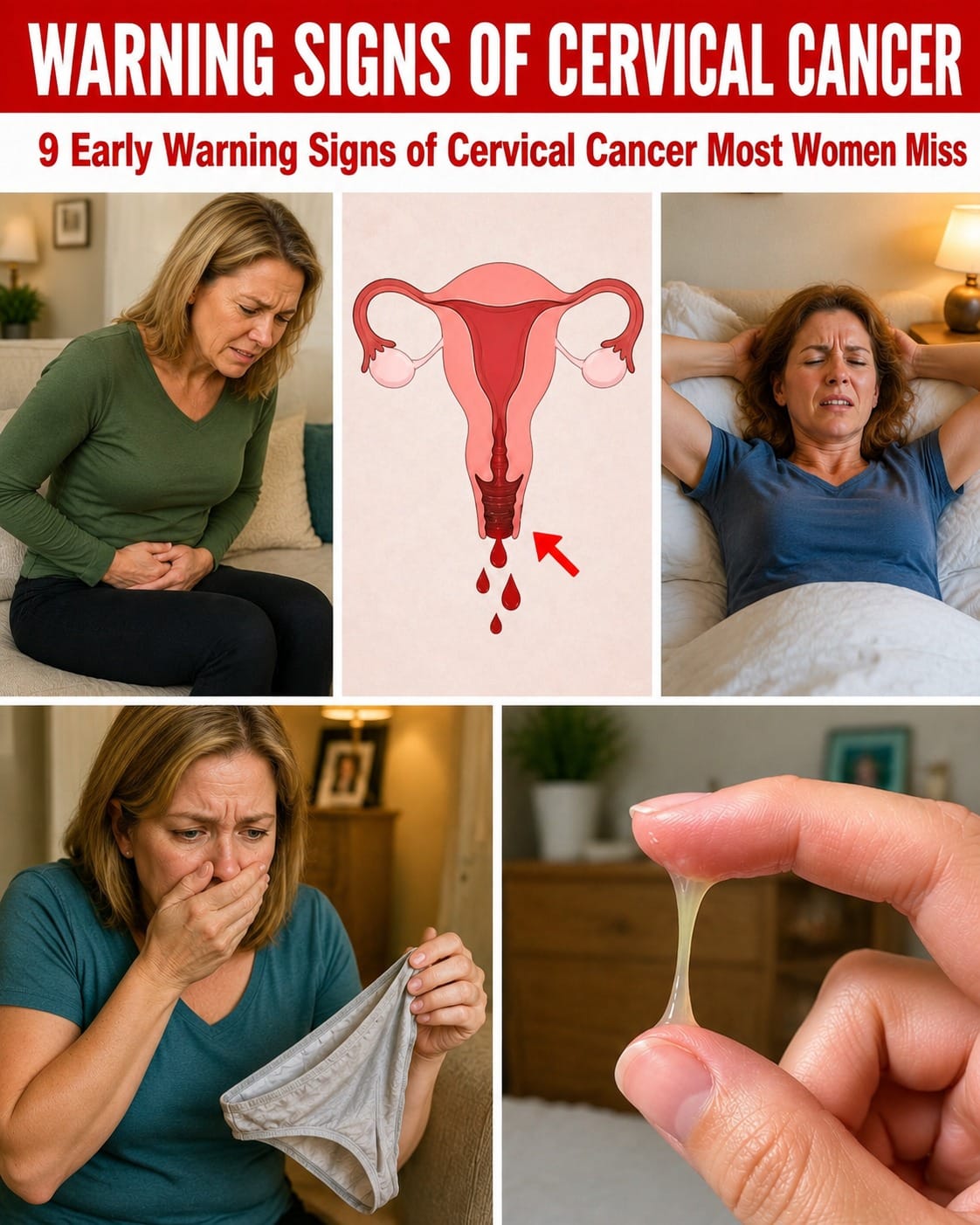
You might be going through your busy day when you notice a bit of spotting after intimacy or some unusual discharge that doesn’t seem quite right. These little changes can feel like just another part of life as a woman especially when they come and go without much fanfare. But ignoring them could mean missing important clues your body is sending. The good news is that paying attention now can make a real difference and there is one simple step most women overlook that could catch things early before they ever become a bigger concern.
Understanding these signs does not mean you have to live in fear. It simply gives you the power to listen to your body and take smart steps forward. Here is everything you need to know about the nine early warning signs that many women miss plus exactly what to watch for and how to respond.
Why These Signs Often Go Unnoticed
Cervical cancer often develops quietly in its earliest stages. According to experts at the Mayo Clinic and the Centers for Disease Control and Prevention many women experience no symptoms at all until changes start to appear. That is exactly why regular screenings remain one of the most powerful tools available. Yet when subtle signals do show up they can easily be blamed on stress hormones or minor infections. But here is the thing that changes everything once you know what to look for you can move from worry to action.
The 9 Early Warning Signs Most Women Miss
1. Bleeding After Intimacy
One of the most commonly overlooked signs is light bleeding or spotting that happens right after sex. It might seem minor or even random but it can point to changes in the cervical tissue. Many women dismiss it as nothing more than friction yet experts note that any bleeding after intercourse deserves attention.
2. Spotting Between Periods
If you find yourself spotting or lightly bleeding between your regular cycles it can feel inconvenient rather than concerning. This intermenstrual bleeding is one of those signs that blends into everyday life. Research shared by leading health organizations shows it is worth tracking because it can be an early indicator something needs checking.
3. Bleeding After Menopause
For women who have gone through menopause any vaginal bleeding at all is not normal. Even a small amount that appears months or years after your last period should prompt a conversation with your doctor. This sign is frequently missed because many assume the changes are simply part of aging.
4. Heavier or Longer Periods Than Usual
Your flow suddenly feels heavier or lasts several days longer than what has been normal for you. While periods can fluctuate over time a noticeable shift that persists month after month is something to mention at your next check-up. It is one of the quieter signs that can be easy to attribute to diet or stress instead.
5. Unusual Vaginal Discharge
Changes in discharge color consistency or odor can be another clue. Watery bloody or foul-smelling discharge that differs from your usual pattern may occur between periods or after menopause. The Mayo Clinic notes that this type of discharge is worth paying attention to especially if it does not resolve on its own.
6. Pain or Discomfort During Sex
Pain during or right after intimacy is not something to brush off as normal. It can feel deeply personal and even embarrassing to discuss yet it is a common symptom that many women keep private. When it becomes persistent it is time to bring it up with your healthcare provider.
7. Persistent Pelvic or Lower Back Pain
A dull ache or pressure in the pelvic area or lower back that does not seem connected to your cycle or recent activity can be easy to ignore. This type of ongoing discomfort is often attributed to everyday issues like sitting too long or muscle strain. Yet when it lingers it deserves a closer look.
8. Frequent or Urgent Urination
Needing to use the bathroom more often or feeling sudden urgency even when your bladder is not full can sometimes relate to pressure in the pelvic region. This sign is frequently missed because it mimics common urinary tract issues. Tracking how often it happens can help you decide when to seek guidance.
9. Unexplained Fatigue or Abdominal Bloating
Feeling unusually tired even after a good night’s sleep or noticing persistent bloating that is not explained by diet or your cycle rounds out the list. Moffitt Cancer Center highlights these subtler signs that very few women connect to potential cervical changes. They may seem unrelated at first but together they paint a clearer picture.
But that is not all. These signs do not appear in a vacuum and they can overlap with many other common health conditions.
What Most Women Do Not Realize About These Signs
Here is the part that surprises many readers. The vast majority of these symptoms have other explanations ranging from infections to hormonal shifts. That is why panic is never the answer. The real power comes from noticing patterns and acting on them calmly and promptly.
Actionable Steps You Can Take Today
Ready to put this knowledge into practice? Here are practical tips you can start using right away:
- Keep a simple symptom journal on your phone noting any unusual bleeding discharge pain or changes in energy levels.
- Schedule your next pelvic exam or Pap test if it has been more than three years since your last one.
- Talk openly with your doctor about any changes even if they seem minor.
- Ask about HPV testing during your routine visit since the virus is linked to most cervical cancers.
- Consider the HPV vaccine if you are under age 45 and have not yet received it.
How Regular Screening Changes Everything
The truth is that cervical cancer is one of the most preventable cancers when caught early. Routine Pap tests and HPV screenings can detect precancerous changes long before symptoms appear. The CDC and Mayo Clinic both emphasize that these simple office visits have dramatically reduced rates over the past decades. If you are between 21 and 65 talk to your provider about the schedule that fits your personal health history.
Lifestyle Habits That Support Your Health
While no single habit guarantees protection small consistent choices add up. Staying up to date on screenings avoiding smoking and practicing safe sex all play supportive roles. The key is building habits that fit your real life rather than chasing perfection.
When Should You See Your Doctor?
If you notice any of the signs above do not wait for them to worsen. Contact your healthcare provider and describe what you have been experiencing in clear detail. Many women feel relieved after that first conversation because most changes turn out to be harmless. But knowing for sure brings peace of mind.
Common Myths About Cervical Cancer Signs
Many women believe these symptoms only appear in later stages or that they would be dramatic and painful. In reality they can be subtle and intermittent. Another myth is that only older women need to worry. The reality is that regular check-ups matter at every age.
Conclusion
Paying attention to your body does not have to be scary. By learning these nine early warning signs you are already taking a proactive step that countless women overlook. Remember the real goal is simple awareness followed by smart action. Your health is worth every minute you invest in it.
FAQ
How often should I get screened for cervical cancer?
Most guidelines recommend starting Pap tests at age 21 and continuing every three to five years depending on your age and test results. Your doctor can tailor the schedule to your individual needs.
Can these signs mean something other than cervical cancer?
Absolutely. The symptoms listed can stem from infections hormonal changes or other common conditions. That is why professional evaluation is the only way to know for sure.
Is there anything I can do to lower my risk?
Yes. Staying current with screenings getting the HPV vaccine if eligible and discussing any family history or risk factors with your provider are all helpful steps.
Disclaimer
This article is for informational purposes only and is not a substitute for professional medical advice diagnosis or treatment. Always consult your healthcare provider with any questions or concerns about your health. Individual symptoms and risks vary and only a qualified medical professional can provide personalized guidance.