
You’ve probably noticed a few odd marks or textures on your skin lately and chalked them up to aging, dry weather, or a minor irritation. But what if those subtle shifts were your body quietly trying to get your attention about something bigger, like blood sugar levels that have been running higher than they should? High blood sugar over time can affect everything from nerves to tiny blood vessels in your skin, leaving behind changes that many people miss until other symptoms appear. The reassuring news is that catching these early clues gives you a real chance to take simple steps that support your overall health.
But here’s the part most people don’t realize until much later: one particular skin change often shows up before classic diabetes symptoms even start, and spotting it could change how you look at your daily habits forever.
Why Your Skin and Blood Sugar Are More Connected Than You Think
Your skin is your body’s largest organ, and it’s packed with blood vessels and nerves that are extremely sensitive to glucose levels. When blood sugar stays elevated, it can lead to dryness, poor circulation, and a higher risk of infections or unusual patches. Research from the Centers for Disease Control and Prevention (CDC) and the American Diabetes Association highlights that skin problems are among the most common early signs people with diabetes notice. Yet many dismiss them as harmless.
The truth is these changes don’t happen overnight. They build slowly, often in areas you might not check every day. Here’s the interesting part: some are harmless on their own but still worth paying attention to because they frequently appear alongside insulin resistance or prediabetes.
The 12 Skin Changes Often Linked to Diabetes
Let’s break down the most common ones so you know exactly what to watch for. Remember, these are often associated with diabetes but aren’t a diagnosis on their own—always talk to your doctor if something looks off.
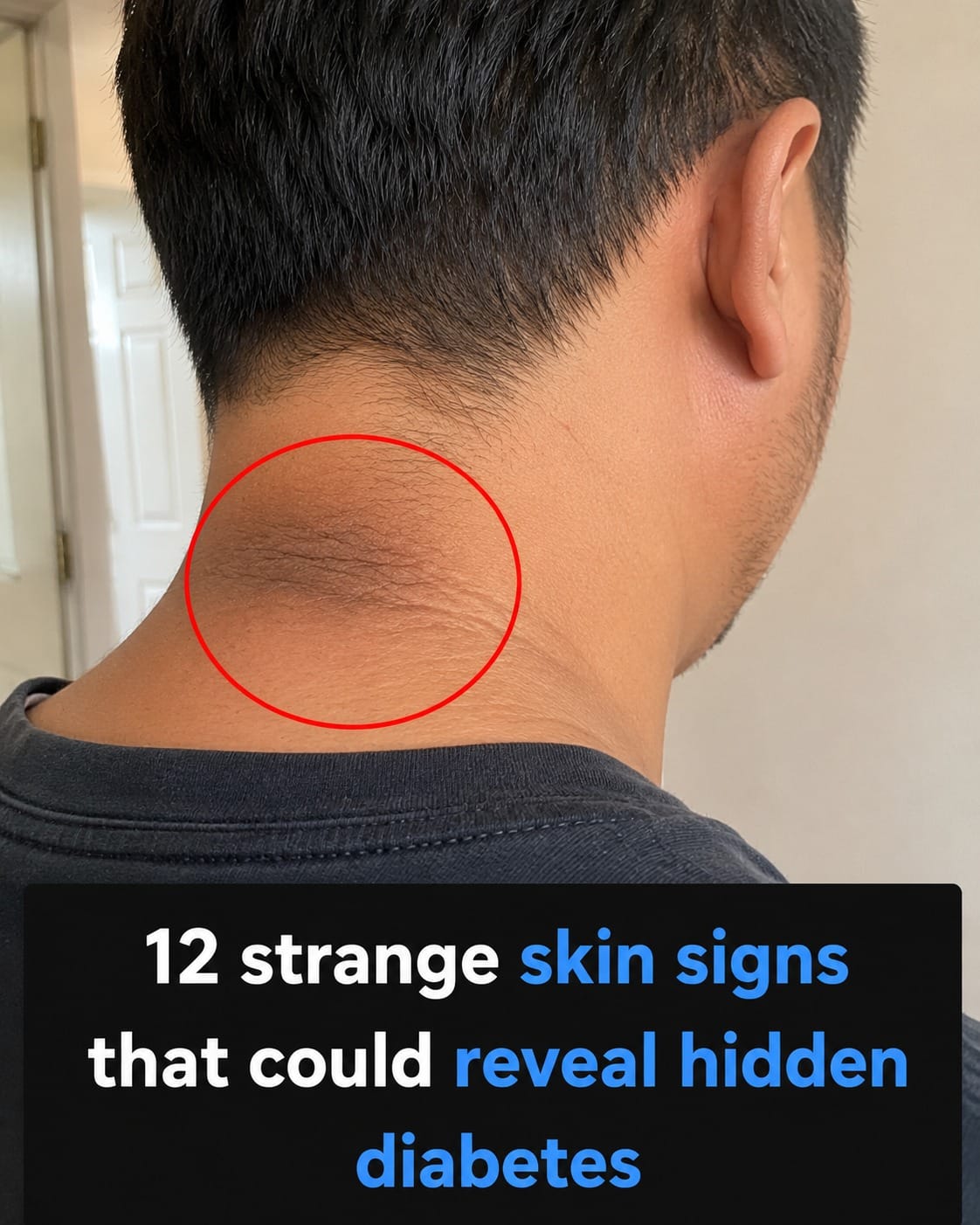
- Dark, velvety patches (Acanthosis nigricans)
You might see thickened, brownish-black skin that feels soft like velvet, usually on the back of your neck, armpits, or groin. It’s strongly tied to insulin resistance and can appear even in prediabetes.
- Shin spots (Diabetic dermopathy)
Light brown, round or oval scaly patches on your lower legs—sometimes called “shin spots.” Up to half of people with diabetes develop these harmless marks from changes in small blood vessels. - Yellowish or reddish-brown patches (Necrobiosis lipoidica)
These start as small raised bumps and can grow into shiny, waxy-looking plaques on the shins. They’re less common but more noticeable and may feel itchy or painful. - Sudden painless blisters (Bullosis diabeticorum)
Large, burn-like blisters that pop up on your hands, feet, or legs without any injury. They usually heal on their own but signal long-term high blood sugar. - Small yellowish bumps with red halos (Eruptive xanthomatosis)
Pea-sized yellow bumps surrounded by redness, often on the backs of hands, arms, or buttocks. These can itch and are linked to high triglycerides alongside diabetes. - Thick, waxy, tight skin on your hands (Digital sclerosis)
Skin on the backs of your hands or fingers feels hard and shiny, making it tougher to move your joints. This is more common in type 1 diabetes but can occur in anyone with long-term high glucose. - Dry, cracked, or flaky skin
Persistent dryness even with lotion, especially on legs and feet. High blood sugar pulls fluid from your tissues, leaving skin dehydrated and prone to cracking.
- Frequent bacterial infections
Boils, styes, or red, swollen, painful areas that linger longer than usual. High glucose creates a perfect environment for bacteria like staph to thrive. - Itchy fungal infections
Red, scaly rashes with tiny blisters in moist folds—think athlete’s foot, jock itch, or yeast infections under the breasts or in the groin. These love warm, damp skin when blood sugar is elevated. - Slow-healing cuts or sores
Even small nicks or scrapes take weeks or months to close because circulation is impaired and your body’s repair system works slower. - Skin tags (small fleshy growths)
Tiny soft bumps, often in the neck, armpits, or groin. While common in many people, they tend to appear more frequently with insulin resistance. - White patches (Vitiligo) or ring-shaped rashes (Granuloma annulare)
Loss of pigment in patches or red-brown rings on the hands or ears. These are more common in type 1 diabetes and can signal an autoimmune component.
But that’s not the whole story. Many of these changes improve dramatically when blood sugar moves back into a healthier range.
Actionable Tips You Can Start Today
The best part? You don’t need fancy treatments to begin protecting your skin right now. Here are five practical steps that make a real difference:
- Check your skin daily — Spend 30 seconds looking at your feet, legs, hands, and skin folds after your shower. Early detection prevents small issues from becoming big ones.
- Moisturize smartly — Use fragrance-free lotion right after bathing while skin is still damp. Avoid putting lotion between your toes to prevent fungal growth.
- Control blood sugar through everyday habits — Eat balanced meals, stay active for at least 30 minutes most days, and follow your doctor’s plan. Many skin issues improve noticeably within weeks of better glucose control.
- Treat minor cuts immediately — Wash with mild soap and water, apply a clean bandage, and monitor for signs of infection.
- Schedule regular check-ups — See your healthcare provider or a dermatologist if you notice new changes. They can rule out other causes and help create a personalized plan.
Here’s a quick comparison to keep in mind:
| Common Skin Issue | When It Might Signal Diabetes | What to Do Next |
|---|---|---|
| Dry, itchy skin | Persists despite moisturizing | Check blood sugar; hydrate more |
| Slow-healing cuts | Takes weeks instead of days | See your doctor promptly |
| Dark velvety patches | Appears suddenly in skin folds | Discuss insulin resistance testing |
| Frequent infections | Recur often in same areas | Get evaluated for underlying causes |
What This Means for Your Health Moving Forward
Your skin is incredibly honest. Those 12 changes aren’t random—they’re often your body’s early warning system. By paying attention now, you’re giving yourself the power to address things before they progress. The good news is that many of these issues become far less noticeable or even fade when blood sugar is managed well and you practice simple daily skin care.
You’ve already taken the first step by reading this far. That curiosity could be the very thing that helps you feel more in control of your health.
FAQ
Can skin changes be the first sign of diabetes?
Yes. Many people discover dark patches, shin spots, or slow-healing wounds before they experience classic symptoms like increased thirst or fatigue. The American Diabetes Association notes that skin problems sometimes appear early because high glucose affects the skin quickly.
Do these skin issues go away if I manage my blood sugar?
Often yes. Conditions like eruptive xanthomatosis, dry skin, and infections frequently improve or resolve when glucose levels stabilize. Others, like shin spots, may stay but cause no harm.
Should I see a doctor right away if I notice one of these changes?
It’s always smart to mention new skin changes at your next visit. If you have blisters, open sores, signs of infection, or rapidly worsening patches, contact your healthcare provider sooner rather than later.
Disclaimer: This article is for informational purposes only and is not a substitute for professional medical advice. Skin changes can have many causes. Always consult your doctor or a qualified healthcare professional for personalized diagnosis and treatment. They can help determine if testing or further evaluation is right for you.