Your Body May Be Sending Signals: 10 Potential Symptoms of Breast Cancer You Shouldn’t Ignore
Your Body May Be Sending Signals: 10 Potential Symptoms of Breast Cancer You Shouldn’t Ignore
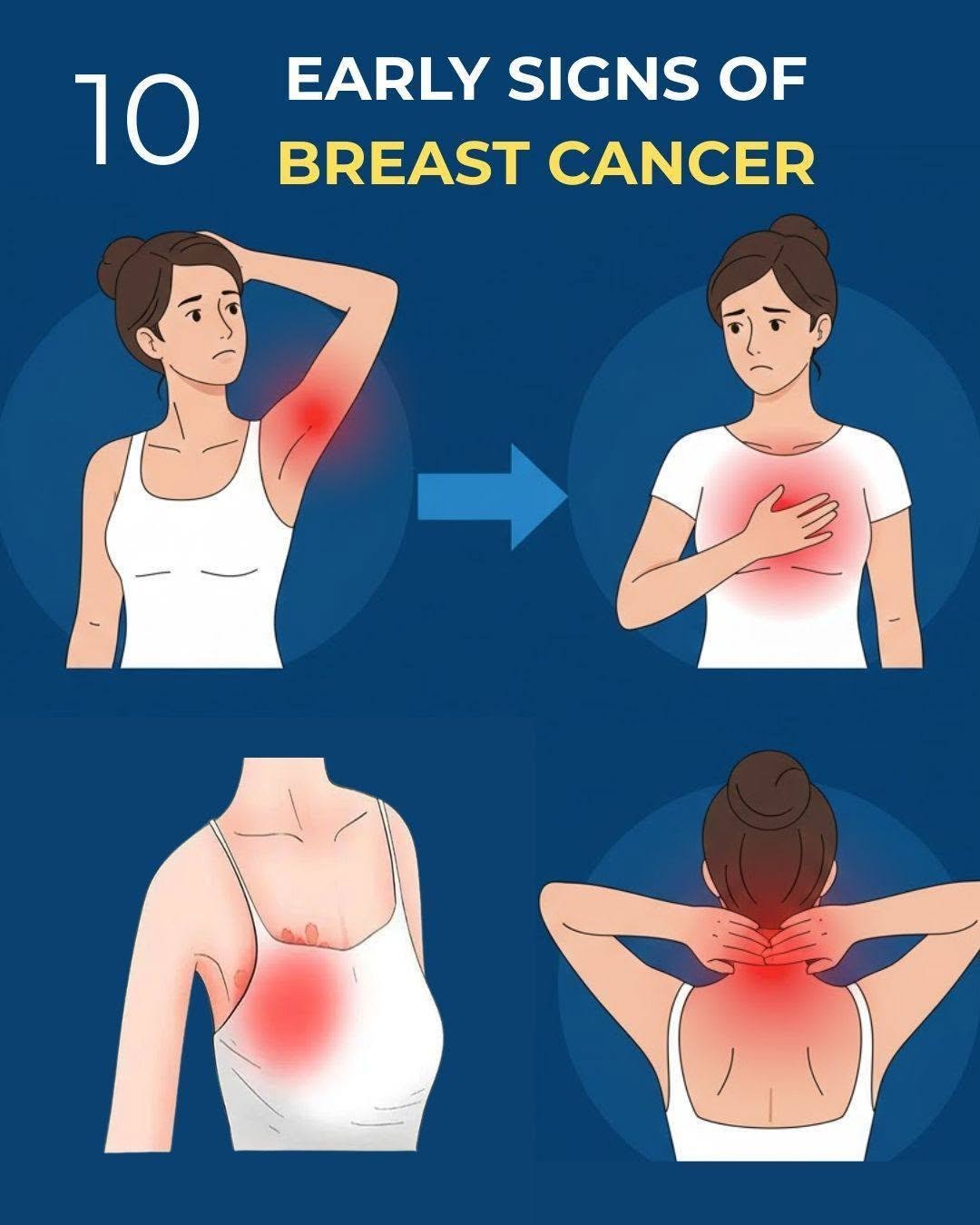
Your Body May Be Sending Signals: 10 Potential Symptoms of Breast Cancer
Breast cancer is one of the most common cancers affecting women worldwide, although it can also occur in men. Detecting breast cancer early often improves treatment options and outcomes.
It’s important to remember that most breast changes are not caused by cancer. Many symptoms can result from benign (non-cancerous) conditions such as cysts, infections, or hormonal changes. However, any new or unusual breast change should be evaluated by a healthcare professional.
1. A New Lump in the Breast or Underarm
A new lump is one of the most recognized signs of breast cancer.
The lump may:
- Feel hard or firm
- Have irregular edges
- Be painless or sometimes tender
- Occur in the breast or under the arm
Not all breast lumps are cancerous, but any new lump should be examined by a healthcare provider.
2. Swelling of All or Part of the Breast
Breast swelling may occur even when no lump is felt.
You may notice:
- One breast becoming noticeably larger
- Persistent swelling
- A feeling of fullness or heaviness
3. Changes in Breast Size or Shape
If one breast suddenly changes in shape, contour, or size without an obvious reason, it should be evaluated.
4. Skin Changes on the Breast
Changes in the skin may include:
- Redness
- Thickening
- Dimpling
- A texture similar to an orange peel (“peau d’orange”)
These changes can have several causes but should not be ignored.
5. Nipple Changes
Watch for changes such as:
- A nipple turning inward (new inversion)
- Persistent crusting
- Scaling
- Redness
- Irritation
Any new nipple change deserves medical assessment.
6. Nipple Discharge
Discharge that is:
- Bloody
- Clear and spontaneous
- Occurs without squeezing
- Comes from one breast only
should be evaluated promptly.
Discharge related to pregnancy or breastfeeding is usually normal.
7. Persistent Breast or Nipple Pain
Breast pain is common and often related to hormonal changes.
However, pain that:
- Persists
- Is localized to one area
- Has no obvious explanation
should be discussed with a healthcare provider.
8. Swollen Lymph Nodes
Swelling under the arm or near the collarbone may occur when lymph nodes become enlarged.
Many conditions can cause swollen lymph nodes, including infections, but persistent swelling should be evaluated.
9. Unexplained Skin Ulcers or Sores
A sore on the breast or nipple that does not heal may require further examination.
10. Persistent Breast Changes That Don’t Go Away
Any breast change that lasts for several weeks or continues to worsen should be assessed by a healthcare professional.
Examples include:
- Ongoing redness
- Thickened skin
- Persistent swelling
- Unexplained discomfort
Who Is at Higher Risk?
Several factors may increase the risk of breast cancer, including:
- Increasing age
- Family history of breast or ovarian cancer
- Certain inherited gene mutations (such as BRCA1 or BRCA2)
- Previous chest radiation therapy
- Obesity after menopause
- Alcohol consumption
- Lack of physical activity
Having one or more risk factors does not mean you will develop breast cancer.
Breast Self-Awareness
Rather than following a rigid monthly self-exam routine, many healthcare organizations encourage breast self-awareness.
This means becoming familiar with how your breasts normally look and feel so you can recognize any new changes.
When Should You See a Doctor?
Schedule a medical evaluation if you notice:
- A new breast lump
- Persistent breast pain
- Nipple discharge, especially if bloody
- Skin dimpling or thickening
- A newly inverted nipple
- Swelling in the breast or underarm
- Any unexplained breast change lasting more than a few weeks
Early evaluation helps determine the cause, whether cancerous or non-cancerous.
Screening Saves Lives
Routine screening helps detect breast cancer before symptoms appear.
Depending on your age and personal risk factors, your healthcare provider may recommend:
- Mammograms
- Clinical breast examinations
- Breast MRI for high-risk individuals
- Ultrasound in selected cases
Follow your healthcare provider’s recommendations for screening.
Frequently Asked Questions
Are all breast lumps cancer?
No. Many breast lumps are benign, including cysts and fibroadenomas. However, every new lump should be evaluated.
Does breast cancer always cause pain?
No. Early breast cancer often causes no pain at all.
Can men develop breast cancer?
Yes. Although much less common, men can also develop breast cancer and should seek evaluation for unusual breast changes.
Does having a family history mean I will get breast cancer?
Not necessarily. Family history increases risk for some people, but many individuals diagnosed with breast cancer have no known family history.
Final Thoughts
Most breast changes are not caused by cancer, but it is always wise to pay attention to new or persistent symptoms. Knowing what is normal for your body and seeking prompt medical evaluation for unusual changes can lead to earlier diagnosis and better treatment outcomes.
Regular screening, healthy lifestyle habits, and open communication with your healthcare provider remain the best ways to support long-term breast health.
Medical Disclaimer: This article is for informational purposes only and does not replace professional medical advice, diagnosis, or treatment. If you notice a breast lump, nipple changes, or other concerning symptoms, consult a licensed healthcare professional promptly.