
Tiny White Bumps on Your Face? Understanding Milia and Safe Ways to Treat Them Naturally
Introduction
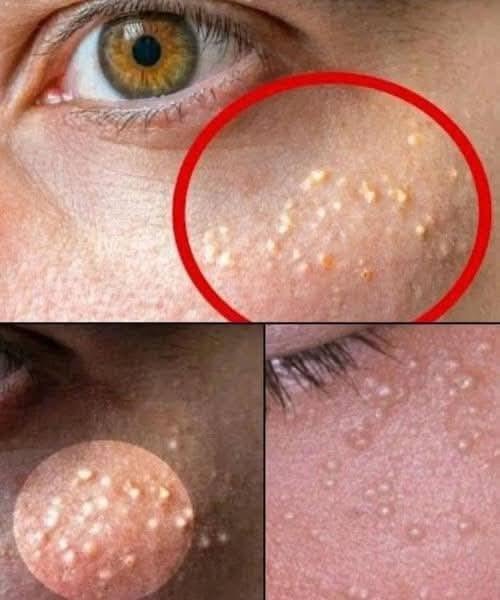
Have you noticed tiny white bumps around your eyes, cheeks, or forehead that refuse to disappear? These small bumps are often milia, a common and harmless skin condition. Although they may resemble whiteheads, milia are actually tiny cysts filled with keratin trapped beneath the skin’s surface.
They are not caused by poor hygiene or acne, and they usually don’t cause pain or itching. However, many people seek treatment because of their appearance.
What Causes Milia?
Milia develop when dead skin cells become trapped instead of shedding naturally. Several factors may increase the risk, including:
- Aging and slower skin cell turnover
- Sun damage
- Heavy or oily skincare products
- Skin injuries or burns
- Long-term use of certain steroid creams
Milia are most commonly found around the eyes, nose, forehead, cheeks, and chin.
Safe Natural Ways to Reduce Milia
1. Cleanse Gently Every Day
Wash your face twice daily with a mild, fragrance-free cleanser. Gentle cleansing helps remove excess oil and surface debris without irritating sensitive skin.
2. Exfoliate Carefully
Use a gentle exfoliating product containing lactic acid or glycolic acid once or twice a week. This encourages healthy skin renewal and may help prevent new milia from forming.
3. Steam Your Face
A weekly facial steam for five to seven minutes may help soften the skin and support natural exfoliation. Always follow with a lightweight moisturizer.
4. Choose Lightweight Moisturizers
Avoid thick creams around the eyes. Instead, select non-comedogenic products containing ingredients like hyaluronic acid, ceramides, or niacinamide.
5. Wear Sunscreen Daily
Daily use of broad-spectrum SPF 30 or higher helps protect the skin from sun damage, which can contribute to milia and premature aging.
What You Should Never Do
Do not squeeze or pick at milia. Unlike pimples, they cannot be safely popped at home. Attempting to remove them yourself may cause infection, scarring, or skin discoloration.
When to See a Dermatologist
Consult a dermatologist if the bumps become painful, inflamed, spread rapidly, or do not improve over time. A healthcare professional can safely remove persistent milia using specialized techniques.
Final Thoughts
Milia are a common skin concern and are usually harmless. A gentle skincare routine, regular sun protection, and mild exfoliation can help improve skin texture and reduce future bumps. If they persist or cause concern, professional treatment is the safest and most effective option.