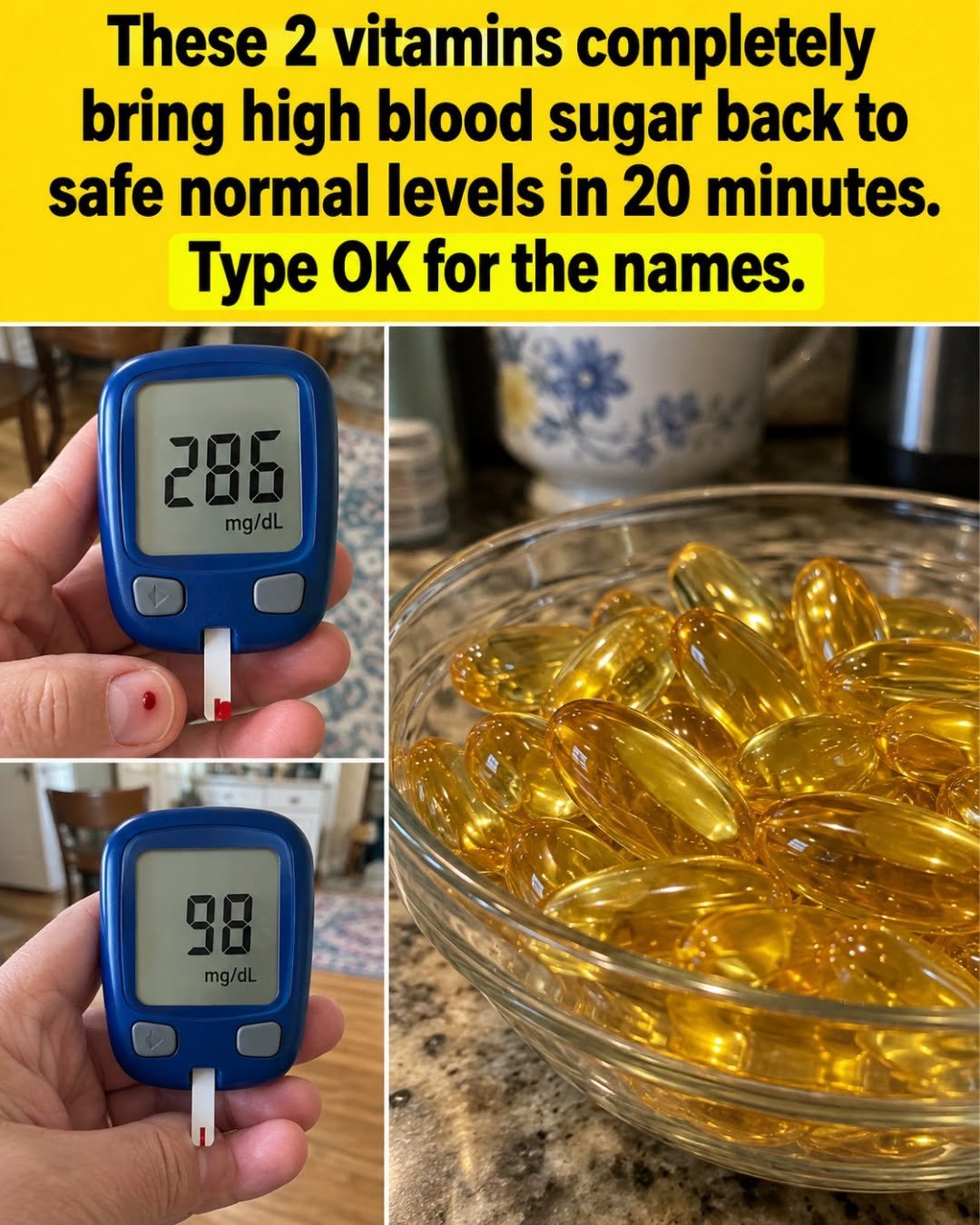
These Two Vitamins Support Stable Blood Sugar
High blood sugar can leave people feeling tired, thirsty, foggy, and frustrated all at once. The worst part is how quickly fear takes over when a number on the meter looks higher than expected. In moments like that, people start searching for a fast fix, hoping something simple will bring relief. There is a reason this kind of promise spreads so fast online, and the truth behind it is more important than the hype. The real story is not about instant reversal, but about what actually supports healthy glucose control over time—and the part most posts leave out is coming next.
Why Blood Sugar Spikes Feel So Overwhelming
Blood sugar rises when the body has trouble moving glucose from the bloodstream into cells efficiently. That can happen for many reasons, including meals high in refined carbohydrates, stress, poor sleep, illness, low activity, or insulin resistance. When glucose stays elevated, the body may respond with thirst, frequent urination, fatigue, or blurred vision. According to research and major health organizations, no vitamin works like a rescue switch for blood sugar. Still, certain nutrients can support the body’s normal metabolic functions, especially when used consistently and appropriately.
But that is only part of the picture. Many people are not looking for a lecture—they are looking for something practical, safe, and realistic. So let’s separate what is possible from what is not.
The Claim Behind the Viral Post
The post suggests that two vitamins can bring high blood sugar back to normal in 20 minutes. That is not supported by reliable medical evidence. Vitamins do not work that way, and they do not replace diabetes medication, meal planning, hydration, movement, or medical care when needed. What they can do is support overall nutritional status, which may matter for long-term health.
Here is the key distinction: support is not the same as immediate correction.
That means a safer, more honest approach is to look at the nutrients being discussed, understand what they do, and use them in a way that fits a balanced routine.
The Two Nutrients Often Mentioned in These Posts
In many versions of this claim, the two softgels shown are a fat-soluble vitamin commonly used for bone and immune support, and another fat-soluble vitamin often associated with antioxidant activity. These nutrients are sometimes taken together because both are absorbed better when eaten with food that contains fat.
Here is what matters most: neither one should be expected to rapidly drop a reading from very high to normal. However, both may play a role in general wellness when someone has a documented need or a diet that lacks enough of them.
What Each Nutrient Is Commonly Used For
Vitamin D3 supports calcium balance, bone health, muscle function, and immune-related processes. Some studies have explored how vitamin D status relates to insulin sensitivity, but the evidence does not show a fast blood sugar fix.
Vitamin E helps protect cells from oxidative stress. It is an antioxidant, meaning it helps limit damage from unstable molecules in the body. Research has examined its role in metabolic health, but again, not as an emergency glucose-lowering tool.
In short: these nutrients may support normal body function, but they are not a substitute for blood sugar management.
Why This Method Keeps Showing Up Online
The reason this type of post gets attention is simple: it offers hope in a stressful moment. People want something easy, low-cost, and immediate. That emotional pull is powerful, especially when someone is worried about a high meter reading. But the internet often confuses “popular” with “proven.”
There is also a visual trick at work. A before-and-after image can make a dramatic change look effortless, even when the real-world situation is much more complex. Blood glucose naturally changes throughout the day depending on food, activity, stress, medication, and hydration. A single image does not tell the full story.
What a Safer, Realistic Version Looks Like
If someone wants to use these nutrients responsibly, the focus should be on label directions, food timing, and overall consistency. That means taking them as directed on the package, usually with a meal that includes some fat, because fat-soluble vitamins absorb better that way.
Here is a simple, practical routine:
- Take the serving amount listed on the label.
- Swallow with a full glass of water.
- Use them with or after a meal that contains healthy fat.
- Do not exceed the recommended dose unless a clinician advises it.
- Keep monitoring blood sugar if you have diabetes or prediabetes.
This approach is much more grounded than chasing a miracle result. And that matters because safe habits are the ones people can repeat.
How to Use Them in a Daily Routine
The best timing is usually with a meal, not on an empty stomach. Many people choose breakfast or lunch if that meal includes eggs, yogurt, nuts, avocado, olive oil, or another source of dietary fat. That can help with absorption and reduce the chance of stomach discomfort in sensitive people.
If someone already takes prescription medication for blood sugar, these vitamins should be viewed as part of a broader nutrition plan, not a replacement. It is also wise to check for interactions, especially if the person takes other supplements or has liver, kidney, or digestive concerns.
Common Mistakes People Make
One of the biggest mistakes is expecting an instant blood sugar drop. Another is taking more than the label recommends because “more must be better.” That is not how fat-soluble vitamins work, and too much can cause problems over time.
Other mistakes include:
- Taking them without food and then assuming they are ineffective.
- Using supplements to replace prescribed treatment.
- Ignoring repeated high readings.
- Assuming a social media post is the same as medical advice.
Research consistently shows that blood sugar management works best when nutrition, movement, sleep, stress control, and medical guidance are combined. No single capsule can do all of that alone.
Who This Approach May Fit Best
This kind of supplement routine may be most appropriate for adults who already know they have a low intake of these nutrients, or who have been told by a clinician that supplementation is reasonable. It may also fit people who want to support general wellness while following a balanced diet.
It is less appropriate for anyone looking for a fast fix for a very high glucose reading. If blood sugar is repeatedly elevated, the priority should be checking the cause and getting proper care. That is especially important if symptoms are severe or the person feels unwell.
The safest mindset is simple: use nutrients to support health, not to chase dramatic claims.
Practical Tips You Can Use Right Away
If your goal is steadier blood sugar support, start with the basics that have real-world value:
- Eat balanced meals with protein, fiber, and healthy fats.
- Limit oversized portions of refined carbs and sugary drinks.
- Walk after meals when possible.
- Sleep enough, because poor sleep can raise glucose levels.
- Track patterns instead of reacting to one reading alone.
These habits do not sound as flashy as viral promises, but they are far more reliable. And unlike hype, they are built for the long term.
Best Use Case for These Vitamins
The best use case is as part of a normal supplement routine when there is a genuine need, a balanced meal, and realistic expectations. They are not emergency tools. They are not a shortcut. And they are not a substitute for blood sugar treatment.
If someone sees a reading that is much higher than usual, the right move is to follow their care plan, hydrate if appropriate, and contact a healthcare professional when needed. Supplements can support wellness, but they should never delay proper care.
Frequently Asked Questions
Do these vitamins lower blood sugar quickly?
There is no good evidence that they rapidly lower blood sugar within 20 minutes. They may support general health, but they are not an emergency glucose treatment.
Can they be taken together?
Many products are taken together in routine supplementation, but the correct dose depends on the label and the person’s health needs. A clinician can help determine whether they are appropriate.
Should they be taken with food?
Yes, they are usually better taken with a meal that contains some fat because they are fat-soluble and absorb better that way.
Conclusion
Viral posts often promise dramatic results because dramatic results get attention. But when it comes to blood sugar, the truth is more careful and more useful: these two vitamins may support normal nutritional functions, yet they do not instantly normalize glucose. The smarter path is to use supplements responsibly, follow label directions, and focus on habits that genuinely support metabolic health over time. That is how you protect your body without falling for a misleading shortcut.