
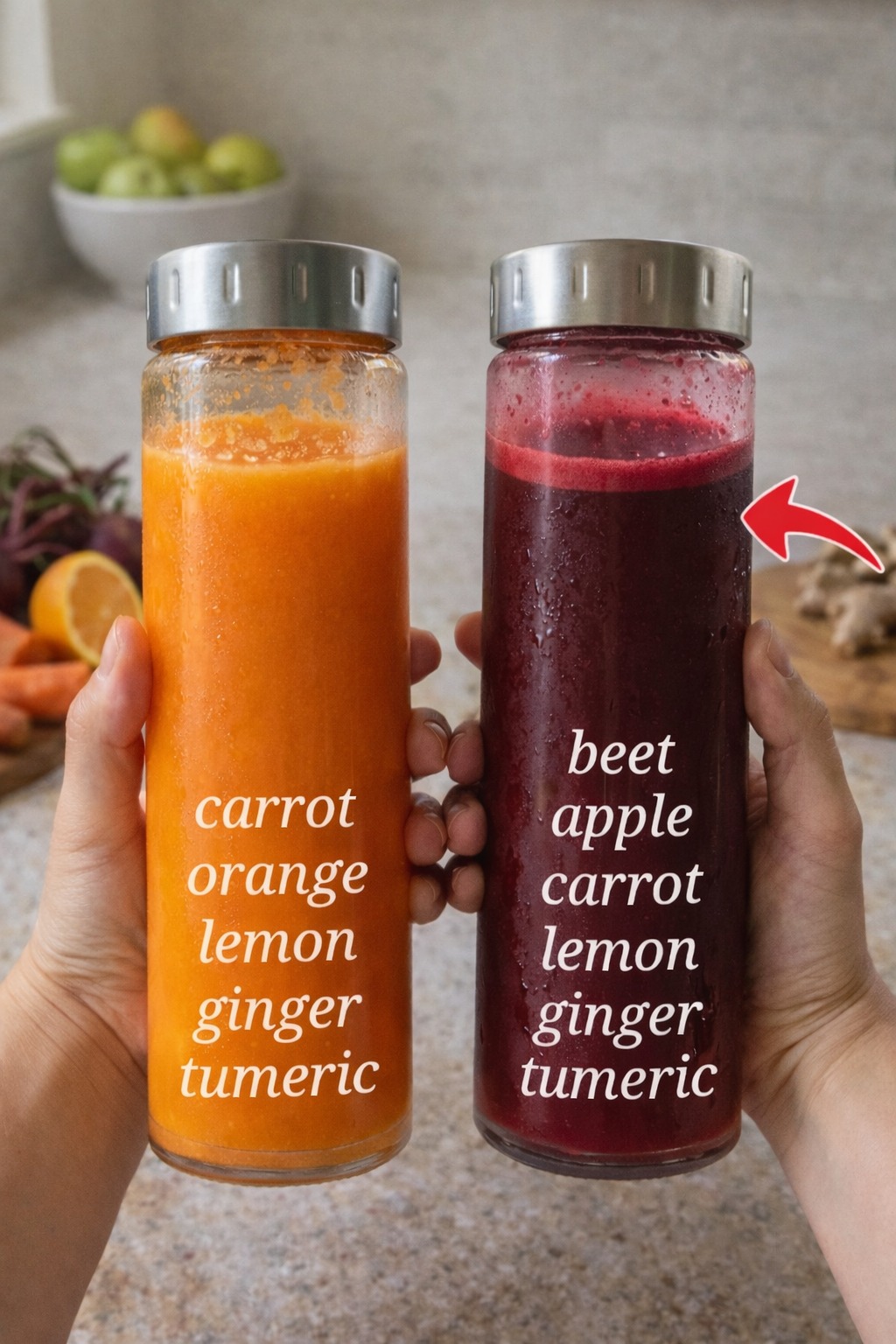
These two juices will change your life. Learn more
There’s a good chance you walked past the answer at your grocery store last week — and didn’t even notice it. Millions of Americans are spending hundreds of dollars on supplements, energy drinks, and wellness products when some of the most powerful support for their immune system, digestion, and energy levels is sitting right in the produce aisle. The truth is, what you put in a glass each morning can either quietly work for your body or do absolutely nothing for it — and most people have never been shown the difference. Stay with us, because the second recipe on this list contains a combination that researchers have been paying close attention to for its effects on inflammation and circulation.
Why Juicing Makes Sense — Especially After 50
As we age, our digestive systems become less efficient at extracting nutrients from food. Absorption rates slow down. Stomach acid decreases. And many Americans simply aren’t eating enough variety in their fruits and vegetables to begin with.
Freshly made juice changes the equation.
When fruits and vegetables are juiced or blended, the nutrients become far easier for your body to absorb quickly — without the heavy digestive workload of a full meal.
Here’s the other thing nobody mentions: most adults over 50 are chronically mildly dehydrated without realizing it. The thirst sensation weakens with age. A nutrient-dense juice first thing in the morning addresses both hydration and nutrition at the same time.
That said — juice is a complement to healthy eating, not a replacement for it. The goal is to add, not subtract.
Recipe #1: Carrot, Orange, Lemon, Ginger and Turmeric Juice
The Morning Elixir That Earns Its Name
This bright, sunshine-colored blend has become a staple in the wellness community — and for good reason. Every ingredient in this glass pulls its weight.
Before we get to the recipe, here’s why each ingredient matters for people specifically over 50.Carrots are one of the richest natural sources of beta-carotene, which your body converts into vitamin A. Vitamin A supports eye health, skin integrity, and immune function — three areas that naturally need more attention as we get older.
Oranges deliver a meaningful dose of vitamin C. Beyond immune support, vitamin C plays a direct role in collagen production — the structural protein that keeps skin, joints, and blood vessels strong. Collagen production naturally declines with age, making vitamin C increasingly important.
Lemon supports digestive function and liver health. Studies suggest that compounds in lemon may help stimulate bile production, which aids fat digestion — something that can slow down after 50.
Ginger has been studied extensively for its effect on inflammation and digestive comfort. It’s particularly useful for people who experience bloating, nausea, or morning stiffness. Research shows ginger contains compounds called gingerols that have measurable anti-inflammatory properties.
Turmeric — specifically its active compound curcumin — has become one of the most researched natural anti-inflammatory ingredients in modern nutrition science. Studies suggest it may support joint comfort, brain health, and protection against oxidative stress.
How to Make It What Makes This Juice Worth Adding to Your Morning
Most people reach for coffee first thing — and there’s nothing wrong with that. But adding this juice before the coffee, even just three or four mornings a week, gives your body something it genuinely can’t get from caffeine.
The combination of vitamin C from the orange and lemon, alongside the anti-inflammatory action of ginger and turmeric, creates a synergistic effect that a supplement bottle rarely replicates as well as whole food sources do.
And here’s a practical note: add a pinch of black pepper to this juice. Research shows that piperine — the active compound in black pepper — can dramatically increase the bioavailability of curcumin from turmeric. Without it, much of the turmeric passes through your system without being fully absorbed.
Recipe #2: Beetroot, Apple, Carrot, Lemon, Ginger and Turmeric Juice
The Deep-Cleanse Blend Researchers Are Paying Attention To
This is the one worth staying for.
Beetroot juice has become one of the most studied natural beverages in sports and cardiovascular nutrition — and the findings are genuinely interesting for anyone concerned about heart health, blood pressure, or energy levels as they age.Here’s what each ingredient brings to this glass — and why it’s particularly relevant for people over 50.
Beetroot is rich in dietary nitrates. Your body converts these nitrates into nitric oxide, a compound that helps relax and widen blood vessels. Studies have shown that regular beetroot juice consumption may support healthy blood pressure levels and improve circulation. For adults over 50, where cardiovascular health becomes a front-and-center priority, this is worth paying attention to.
Apples contribute natural sugars that make this juice genuinely pleasant to drink without added sweetener. They also provide quercetin — a plant compound with antioxidant and anti-inflammatory properties that has been studied for its potential role in immune health.
Carrots add beta-carotene and a natural sweetness that balances the earthiness of the beet. Think of them as the glue that holds this flavor profile together.
Lemon adds brightness and supports your body’s natural detoxification pathways, particularly liver function. The citric acid also helps preserve the juice’s color and freshness.
Ginger supports gut comfort and has a well-documented ability to reduce markers of inflammation in the body. For anyone dealing with joint stiffness or digestive sluggishness in the morning, ginger is a meaningful addition.
Turmeric rounds the blend with its curcumin content — supporting the same anti-inflammatory and antioxidant functions described in the first recipe.
How to Make It—
How These Two Juices Compare — A Quick Side-by-Side
| Carrot-Orange-Ginger | Beetroot-Apple-Carrot | |
|---|---|---|
| Best time to drink | First thing in the morning | Morning or mid-afternoon |
| Primary focus | Immune support, skin, energy | Circulation, liver, cleansing |
| Flavor profile | Bright, citrusy, warming | Earthy, sweet, bold |
| Intensity for beginners | Moderate — easy to start with | Stronger — start with less beet |
| Natural sugar level | Moderate | Moderate to higher |
| Shared ingredients | Ginger, turmeric, carrot | Ginger, turmeric, carrot |
Both recipes share three ingredients — carrot, ginger, and turmeric — which means they build on each other rather than overlap redundantly. Together, they give you a broader spectrum of nutrients than either one alone.
Practical Tips to Get the Most Out of These Juices
You don’t need an expensive cold-press juicer to make either of these recipes work. A standard centrifugal juicer or even a high-speed blender with a strainer gets the job done.
A few habits that make a real difference:
Drink fresh, not stored. Freshly made juice begins losing certain nutrients — particularly vitamin C — relatively quickly once exposed to air. Drinking within 15 to 20 minutes of making it gives you the highest nutritional return.
Be consistent more than perfect. Three to four times per week, consistently, will do far more for you than seven days in a row followed by a month of nothing.
Don’t juice on an empty stomach if you’re sensitive. Some people experience mild nausea or digestive discomfort from strong juices, particularly the beet blend, on a completely empty stomach. A small handful of nuts or a few crackers first can help.
Add black pepper to both recipes. This single habit meaningfully increases how much curcumin from turmeric your body actually absorbs and uses.
Know who should check in with their doctor first. Beet juice can interact with blood pressure medications due to its nitrate content. Ginger in large amounts can interact with blood thinners. If you take daily medications, a quick conversation with your doctor before making these a daily habit is a smart step.
Conclusion
There’s a reason nutrition experts keep coming back to whole, plant-based foods as the foundation of good health — and these two juice recipes put some of the most nutrient-dense produce nature offers into a convenient, delicious daily practice.
The carrot-orange-ginger blend gives your mornings an immune-boosting, skin-supporting, anti-inflammatory lift. The beetroot-apple blend goes deeper — supporting circulation, liver function, and the kind of cellular cleanup your body needs more of as the years go on.
Neither one is a miracle. Both of them, done consistently, are genuinely good for you. And that’s exactly what a smart, sustainable health habit looks like.