Mini-Strokes Often Go Unnoticed: 9 Symptoms You Should Never Ignore
Mini-Strokes Often Go Unnoticed: 9 Symptoms You Should Never Ignore
7 Warning Signs of a Mini-Stroke You Should Never Ignore
A “mini-stroke,” medically called a transient ischemic attack (TIA), can be easy to overlook because its symptoms may disappear within minutes or hours.
But temporary symptoms do not mean the event was harmless.
A TIA occurs when blood flow to part of the brain is temporarily disrupted. The resulting symptoms can look very much like those of a stroke. The American Stroke Association describes a TIA as a warning stroke because it can signal an increased risk of having a full stroke.
If sudden neurological symptoms appear—even if they completely disappear afterward—urgent medical evaluation is important. Do not wait for symptoms to return before seeking help.
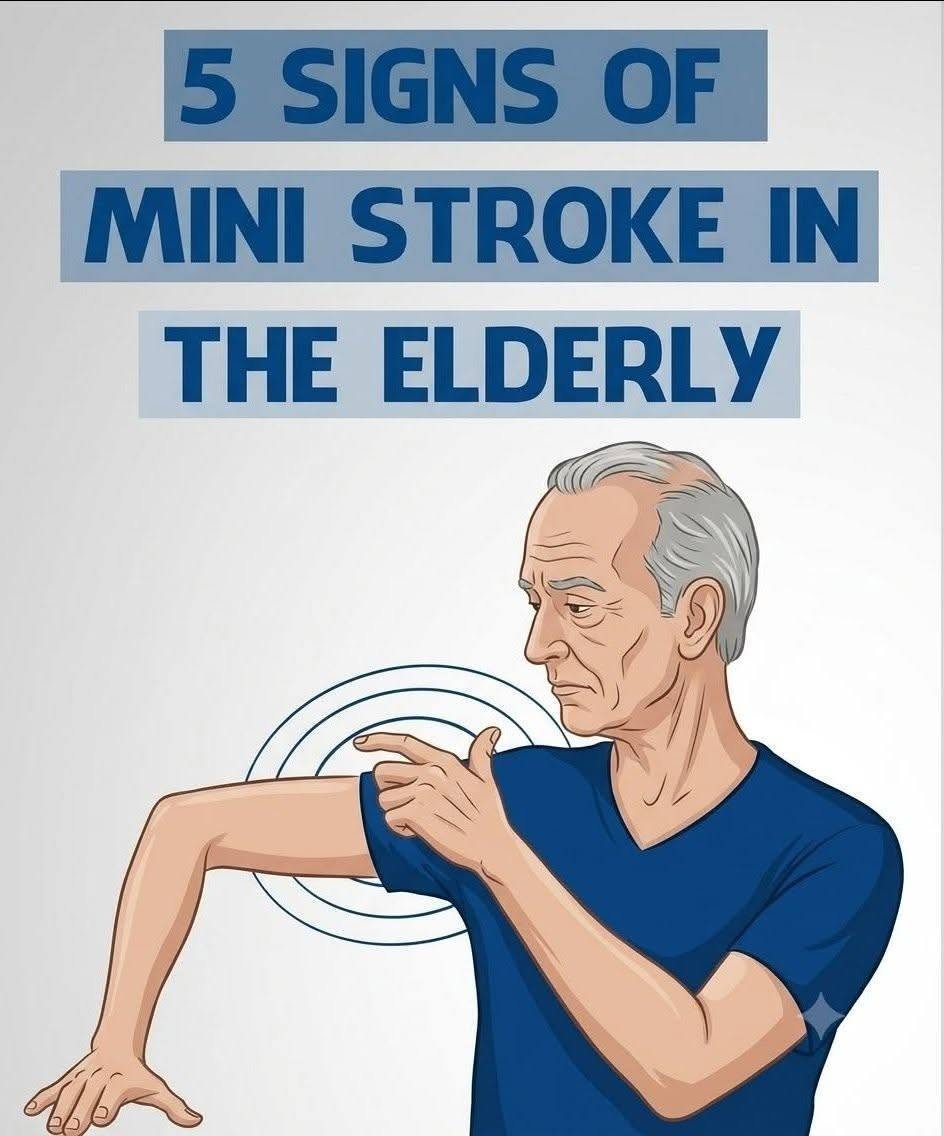
1. Sudden Weakness on One Side
Sudden weakness is one of the most recognizable warning signs of a stroke or TIA.
It may affect the:
- Face
- Arm
- Hand
- Leg
The weakness often occurs on one side of the body. Someone may suddenly have trouble gripping an object, lifting one arm, standing, or walking normally.
Because TIA symptoms can resolve quickly, a person may feel fine again and assume the episode was nothing serious.
A Simple Check
Ask the person to raise both arms.
If one arm cannot be lifted normally or begins drifting downward, treat the situation as an emergency.
2. Sudden Numbness or Loss of Sensation
A TIA can cause sudden numbness, sometimes with weakness and sometimes without it.
A person may describe the sensation as:
- Pins and needles
- Loss of feeling
- A heavy or unusual sensation
- Numbness on one side of the face
- Numbness in an arm or leg
Sudden, unexplained numbness—especially when it affects one side of the body—should not be casually dismissed.
While numbness can have many causes, a sudden neurological change needs prompt assessment.
3. Facial Drooping
Temporary weakness of the facial muscles can cause one side of the face to droop.
You might notice:
- One corner of the mouth hanging lower
- An uneven smile
- One side of the face appearing weaker
- A sensation of numbness in the face
Facial drooping is one of the classic signs included in the F in FAST.
Try the FAST Face Check
Ask the person to smile.
If one side of the face does not move normally or the smile suddenly becomes uneven, seek emergency medical help immediately.
4. Sudden Trouble Speaking or Understanding
A TIA can temporarily affect areas of the brain involved in language.
Someone may suddenly:
- Slur their speech
- Have trouble finding ordinary words
- Speak in an unusual or confused way
- Say words or sentences that do not make sense
- Have difficulty understanding what another person is saying
Sudden speech or language problems are important warning signs.
You can ask the person to repeat a simple sentence. If their speech suddenly sounds abnormal or they cannot understand the request, don’t wait to see whether it passes.
5. Sudden Vision Changes
Temporary changes in vision can also occur during a TIA.
Possible symptoms include:
- Sudden blurred vision
- Double vision
- Partial loss of vision
- Sudden blindness in one eye
- Difficulty seeing normally
Because the problem may disappear quickly, someone might assume their eyes were tired or that the episode was temporary and harmless.
A sudden unexplained change in vision, however, can be a neurological warning sign and deserves urgent medical assessment.
6. Sudden Dizziness or Vertigo
A TIA can sometimes affect parts of the brain involved in balance and coordination.
A person may suddenly experience:
- Dizziness
- A spinning sensation
- Difficulty standing
- Feeling pulled toward one side
- Sudden trouble walking
Dizziness by itself is extremely common and can result from many conditions that have nothing to do with stroke.
However, sudden dizziness combined with other neurological symptoms—such as weakness, speech problems, vision changes, or severe coordination problems—is much more concerning.
7. Sudden Loss of Balance or Coordination
A person experiencing a TIA may suddenly have difficulty coordinating their movements.
They might:
- Stagger while walking
- Suddenly become unsteady
- Drop objects
- Have difficulty controlling an arm or hand
- Need support to remain standing
Sudden problems with balance or coordination can be an important stroke warning sign, particularly when they occur alongside other symptoms.
The B.E. F.A.S.T. stroke-recognition method includes Balance and Eyes because these symptoms can also occur during stroke.
What Is FAST or B.E. F.A.S.T.?
Knowing a simple stroke-recognition method can help you react quickly.
F — Face: Is one side of the face drooping?
A — Arms: Is one arm weak or drifting downward?
S — Speech: Is speech suddenly slurred, confused, or difficult to understand?
T — Time: If these symptoms appear, time is critical. Call emergency medical services.
B.E. F.A.S.T. adds:
B — Balance: Is there sudden loss of balance or coordination?
E — Eyes: Is there sudden vision loss or another unexplained vision problem?
T — Time: Get emergency help immediately.
What Should You Do If Symptoms Disappear?
This is one of the most important points about a TIA.
Do not assume that you’re safe simply because the symptoms have gone away.
A TIA can be a warning that a more serious stroke could occur. Someone who experiences sudden weakness, numbness, facial drooping, speech difficulty, vision changes, or significant balance problems should receive urgent medical evaluation—even if they feel completely normal afterward.
Do not drive yourself if emergency symptoms are occurring. Contact your local emergency medical service and explain what happened, including when the symptoms started and when they stopped.
Knowing the exact timing can help medical professionals assess the situation.
TIA vs. Stroke: What’s the Difference?
A TIA and an ischemic stroke can cause similar neurological symptoms.
The major distinction is that TIA symptoms are temporary because the interruption of blood flow does not result in permanent brain injury in the same way an ischemic stroke does.
However, you cannot safely determine at home whether a sudden neurological episode is a TIA or a stroke.
That’s why symptoms should be treated seriously even when they improve.
When to Seek Emergency Help
Call your local emergency medical service immediately if someone suddenly develops:
- Facial drooping
- One-sided weakness or numbness
- Difficulty speaking or understanding
- Sudden vision loss or major vision changes
- Sudden severe balance or coordination problems
- Other unexplained neurological symptoms
Do not wait for symptoms to disappear.
If symptoms have already disappeared, urgent medical assessment is still important because a TIA can be a warning sign of a future stroke.
Final Thoughts
A TIA may last only a short time, but that doesn’t make it something to ignore.
Sudden weakness, numbness, facial drooping, speech difficulties, vision changes, dizziness, and loss of balance can all be warning signs of a stroke or TIA. Recognizing these symptoms quickly and getting emergency medical attention can make a critical difference.
When it comes to sudden neurological symptoms, don’t wait to see what happens. Treat them as an emergency.