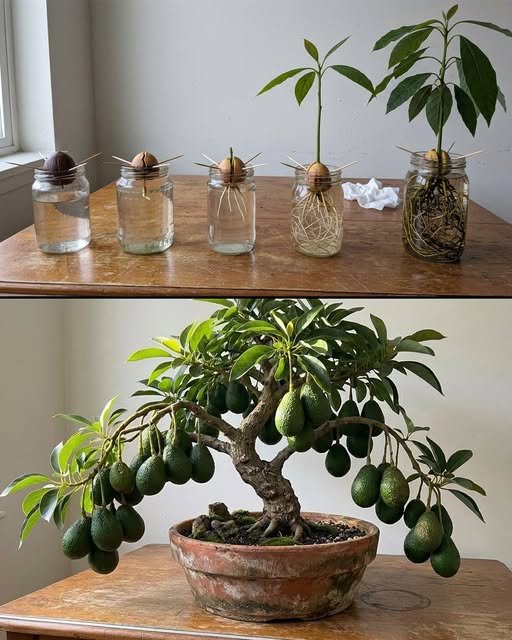
How to Grow Avocados at Home: From Pit to Faster Fruit
Many people start their avocado growing journey by saving a pit from the kitchen. Sprouting a seed is a great project, but if you want to actually harvest and eat your own avocados, you need to know a few important techniques. Relying on a seed alone will require a lot of patience, but with a simple trick called grafting, you can speed up the process by years.
The Secret to Faster Fruit: Grafting
Growing an avocado directly from a seed is fun, but it comes with two major problems. First, a tree grown from seed can take anywhere from 10 to 15 years to produce its first avocado. Second, avocados grown from seed rarely taste like the avocado you originally ate. The fruit might be watery, stringy, or very small.
To fix this, avocado growers use a method called grafting. Grafting combines two different plants into one. You use your seed-grown plant for its strong roots, and you attach a branch from an older tree that already makes great avocados.
Here is why grafting is the most important step:
- Faster Harvests: Because the attached branch is taken from an adult tree, your new plant acts like an adult right away. A grafted tree can produce fruit in just 3 to 4 years instead of 15.
- Guaranteed Quality: The fruit will be an exact copy of the tree the branch came from. If you use a branch from a Hass avocado tree, you will get Hass avocados.
How to Graft Your Avocado
Grafting might sound complicated, but it is a straightforward process once your seedling is ready.
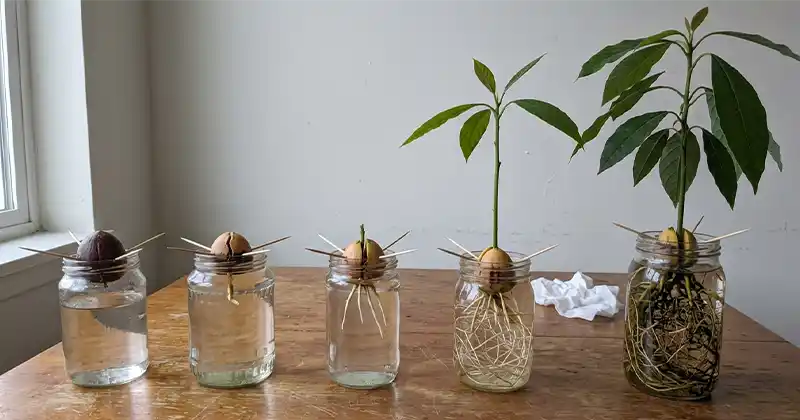
- Grow the Rootstock: Sprout your avocado seed and let it grow until the main green stem is about as thick as a pencil. This is your “rootstock.”
- Get a Scion: Find a small, healthy branch from a mature avocado tree that produces good fruit. This piece is called the “scion.” It should be the same thickness as your seedling.
- Make the Cuts: Cut the top leafy part off your seedling, leaving a short stump. Carefully split the top of this stump straight down the middle, about one inch deep.
- Shape the Scion: Take your scion branch and carve the bottom end into a V-shaped wedge.
- Join Them: Slide the V-shaped wedge of the scion firmly into the split on your seedling stump. The green layers under the bark need to touch so they can heal together.
- Wrap it Up: Wrap the connection tightly with special gardening grafting tape. This keeps the joint clean and holds it together while the plant heals and grows into a single tree.
Growing Avocados Indoors in Pots
If you live in an area with cold winters, you can successfully grow an avocado tree indoors. They adapt well to containers if you provide the right conditions.
- Proper Soil: Avocados have fragile roots that easily rot in heavy, wet dirt. Always use a loose potting mix blended with sand or perlite so water drains out very quickly.
- Maximum Light: Place your potted avocado in front of a south-facing window. They need at least 6 to 8 hours of direct, bright sunlight every day. If your house is dark, you will need to hang a plant grow light directly above it.
- Careful Watering: Never keep the soil constantly wet. Wait until the top two to three inches of the soil feel completely dry to the touch before watering again. When you do water, soak it thoroughly until water runs out the bottom of the pot.
The Ultimate Challenge: Avocado Bonsai
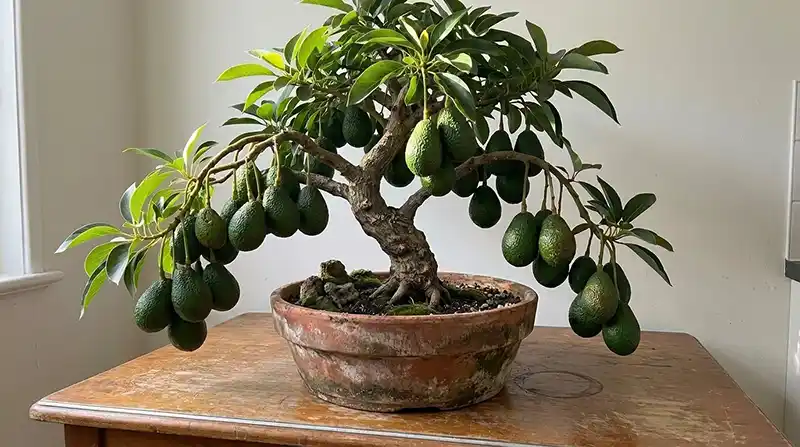
Turning an avocado into a miniature bonsai tree that looks beautiful and produces fruit is a rewarding challenge. Avocados naturally want to grow into massive trees with huge leaves, so you have to train them constantly.
- Choose a Dwarf Variety: To get fruit on a tiny bonsai tree, you must graft a dwarf avocado variety onto your seedling. The ‘Wurtz’ variety (often sold as ‘Little Cado’) is the best choice because it naturally stays smaller.
- Constant Pruning: To keep the tree small and force it to grow smaller leaves, you must frequently pinch off the newest leaf buds at the tips of the branches. This forces the tree to grow wider and thicker instead of tall and leggy.
- Root Trimming: Every two to three years, you will need to pull the tree out of its bonsai pot, carefully trim back a small portion of the thickest roots, and replant it with fresh soil to keep it miniature.
Pro Tricks and Tips for Success
- Plant in Dirt: Instead of using toothpicks and a glass of water, plant your fresh avocado pit directly into a small pot of moist soil. It often creates a much stronger, healthier root system from the very beginning.
- Feed Heavy: Avocados need a lot of food. Use a fertilizer specifically made for citrus or avocado trees, as they contain important nutrients like zinc that general fertilizers do not have.
- Protect the Bark: Young avocado bark burns easily in direct, intense sun. If you move your indoor tree outside for the summer, keep the main trunk shaded or loosely wrapped to prevent sunburn.
- Leave the Roots Alone: Avocado roots grow very close to the surface of the soil. Never dig or rake heavily around the base of your tree, as you will easily damage the shallow root system.