High Cholesterol Symptoms: What Your Body Is Trying to Tell You
High Cholesterol Symptoms: What Your Body Is Trying to Tell You
Have you ever wondered whether your body could be warning you about high cholesterol without you even realizing it? Many people believe that serious health problems always come with obvious symptoms, such as pain, dizziness, or extreme tiredness. However, high cholesterol is different. It can quietly build up over time without causing noticeable warning signs.
High cholesterol is one of the most common health concerns worldwide. It can affect people of different ages, including those who feel healthy, exercise regularly, and have no obvious medical problems. The biggest concern is that untreated high cholesterol can contribute to the development of cardiovascular disease, including heart attacks and strokes.
But what exactly is cholesterol? Which symptoms should you look out for? Can your body show visible signs of high cholesterol? And how can you find out whether your cholesterol levels are too high?
Understanding the answers to these questions can help you take better care of your heart and protect your long-term health.
What Is Cholesterol?
Cholesterol is a waxy, fat-like substance found in your blood and in the cells of your body. Your body needs cholesterol to produce hormones, build cell membranes, and make vitamin D and substances that help digest food.
Your liver produces much of the cholesterol your body needs. Cholesterol also enters your body through certain foods, particularly animal-based foods.
The problem begins when certain cholesterol levels become too high, especially when low-density lipoprotein cholesterol is elevated.
Cholesterol travels through your bloodstream in particles called lipoproteins. Two important types are LDL and HDL.
1. LDL Cholesterol: The So-Called Bad Cholesterol
Low-density lipoprotein, or LDL, is commonly known as bad cholesterol.
When LDL levels are too high, cholesterol can accumulate in the walls of your arteries. Over time, this buildup can contribute to the formation of plaques that narrow and stiffen the arteries.
This process is called atherosclerosis. It can reduce blood flow to vital organs and increase the risk of heart attacks, strokes, and other circulation problems.
2. HDL Cholesterol: The Good Cholesterol
High-density lipoprotein, or HDL, is often called good cholesterol because it helps transport cholesterol away from tissues and toward the liver for processing.
However, having high HDL does not completely eliminate the risks associated with elevated LDL or other abnormal blood fats.
3. Triglycerides: Another Important Blood Fat
Triglycerides are another type of fat found in your blood. Your body uses them to store energy, but elevated triglycerides can contribute to cardiovascular risk, particularly when combined with high LDL, low HDL, diabetes, or other risk factors.
A lipid profile blood test can measure these important blood fats and help your healthcare professional assess your cardiovascular health.
High Cholesterol Symptoms: What Does Your Body Tell You?
One of the most important facts about high cholesterol is that it usually causes no symptoms at all.
You may have elevated cholesterol for years without experiencing pain, weakness, headaches, or any other obvious warning signs.
This is why high cholesterol is sometimes called a silent risk factor. A person can feel perfectly healthy while cholesterol gradually contributes to plaque buildup inside the arteries.
Nevertheless, certain visible changes or symptoms can sometimes be associated with inherited cholesterol disorders or complications caused by narrowed arteries.
Understanding the difference is essential.
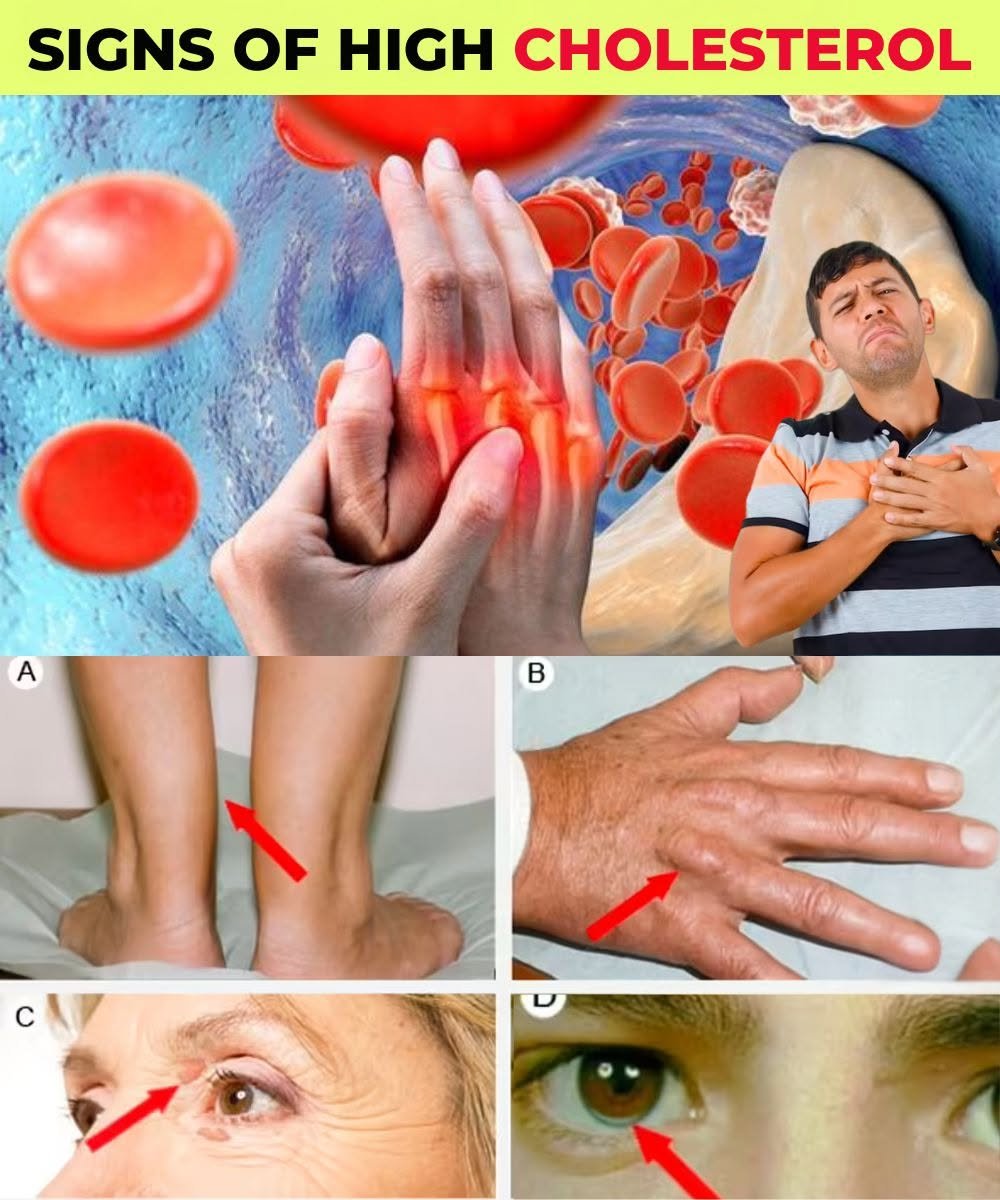
1. Yellowish Deposits Around the Eyes
One possible visible sign associated with certain cholesterol disorders is the appearance of yellowish deposits around the eyelids.
These deposits are known as xanthelasma.
They may appear as soft, yellow patches on or near the inner corners of the upper or lower eyelids. They are generally painless and may gradually become more noticeable.
Xanthelasma can be associated with elevated cholesterol, but it does not always indicate high cholesterol. Some people develop these deposits despite having normal cholesterol levels.
If you notice new yellowish patches around your eyes, consider consulting a healthcare professional. A lipid profile may be appropriate, depending on your medical history and other risk factors.
Important: The absence of yellow patches does not mean your cholesterol is normal.
2. A Gray or White Ring Around the Cornea
Have you noticed a pale gray or white ring around the colored part of someone’s eye?
This appearance is called corneal arcus. It occurs when lipid deposits accumulate around the outer edge of the cornea.
In older adults, corneal arcus is common and often relates to aging rather than a specific cholesterol problem.
However, when this sign appears in a younger person, particularly before the age of 45, it can sometimes be associated with inherited high cholesterol.
A gray or white ring around the eye cannot reliably diagnose high cholesterol. Blood testing is needed to assess cholesterol levels.
3. Yellowish Bumps on the Skin
Some people with markedly elevated cholesterol develop small yellowish bumps beneath or within the skin. These deposits are called xanthomas.
They can appear on the elbows, knees, hands, feet, buttocks, or other areas of the body.
Their appearance varies. Some are small and firm, while others form larger, raised patches or nodules.
Certain types of xanthomas are associated with inherited lipid disorders, including familial hypercholesterolemia.
However, not every yellowish skin bump is caused by cholesterol. Other skin conditions can look similar, so medical evaluation is important.
If you notice unusual yellowish bumps, especially if you also have a family history of high cholesterol or early heart disease, ask your healthcare professional whether cholesterol testing is appropriate.
4. Pain in the Legs When Walking
High cholesterol itself does not usually cause leg pain. However, cholesterol-related plaque buildup can narrow the arteries supplying blood to the legs.
This condition is known as peripheral artery disease, or PAD.
A common symptom is cramping, aching, or fatigue in the calves, thighs, or buttocks during walking or physical activity. The discomfort often improves after resting and may return when walking again.
Other possible signs include:
- Feet that feel colder than usual.
- Reduced hair growth on the lower legs.
- Slow-healing sores on the feet or legs.
- Changes in skin color or texture.
- Weak pulses in the feet.
These symptoms can have other causes, too. If you repeatedly experience leg pain while walking, seek medical evaluation.
Sudden severe pain, a cold or pale limb, or sudden numbness or weakness requires emergency assessment because it may indicate an acute circulation problem.
5. Chest Pain or Pressure
Chest discomfort is not a routine symptom of high cholesterol itself. However, cholesterol-related narrowing of the arteries that supply the heart can lead to coronary artery disease.
When the heart muscle does not receive enough oxygen-rich blood, a person may experience angina.
Possible symptoms include pressure, squeezing, heaviness, or discomfort in the chest. Pain or discomfort may also spread to the arms, shoulders, back, neck, jaw, or upper abdomen.
Some people experience shortness of breath, sweating, nausea, or unusual fatigue.
These symptoms can occur during physical activity or emotional stress, but they can also develop at rest, especially during a heart attack.
Seek emergency medical care immediately if you experience new or severe chest pressure, particularly with shortness of breath, cold sweating, faintness, or pain spreading to the arm or jaw. Do not wait for a cholesterol test.
6. Shortness of Breath During Activity
Shortness of breath is not a direct symptom of high cholesterol.
However, it can occur when cholesterol-related cardiovascular disease affects the heart’s ability to deliver blood effectively or when heart disease causes fluid buildup.
You might notice that climbing stairs, walking uphill, or performing routine activities becomes more difficult than before.
There are many other possible causes of breathlessness, including lung disease, anemia, infections, and physical deconditioning.
Persistent or unexplained shortness of breath should be evaluated by a healthcare professional. Sudden or severe breathlessness, especially with chest pain, requires emergency care.
7. Sudden Weakness, Numbness, or Difficulty Speaking
High cholesterol can contribute to plaque buildup in arteries that supply the brain. If blood flow becomes blocked, a stroke or transient ischemic attack may occur.
Warning signs can include:
- Sudden weakness or numbness of the face, arm, or leg, particularly on one side.
- Sudden difficulty speaking or understanding speech.
- Sudden vision changes.
- Sudden loss of balance or coordination.
- A sudden, severe headache without a known cause.
These symptoms do not mean that you can identify high cholesterol by how you feel. They may indicate a stroke or another medical emergency.
If any of these symptoms appear suddenly, call emergency services immediately, even if they improve after a few minutes.
Why High Cholesterol Can Be Dangerous Without Warning Signs
The greatest danger of high cholesterol is that artery damage may develop silently over many years.
LDL cholesterol can enter artery walls and contribute to plaque formation. As plaques grow, they may narrow the arteries and limit the supply of oxygen-rich blood to vital organs.
Sometimes a plaque ruptures, triggering a blood clot that suddenly blocks an artery.
Depending on where this occurs, the result may be a heart attack, stroke, or another serious circulation problem.
This explains why someone who feels healthy can still experience a cardiovascular emergency.
The absence of symptoms is not proof that cholesterol levels are healthy.
Who Is at Greater Risk of High Cholesterol?
Several factors can increase the likelihood of developing high cholesterol.
1. An unhealthy dietary pattern
Regularly consuming large amounts of saturated fat and trans fat can raise LDL cholesterol.
Sources may include fatty or processed meats, butter, high-fat dairy products, and foods containing partially hydrogenated oils.
The effect depends on the overall diet and the specific foods consumed.
2. Lack of physical activity
Regular physical activity supports cardiovascular health and can help improve triglyceride levels and other aspects of the lipid profile.
A sedentary lifestyle may contribute to an unfavorable cholesterol pattern, especially when combined with other risk factors.
3. Excess body weight
Excess weight, particularly when associated with abdominal fat, can contribute to elevated triglycerides, lower HDL cholesterol, and other metabolic problems.
Even modest improvements in diet and activity can benefit overall cardiovascular health.
4. Smoking
Smoking damages blood vessels and increases cardiovascular risk. It can also lower HDL cholesterol.
Stopping smoking is one of the most important steps a person can take to protect heart health.
5. Diabetes and other medical conditions
Diabetes, an underactive thyroid, certain kidney conditions, and some other medical problems can affect cholesterol levels.
Some medications may also influence blood fats.
If you have one of these conditions, your healthcare professional may recommend more frequent cholesterol testing.
6. Family history and genetics
Some people inherit a condition called familial hypercholesterolemia, which causes very high LDL cholesterol from an early age.
People with this condition may develop cardiovascular disease earlier than expected if it remains untreated.
A family history of very high cholesterol or heart attacks at a young age is an important reason to discuss screening with a healthcare professional.
Importantly, even young, physically active people with a healthy diet can have genetically elevated cholesterol.
How Can You Know If Your Cholesterol Is High?
The most reliable way to identify high cholesterol is through a blood test called a lipid profile or lipid panel.
Depending on the laboratory and the test ordered, it measures:
- Total cholesterol: The overall amount of cholesterol in the blood.
- LDL cholesterol: A major contributor to cholesterol buildup in artery walls.
- HDL cholesterol: A lipoprotein involved in transporting cholesterol.
- Triglycerides: Another type of blood fat associated with cardiovascular risk.
Your healthcare professional interprets these results in the context of your age, medical history, blood pressure, diabetes status, smoking history, and other risk factors.
There is no single cholesterol target that is ideal for every person. People with existing cardiovascular disease or particularly high risk may need lower LDL levels than those at lower risk.
Some lipid tests can be performed without fasting, although fasting may be requested in certain circumstances, particularly when triglyceride measurement requires clarification.
Ask your healthcare professional or laboratory whether you need to fast before your test.
What Can You Do to Lower High Cholesterol Naturally?
Healthy lifestyle changes can make an important difference to cholesterol levels and overall heart health. However, people with very high cholesterol or substantial cardiovascular risk may also need medication.
1. Eat More Soluble Fiber
Soluble fiber can help reduce LDL cholesterol by limiting the absorption of cholesterol in the digestive system.
Good sources include:
- Oats and barley.
- Beans and lentils.
- Apples and pears.
- Certain vegetables.
- Psyllium, when used appropriately.
Try adding oats to breakfast or including beans and lentils in your regular meals.
2. Choose Healthier Fats
Replacing saturated fats with unsaturated fats can help lower LDL cholesterol.
Consider using moderate amounts of olive, canola, or other unsaturated vegetable oils instead of butter or ghee. Nuts, seeds, and fish can also be part of a heart-healthy dietary pattern.
In South Asian diets, reducing excessive ghee, butter, fatty meats, and foods containing industrial trans fats may be particularly helpful.
You do not need to eliminate all dietary fat. The type of fat matters.
3. Exercise Regularly
Regular physical activity supports cardiovascular health and can improve triglycerides, fitness, and blood pressure.
For many adults, a useful goal is at least 150 minutes of moderate-intensity aerobic activity per week, provided their health allows it.
Brisk walking, cycling, swimming, and dancing are possible options.
If you have existing heart disease, significant symptoms, or another medical condition that limits exercise, discuss a suitable activity plan with your healthcare professional.
4. Maintain a Healthy Weight
If you have excess weight, gradual weight loss may help improve triglyceride levels and other cardiovascular risk factors.
Focus on sustainable changes rather than extreme diets or rapid weight-loss plans.
Balanced meals, regular activity, adequate sleep, and realistic goals are more likely to support lasting improvements.
5. Avoid Smoking
Smoking increases cardiovascular risk regardless of your cholesterol level.
Quitting can improve your overall health and reduce the likelihood of heart disease and stroke. Support from a healthcare professional can make quitting easier.
6. Limit Excessive Alcohol Consumption
Alcohol can raise triglyceride levels, especially when consumed in large amounts. Avoiding or reducing alcohol may be particularly important if your triglycerides are elevated.
People who do not drink should not start drinking for supposed heart-health benefits.
Do You Need Medication for High Cholesterol?
Lifestyle changes are important, but they are not always enough.
Statins are commonly prescribed medications that lower LDL cholesterol and reduce the risk of heart attacks and strokes in appropriate patients.
Other medications may be recommended when statins are not sufficient or cannot be tolerated.
Your healthcare professional may consider medication based on your LDL level, age, existing cardiovascular disease, diabetes, family history, and overall risk.
If you have been prescribed cholesterol medication, do not stop taking it simply because you feel healthy or your cholesterol improves. Discuss any concerns or side effects with your healthcare professional.
Common Myths About High Cholesterol
Myth 1: You can feel when your cholesterol is high.
Fact: High cholesterol usually has no noticeable symptoms. A blood test is necessary to measure it.
Myth 2: Only overweight people have high cholesterol.
Fact: People of any body size can have elevated cholesterol, including those who exercise regularly.
Myth 3: Eating no fat will solve the problem.
Fact: Your body needs dietary fat. Replacing saturated fats with healthier unsaturated fats is generally more useful than trying to eliminate all fat.
Myth 4: Natural supplements are always safer than medication.
Fact: Supplements can have side effects, interact with medicines, or lack strong evidence of effectiveness. They should not replace prescribed treatment without medical guidance.
Myth 5: If your cholesterol improves, you can stop your medicine.
Fact: Improved cholesterol may be the result of medication and lifestyle changes. Stopping treatment can allow cholesterol levels to rise again. Always consult your prescriber before changing treatment.
When Should You Get Your Cholesterol Checked?
Adults should discuss cholesterol screening with their healthcare professional, who can recommend an appropriate testing schedule based on age and individual risk.
Testing may be particularly important if you have diabetes, high blood pressure, kidney disease, a family history of early heart disease, or a previous cardiovascular event.
People with familial hypercholesterolemia or other significant risk factors may need testing earlier and more frequently.
Even if you feel completely healthy, knowing your cholesterol levels can help you make informed decisions about prevention and treatment.
Frequently Asked Questions About High Cholesterol
1. What is the first sign of high cholesterol?
There is usually no first noticeable sign. Many people discover high cholesterol through routine blood testing rather than symptoms.
2. Can high cholesterol cause headaches?
High cholesterol itself does not typically cause headaches. If headaches are persistent, severe, or unusual, they should be assessed on their own merits.
3. Can drinking water lower cholesterol?
Drinking water supports hydration but does not directly lower LDL cholesterol in a meaningful, established way. Dietary changes, physical activity, and medication when indicated are more effective strategies.
4. Can high cholesterol be reversed?
Cholesterol levels can often be substantially improved through lifestyle changes and, when necessary, medication. The goal is to reduce cardiovascular risk and maintain healthier levels over time.
5. Can a young person have high cholesterol?
Yes. Genetics, medical conditions, and dietary factors can cause high cholesterol in younger people. Familial hypercholesterolemia is an important inherited cause.
6. How quickly can cholesterol levels improve?
Changes can become measurable within several weeks, depending on the intervention and individual circumstances. Healthcare professionals commonly reassess lipid levels after starting or adjusting treatment to determine whether it is working.
7. Are yellow eyes always a sign of high cholesterol?
No. Yellow patches around the eyelids may be xanthelasma, which can be associated with cholesterol disorders, but they do not confirm high cholesterol. Yellowing of the whites of the eyes is different and may indicate jaundice, which needs prompt medical evaluation.
Final Thoughts: Listen to Your Health, Even When You Feel Fine
High cholesterol is a condition that often develops silently. You may feel energetic, exercise regularly, and have no pain while elevated LDL cholesterol gradually increases your risk of cardiovascular disease.
The most important warning is that you cannot reliably identify high cholesterol by looking at your body or judging how you feel.
A lipid profile blood test, combined with an assessment of your overall cardiovascular risk, provides much more useful information than symptoms alone.
Make heart-healthy choices by eating more fiber, replacing saturated fats with unsaturated fats, staying physically active, avoiding tobacco, and maintaining a healthy weight. If medication is recommended, take it as directed and attend follow-up appointments.
Your body may not always give you an obvious warning when cholesterol is high. Do not wait for symptoms to appear. Take a proactive approach to screening, prevention, and heart health today.