
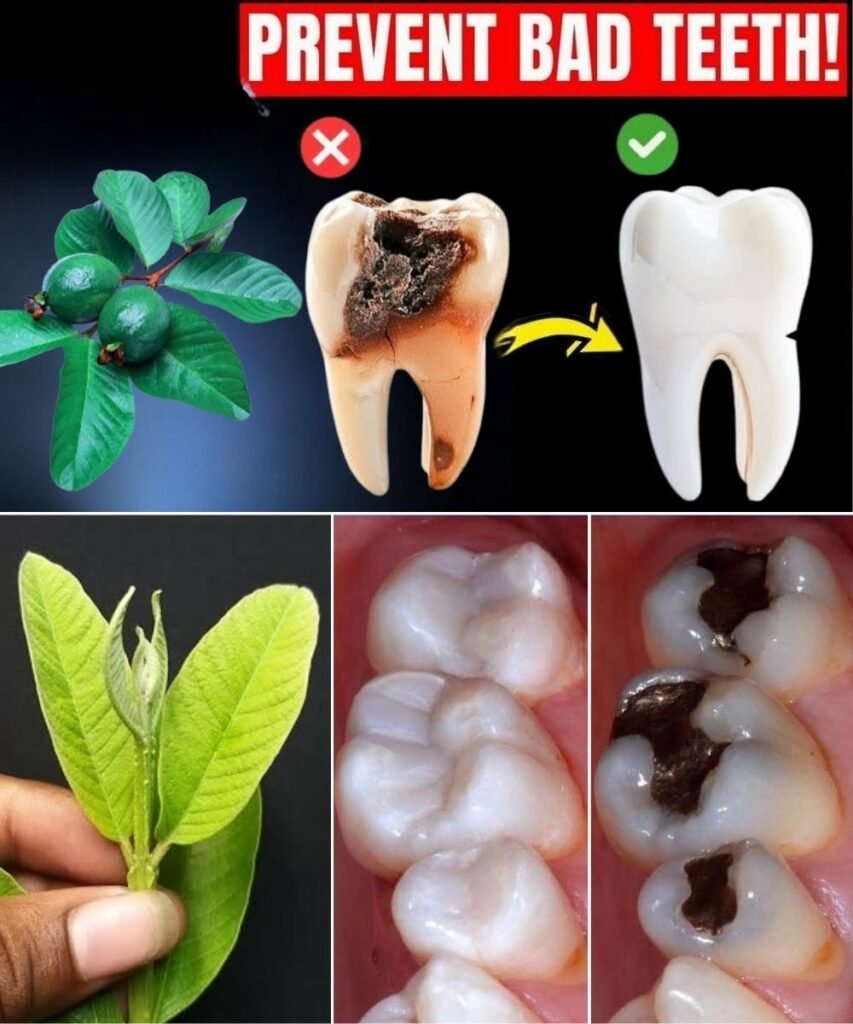
Guava Leaves + Oral Hygiene: What You Should Know
Guava leaves have been used in traditional practices for mouth care. Here’s the safe, factual information.
1. Why Do People Use Guava Leaves?
In many cultures, guava leaf tea or a guava leaf rinse is used as a traditional mouth rinse because:
- Natural compounds: Guava leaves contain tannins and flavonoids.
- Astringent feel: They may make gums feel temporarily firmer.
- Fresh breath: The rinse has a mild, clean taste.
Guava leaves do not:
- Fill cavities
- Rebuild tooth enamel
- Cure tooth decay
2. Top 3 Traditional Ways People Use Guava Leaves for Mouth Care
These methods are intended for general oral hygiene only. Stop using them if you experience irritation.
Method 1: Guava Leaf Rinse
Instructions:
- Boil 5–6 clean guava leaves in 2 cups of water for 10 minutes.
- Allow the liquid to cool to room temperature.
- Strain the leaves.
- Swish the rinse around your mouth for 30 seconds, then spit it out.
Use: Once daily.
Method 2: Chew a Fresh Guava Leaf
Instructions:
- Wash 1 young, tender guava leaf thoroughly.
- Chew gently for 1–2 minutes.
- Spit out the leaf.
- Rinse your mouth with water afterward.
Method 3: Guava Leaf Mouth Spray
Instructions:
- Prepare the guava leaf rinse as described above.
- Pour it into a clean spray bottle.
- Spray inside your mouth after meals when brushing isn’t possible.
- Keep refrigerated and use within 2 days.
3. What Actually Helps Prevent Tooth Decay
Tooth decay develops when bacteria feed on sugars and produce acids that damage enamel. The most effective ways to help prevent cavities include:
- Brush Twice Daily: Use fluoride toothpaste for 2 minutes each time.
- Floss Every Day: Removes plaque between teeth.
- Limit Sugary Foods and Drinks: Especially between meals.
- Drink Water: Helps rinse away food particles and supports saliva.
- Visit Your Dentist Regularly: Routine checkups and cleanings help detect problems early.
- Use Fluoride: Fluoride toothpaste and professional fluoride treatments help strengthen enamel.
4. Safety Notes
- Allergies: Stop use if irritation or an allergic reaction occurs.
- Young children: Avoid use in children under 3 years old unless advised by a healthcare professional.
- Do not swallow large amounts of the rinse.
- Possible staining: The tannins in guava leaves may contribute to mild staining over time.
- Not a treatment: Guava leaves cannot repair existing cavities.
5. When to See a Dentist Immediately
Seek dental care if you have:
- A toothache that doesn’t go away
- A visible hole or brown/black spot on a tooth
- Sensitivity to hot, cold, or sweet foods
- Swelling of the gums or face
- Pus or a bad taste in your mouth
A dentist can provide treatments such as fillings, fluoride treatments, sealants, root canal therapy, or other care based on your needs.
Final Thoughts
A guava leaf rinse is a traditional, low-cost practice that some people use for fresh breath and general mouth care. However, it is not a substitute for brushing with fluoride toothpaste, flossing, or professional dental care. For cavities or tooth decay, the only proven treatments are those provided by a dental professional.