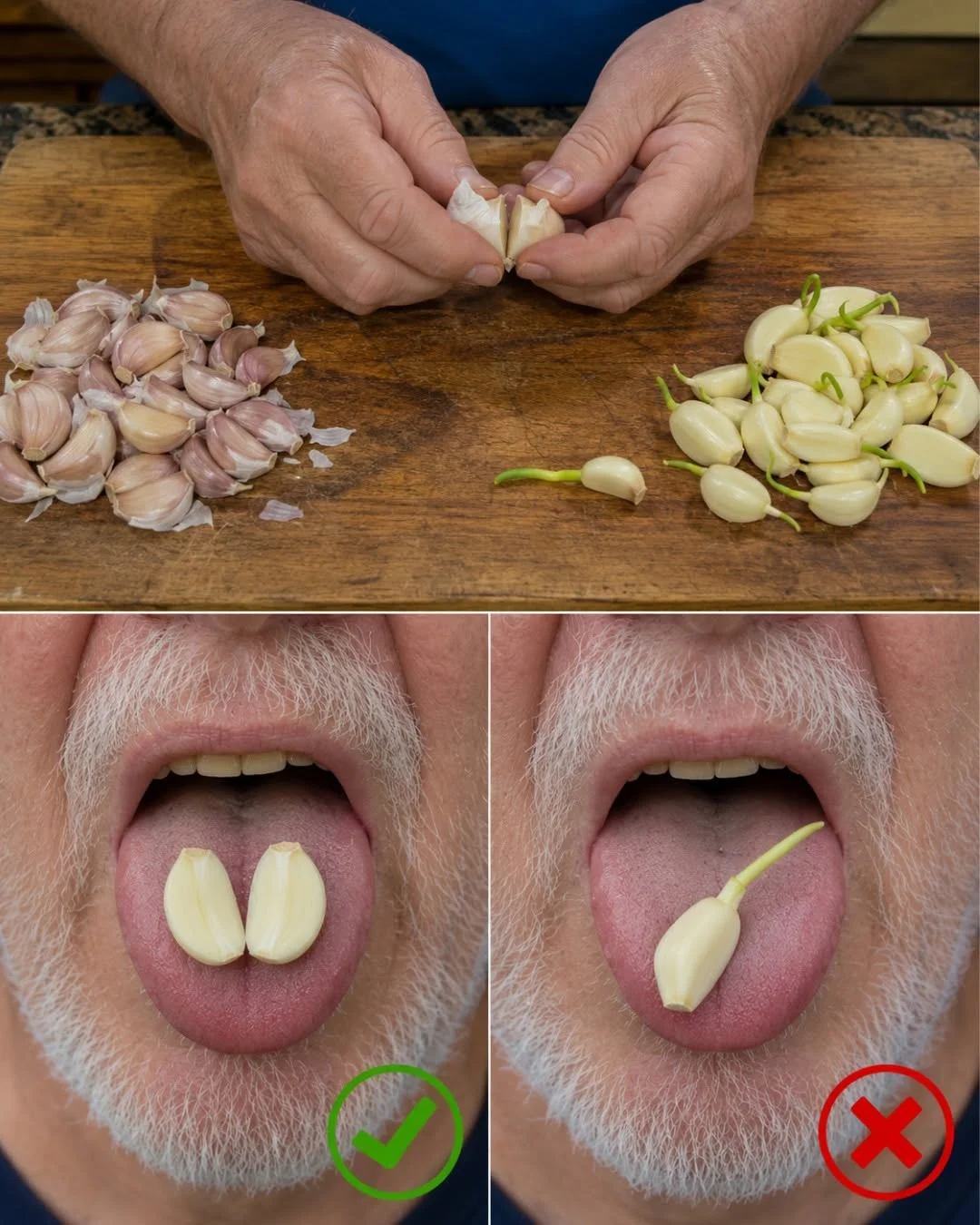
Garlic Triggers Stomach Burn, Bloating, and Medication Trouble
Garlic can turn a bland plate into a firestorm in your gut. One wrong move, and that sharp sulfur punch hits your stomach like a lit match dropped into dry paper, then the burn climbs, the belly swells, and the whole meal starts feeling like a mistake.
The Facebook post is warning about stomach burn, bloating, heartburn, and medication trouble, and that is exactly where the danger lives. Not in garlic itself, but in the way it gets crushed, cooked, stacked, and swallowed like harmless seasoning dust.
That’s why some people finish dinner and feel fine, while others are sitting upright at 2 a.m., chest hot, throat tight, stomach churning like a washing machine full of rocks. The same clove that wakes up a meal can wake up every weak spot in your digestive tract.
The real story is uglier than “garlic is good” or “garlic is bad.” Garlic is a chemical switch, and once you flip it the wrong way, it stops acting like food and starts acting like a gut grenade.
The cheapest fix in the kitchen gets the least airtime, and that is exactly why people keep getting blindsided.
The Garlic Release Sequence
The second garlic is crushed, chopped, or smashed, its defense chemistry wakes up. That is where the punch comes from — the raw biological fuel that people chase for its sharp edge, but rarely respect for its bite.
Think of a sealed spray can being shaken and cracked open. Inside, nothing happens; outside, the pressure changes everything. Garlic works the same way: break the bulb, expose it to air, and the whole thing turns aggressive.
Skip that pause before heat, and you blunt the process before it ever reaches the body. Treat it like a race against the pan, and you get a scorched flavor with less of the useful chemistry and more of the irritation.
The first thing people notice is not some abstract “digestive support.” It is the meal sitting heavier, the chest warming up, the throat getting prickly, or the stomach feeling like it has been rubbed with sandpaper.
That is the ugly contrast: when garlic is handled carelessly, it lands like a chemical slap. When it is given respect, it stays a kitchen hero instead of becoming a furnace in your upper gut.
Why the Stomach Rebels First
Raw garlic on an empty stomach is where a lot of people get ambushed. Instead of a clean lift, they get burning, nausea, cramps, and that bloated, balloon-tight feeling that makes jeans feel suddenly hostile.
Picture your stomach lining like fresh paint on a wall. Hit it with a harsh solvent and it does not “support digestion” — it strips, stings, and leaves the surface raw. That is what too much raw garlic can do to a sensitive gut.
For someone already living with reflux, the burn can climb upward like a fuse burning toward a keg. For someone who bloats easily, the pressure can feel like a sealed jar that will not release no matter how hard you twist the lid.
After a few days of smarter use, the pattern changes. Meals stop arriving with a second wave of regret, and the body stops bracing for the same familiar flare-up.
The hidden cruelty is that people blame weak digestion, age, or bad luck when the real problem is how the garlic was handled before it ever reached the pan.
Why Medication Users Need a Different Rulebook
Garlic does not stop at the stomach. It also pushes on the blood-thinning side of the body, which is why anyone on blood thinners or antiplatelet drugs cannot treat it like harmless seasoning.
Think of your circulation like a narrow city highway after midnight. Add the wrong traffic pattern and the whole system gets slippery fast. Stack too much garlic too fast, and you are not “being healthy” — you are forcing a conversation your doctor needs to hear about.
This is where people get reckless: they hear natural and assume safe in any dose. That is how a kitchen habit turns into a medication problem with real consequences.
Older adults often feel this shift first because digestion, absorption, and medication sensitivity get less forgiving with time. What used to slide by now lands with force.
And that is why nobody told you. Not because it does not matter, but because the cheapest fix gets the least airtime, and a clove of garlic does not pay for glossy campaigns.
Why Men Feel the Drag First
For men, the warning often shows up as heavy, stubborn gut pressure after a rich meal. The evening gets thick and sluggish, like someone poured wet concrete into the lower chest and upper belly.
That is the body saying the garlic hit too hard, too raw, or too close to an already irritated system. Not weakness — overload.
When garlic is used with meals, crushed first, then given time before cooking, the body gets the useful side of the compound without the same digestive punishment. The shift is not magic. It is control.
Why Women Notice It Differently
For women, the flare often shows up as a sharper reflux spike or a bloated, tight midsection that makes sitting still feel irritating. It can feel like the whole abdomen has been wrapped in a belt that keeps tightening by the hour.
Different bodies, same root problem: too much garlic, too raw, too fast, or too close to a sensitive system. One pan smokes at the edges, another burns in the center, but both are telling you the heat is wrong.
Once garlic is handled with more care, the after-dinner punishment starts to fade. The body stops bracing, the stomach stops protesting, and the meal feels like food again instead of a dare.
That is the part people miss: the goal is not more garlic. The goal is the Garlic Release Sequence.
The One Kitchen Habit That Wrecks Everything
Most people crush garlic and throw it straight into a blazing pan. That burns away the best part, leaves the flavor bitter, and turns the whole thing into a scorched apology.
Low to medium heat changes the game. Add it later when possible, and stop treating the clove like it has to survive a firefight on the stove.
One common kitchen habit neutralizes the whole process before it reaches your bloodstream: crushing garlic and cooking it immediately, without giving it time to wake up.
The next time you want garlic to work for you, not against you, the real question is not how much you used — it is whether you gave the clove time to activate before the heat hit it.
This article is for informational purposes only and does not replace professional medical advice. Please consult your healthcare provider for personalized guidance.