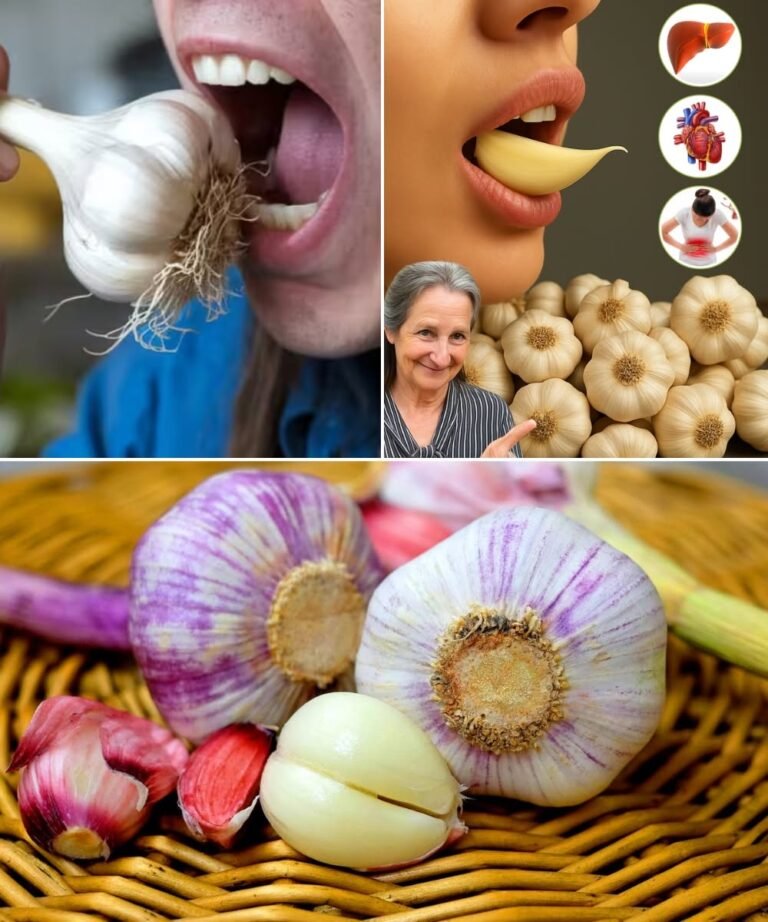
Garlic + Milk: The Odd Pair That Hits Your Immune System Hard
That sharp garlic bite in warm milk doesn’t just “go down.” It detonates a chemical chain reaction that floods your body with allicin-like sulfur compounds, then drags those compounds through your gut like a fire crew running toward a blaze. The smell alone is enough to wake up your senses; inside, it’s like opening a clogged drain and forcing hot water through the pipe.
And that’s exactly why people keep reaching for this strange old mix when their body feels off. The weak spot is usually the same: the chest that feels heavy, the belly that sits like a stone, the blood vessels that have gone stiff and stubborn, the skin that looks tired no matter how much sleep you get. Nobody tells you how much of that starts with sluggish internal traffic.
That’s the real story here: not “garlic in milk,” but what happens when a sulfur-packed bulb gets carried into the body by a creamy delivery system.
The Sulfur Surge Your Body Notices First
Crush garlic and the cells break. That’s when the real machinery wakes up: enzymes collide, sulfur compounds form, and the whole thing starts acting like molecular crowbars against grime, pressure, and stagnation.
Milk changes the game. It softens the assault on your throat and stomach, then carries those compounds deeper, like a truck hauling demolition charges straight to the problem zone. The first thing many people notice is that their body stops feeling so “stuck” — less brick-in-the-belly, less drag in the chest, less of that deadened, foggy weight.
Here’s the part nobody likes to say out loud: modern food leaves people underfueled and overclogged at the same time. You’re eating, but your cells are starving. You’re resting, but your system is still running hot. That’s not aging — that’s a body trying to work with dirty fuel and narrowed pathways.
Think of garlic as the spark and milk as the carrier oil. One wakes the engine up; the other helps the charge get where it needs to go without turning your throat into a war zone. But the immune payoff isn’t even the most interesting part…
Why Your Chest, Gut, and Blood Vessels Feel the Shift
Immune pressure. When your defenses are worn down, every tiny bug feels bigger than it should. Garlic’s sulfur compounds hit like internal flame-smothering agents, forcing your body to stop wasting energy on constant cleanup and start defending with more force. The after-feeling is simple: less of that “I’m coming down with something” heaviness hanging over you.
Blood flow and pressure. Stiff vessels are like old garden hoses with mineral crust baked into the walls. Garlic pushes against that rigidity, while the minerals in milk help keep the system from running dry and twitchy. You feel it in the body first — the head not pounding as hard, the hands not so cold, the face not so drained.
But that’s only the surface story. Underneath, the gut is doing something even stranger.
Digestion. When your stomach is sluggish, food sits like wet cement. Garlic wakes up digestive enzymes, and warm milk can make the whole process feel less like a brawl and more like a controlled rinse. After a few days of consistency, the belly often feels less bloated, less tense, less like it’s carrying a balloon full of bad air.
And yes, there’s a reason this old remedy survived while so many flashy “superfood” trends disappeared. Wall Street doesn’t build empires around a garlic clove sitting in a cup of milk. No glossy ad campaign can charge $89 for something your kitchen already owns. That doesn’t make it weak — it makes it inconvenient for the people selling you the next miracle.
Still, the body-specific effects don’t stop at the gut. The next place people notice the shift is in the skin…
The Skin, Inflammation, and the Tired Face in the Mirror
When inflammation runs hot, the face shows it first. Puffy under-eyes, dull tone, skin that looks like it slept badly even after a full night in bed — that’s internal heat leaking outward.
Garlic acts like a fire-smothering compound inside the body, while milk brings in raw biological fuel and moisture that help the system stop looking parched. The skin doesn’t magically transform overnight, but the after-picture is familiar: less sallow, less irritated, less like your face has been under siege.
That’s why this mix lands differently for different people: one person feels it in the chest, another in the belly, another in the mirror.
For women who carry the stress in digestion and skin, the relief is often recognition first: “So that’s why I’ve been bloated and blotchy at the same time.” For men, the surprise is usually the pressure shift — the body feels less jammed, less inflamed, less like it’s fighting itself from the inside out.
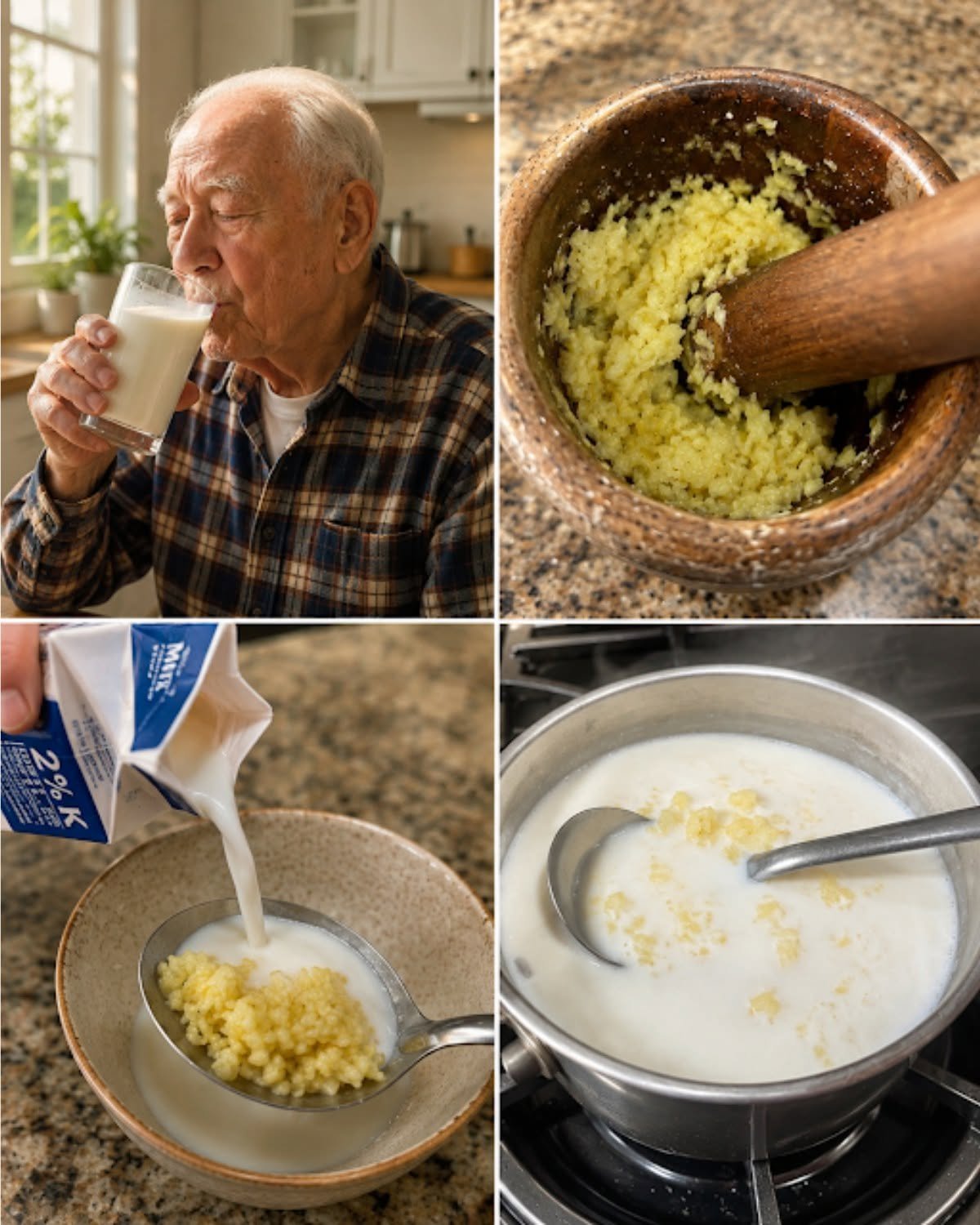
And once you see that pattern, the old recipe stops looking strange. It starts looking like a crude but effective body hack: break the garlic, warm the milk, let the compounds bind, then give your system a chance to unclench. But one wrong step can ruin the whole thing…
The One Kitchen Habit That Sabotages Everything
Boiling the milk to a furious froth is the fastest way to wreck the point of the drink. You end up with scorched milk, a burnt smell clinging to the pot, and garlic compounds that never get a clean ride into your system.
Heat it too hard and you turn the whole thing into a bitter, flat mess. Too little heat and you don’t release enough of the garlic’s active chemistry. The sweet spot is warm enough to carry the compounds, not so hot that you cook the benefit out of it.
That tiny detail is why some people swear by the mix and others feel nothing. Same ingredients, wrong execution. Same glass, different result. And there’s one pairing mistake that matters even more than the heat…
P.S. Don’t chase this with a greasy late-night meal. A heavy plate of fried food sits in the stomach like a wet blanket, smothering the very digestive fire this mix is trying to wake up. If you want the body to actually use the garlic, keep the timing clean and the stomach lighter. Next, I’ll show you the version people use when they want the strongest effect without the harsh aftertaste.
This article is for informational purposes only and does not replace professional medical advice. Please consult your healthcare provider for personalized guidance.