
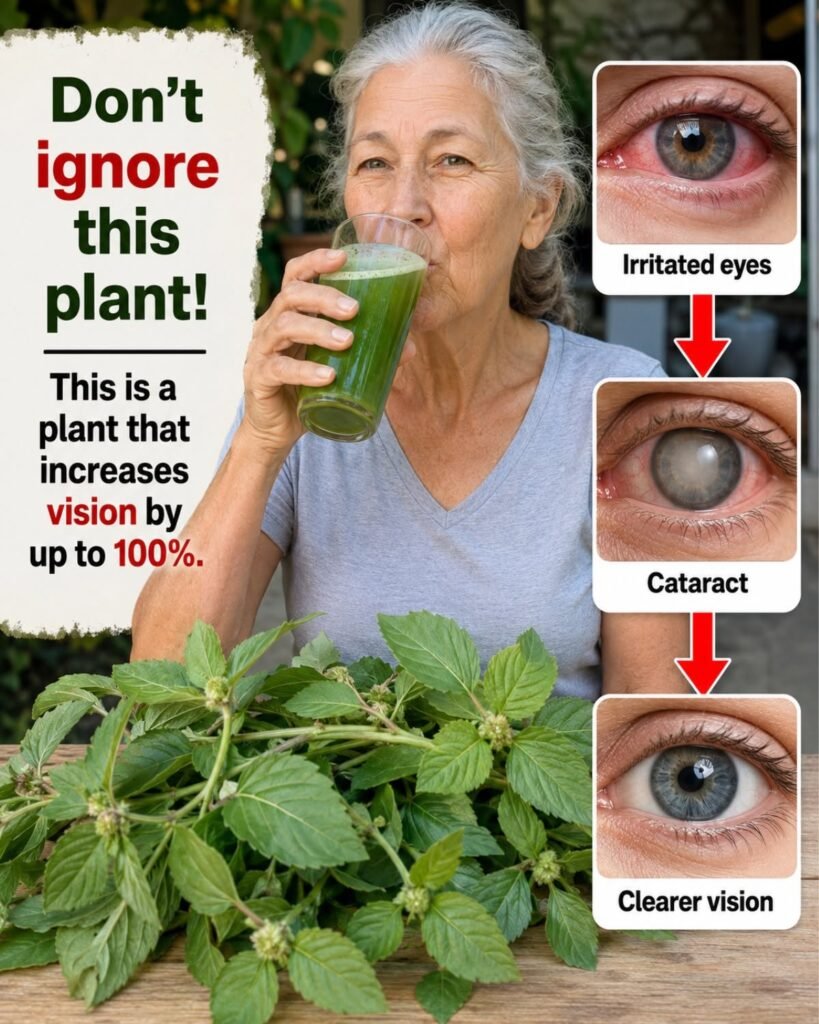
Euphorbia hirta and the Eye Reset Your Vision Has Been Begging For
The roadside herb people dismiss is the one linked to tired, strained eyes
Euphorbia hirta is the little green plant with clustered flowers and milky sap that people walk past without a second glance. Yet the Facebook post ties it directly to eye health, sharper vision, and even the kind of support people hope will keep cataracts from marching forward.
That matters because the real problem is rarely “bad eyesight” in a vacuum. It starts as dry, gritty eyes, a heavy lid feeling, red rims, and that hot pressure behind the eyes after screens, reading, glare, or long days that never seem to end.
And what makes this so frustrating is that the eye doesn’t complain like a broken bone. It whispers first, then nags, then suddenly every blink feels like dragging sand across glass.
The Eye Reset Current is what happens when irritation stops winning

The mechanism here is not magic, and it is not a fantasy promise. It is a shift in the local fire around the eye area, where plant compounds act like sludge-clearing compounds against the oxidative mess that builds when the eyes are overworked and under-rested.
Think of your eyes like a camera lens filmed over with dust and fingerprints. The image still exists, but every detail has to fight through a dirty layer before it reaches clarity.
Euphorbia hirta is presented as the herb that helps wipe that film away. The first thing people notice is not fireworks; it is the absence of the constant urge to rub, squint, and squeeze the lids shut just to get through the afternoon.
What your day feels like when the eyes are under siege
By midmorning, the screen glare starts biting. By afternoon, the eyes feel swollen and hot, and the face carries that tired, pinched look that makes you seem exhausted even when you are trying to stay sharp.
That is the ugly contrast: when the eye area stays irritated, every glance costs more effort. Every blink becomes a tiny labor strike, and the whole system feels like it is working with the brakes on.
What this herb is said to do is change the environment so the discomfort stops feeding on itself. Not a miracle. A reset in the conditions that keep the burn alive.
Why the supplement aisle barely whispers about this plant

The pharmaceutical profit engine runs on complexity, not on a roadside herb with no glossy packaging and no celebrity face on the label. Wall Street does not build empires around something that grows in plain sight.
That is why the cheapest fixes get the least airtime. Nobody built a Super Bowl ad around a weed with milky sap, even when traditional use keeps pointing back to it for eye comfort and external support.
The ugliest truth in health is that the cheapest fix is usually the one the market hides in plain sight.
Why women notice the shift in a different way
For women, the strain often shows up as puffiness, dullness, and that stubborn irritation that makeup cannot hide and sleep does not fully erase. The eyes do not just feel tired; the whole face can look like it has been through a long, dry wind.
Picture the bathroom mirror at the end of the day. The lighting is brutal, the lids look swollen, and the skin around the eyes feels like it has been stretched too tight over a frame.
That is where the Eye Reset Current earns attention. The herb’s traditional external use is tied to calming the local fire so the eye area stops carrying that constant, inflamed tension.
Why men often feel it first once the pressure drops

Men tend to ignore the early warning signs until the eyes feel packed with grit and the face goes tight from overuse. Then the shift is obvious, because the body has been shouting long before it was listened to.
Think of a shop filter clogged with dust. The machine still runs, but it has to strain harder just to keep air moving, and the whole system sounds older than it is.
When that load eases, the relief is immediate in the body, even if the explanation is simple. Less rubbing. Less squinting. Less of that exhausted stare that follows you into the evening.
The body clue hiding in the leaves and sap
Break the stem and the white sap appears fast, almost startlingly. That is the plant announcing its potency, not its prettiness, and it is exactly why traditional use treats it with care.
The leaf compounds are described as molecular brooms, sweeping through the oxidative mess that piles up when the eyes have been pushed too hard. The result is not a fantasy cure; it is a quieter battlefield around the eye.
Over time, the pattern gets clearer: less irritation, less heaviness, less of that sandpapery feeling that makes the day feel longer than it should.
The part most people get wrong before it ever reaches the skin
One common kitchen habit wrecks the whole process: crushing the leaves too aggressively until the sap runs everywhere, then applying them carelessly near sensitive skin. That turns a traditional comfort practice into a sting-fest fast.
The milky juice is powerful, and sloppy handling makes the body answer immediately with burning and redness. That is not support; that is self-sabotage with green goo.
Alone, the plant is potent. Paired with the right preparation, it becomes a very different animal.
The next layer nobody expects
There is one companion preparation that changes how this herb is traditionally used, and it is the difference between a useful external rinse and a useless smear. That pairing is where the real method gets interesting.
This article is for informational purposes only and does not replace professional medical advice. Please consult your healthcare provider for personalized guidance.