
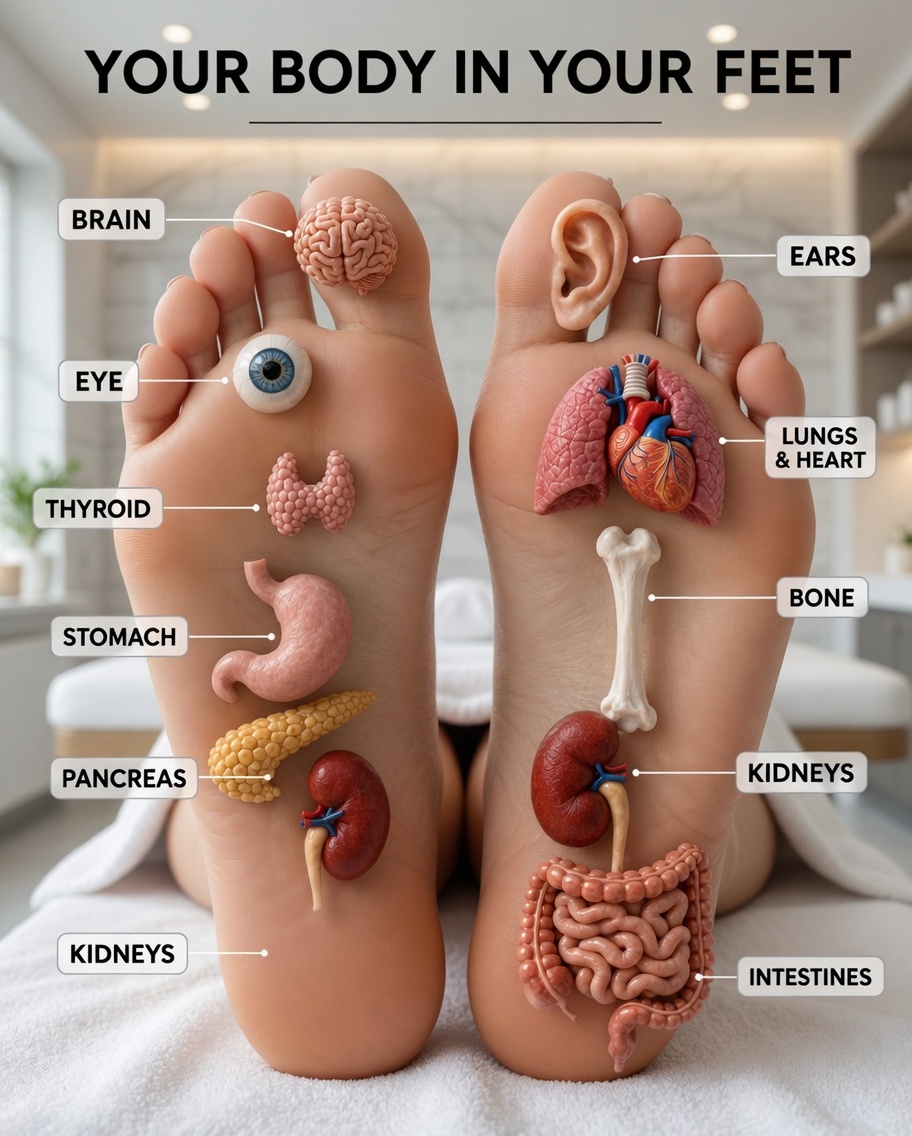
That sharp, piney burst of lavender or peppermint isn’t just perfume for your skin. When essential oils meet the thick, sponge-like soles of your feet, their molecules press through the surface and start talking to the nervous system, while the massage itself wakes up sluggish circulation like a pump priming a dry hose.
And that’s why people notice stress drop, sleep deepen, and that heavy, cold-foot feeling start to loosen. The feet are packed with nerve endings, yes — but the real story is what happens when those signals travel upward and collide with a body that’s been running on fumes.
Most people treat the bottom of the foot like dead real estate. It isn’t dead at all; it’s a crowded control panel, and when you coat it with the right oil, you’re not just rubbing on scent — you’re flipping switches that the wellness machine barely bothers to explain.
The Foot Circuit Nobody Talks About
Your soles are built like a dense, calloused filter with thousands of tiny openings and nerve endings underneath all that tough skin. Rub in a diluted essential oil, and the first thing that changes is not some mystical vibe — it’s the sensory traffic screaming up from the feet into the brain.
That’s why the effect feels so immediate. The skin warms under your thumbs, the oil glides, the scent rises, and suddenly the body is no longer sitting in the same tense, cramped posture it had five minutes earlier.
Think of it like opening a jammed valve in a garden irrigation system. The water doesn’t need a lecture; it just needs the blockage eased so flow can move again. But the circulation piece is only the beginning — because the next shift happens where stress is born.
Why Stress Starts Backing Off
Lavender, chamomile, and cedarwood don’t “soothe” in some vague, fluffy way. They trigger the brain’s relaxation circuitry while the massage on the feet tells the body it can stop bracing for impact.
That’s the part people recognize first: shoulders dropping, jaw unclenching, the inside of the chest no longer feeling like a clenched fist. You go from buzzing and scattered to something closer to steady, as if a loud machine in the background finally powered down.
The ugly truth is that stressed feet usually belong to a stressed body. Cold toes, tight arches, and that restless, wired feeling at night are often the surface signs of a system that never got the memo to stand down.
And here’s where the story gets sharper: once the nervous system stops shouting, sleep has a chance to move in — but only if one thing is done before the oils ever touch the skin.
The Sleep Shift Starts Before Bedtime
Sleep doesn’t begin when your head hits the pillow. It begins when the body stops acting like it still has unfinished business, and the right foot ritual forces that transition.
When lavender or cedarwood is massaged into the soles, the scent lingers in the room like a signal flare, while the physical pressure on the arch and heel tells the body to stop clenching and start descending. It’s like dimming the lights in a control room that’s been lit up all day.
Most people miss the real reason this works: the feet are one of the few places where touch, smell, and nervous-system input collide at the same time. That combination is why the mind can feel quieter even before the body fully settles.
But the sleep story has a second layer, and it’s the one that explains why some people wake up feeling less swollen, less heavy, and less dragged through wet cement than they did before.
Why Circulation Changes When the Feet Wake Up
Massage is not decoration. It presses stagnant tissue, warms the skin, and helps push vibrant, oxygen-rich circulation into places that have been sitting cold and underfed for too long.
Picture a clogged sink drain that’s been sitting there with gray water swirling lazily in circles. Now imagine someone loosening the buildup while warm water starts moving through again — that’s the kind of internal shift people feel when the soles are worked with oil and pressure.
And what happens next is the reason this feels different from slapping lotion on dry skin. The circulation change doesn’t stay in the feet; it changes how the whole lower body feels when you stand up, walk, or climb out of bed.
That’s also why the immune-support angle gets so much attention — because once the body stops running on tension and sluggish flow, it stops looking like a house with the lights half on.
The Immune and Skin Payoff
Tea tree and eucalyptus are loaded with fire-smothering compounds and sludge-clearing compounds that hit the skin like a cleanup crew. On thick foot skin, they get a longer runway to do their work while the massage keeps the tissue open and responsive.
That’s the part many people underestimate. The feet are not just a landing pad; they’re a sealed, hard-working barrier that can trap heat, sweat, odor, and irritation until the skin starts looking rough, cracked, or angry.
In a busy day, that shows up as burning heels in your shoes, a sticky feeling under socks, or skin that looks dry enough to split if you flex it wrong. When the right oils are used correctly, the feet stop feeling like neglected equipment and start feeling maintained.
And that’s why nobody built a Super Bowl ad around a bottle of tea tree oil and a pair of socks. There’s no glossy profit machine in telling people a simple nightly ritual can help the body reset itself.
The real surprise is what happens when the wrong prep ruins the whole thing — because one common habit can shut the process down before it ever starts.
The Part That Quietly Sabotages Everything
Putting essential oils straight onto damp, freshly washed feet sounds harmless, but it can turn the skin hot, stingy, and irritated fast. Worse, skipping dilution with a carrier oil makes the concentration so aggressive it can overwhelm the very surface you’re trying to help.
That’s what it looks like when a useful ritual gets sloppy: oil pooling in the creases, a sharp smell hanging too heavy in the air, socks trapping the slick film against skin that was never meant to take the full blast.
The smarter move is simple: dilute, massage, and let the body receive the signal instead of getting hit with a chemical slap. And once that’s in place, there’s one pairing that changes everything about how far the effect goes.
This article is for informational purposes only and does not replace professional medical advice. Please consult your healthcare provider for personalized guidance.