Discover the Natural Power of Guava Leaves for a Brighter, Fresher Smile
Discover the Natural Power of Guava Leaves for a Brighter, Fresher Smile
Discover how a simple guava leaf rinse can become part of your oral-care routine. Learn how to prepare it using fresh guava leaves, water, and an optional pinch of salt.
Guava Leaves for Oral Care: A Simple Traditional Rinse
A healthy-looking smile does not always require a complicated routine. Guava leaves have long been used in traditional wellness practices, and they contain natural plant compounds that have attracted interest for their potential role in oral care.
One simple way to use fresh guava leaves is to prepare a mild homemade rinse. This easy preparation requires only 5–7 young guava leaves and water, with a tiny amount of fine salt as an optional addition.
While a guava leaf rinse may help freshen the mouth and complement regular oral hygiene, it should be considered a supportive home-care practice rather than a replacement for brushing, flossing, or professional dental care.
Why Are Guava Leaves Used for Oral Care?
Guava leaves contain naturally occurring plant compounds, including polyphenols, flavonoids, and other antioxidants. Traditionally, guava leaves have been used in various preparations for oral and general wellness.
A homemade guava leaf rinse may be appealing because it is:
Simple to prepare
Made from fresh plant ingredients
Gentle when used appropriately
Easy to incorporate into an oral-care routine
Free from complicated ingredients
For people interested in traditional approaches, this rinse can be used alongside a consistent brushing and flossing routine.
Ingredients
To prepare a simple guava leaf rinse, you will need:
5–7 fresh guava leaves — young leaves are preferred
1 cup of water
A tiny pinch of fine salt — optional
A soft toothbrush
A small clean cup or jar
Choose fresh, healthy-looking leaves and wash them thoroughly before preparation.
How to Make Guava Leaf Rinse
Step 1: Wash the Leaves
Rinse 5–7 fresh guava leaves carefully under clean running water to remove dirt and surface residue.
Young leaves are often preferred because they are tender and easy to crush.
Step 2: Lightly Crush the Leaves
Tear the leaves into smaller pieces or gently crush them with clean hands.
This can help release some of the natural compounds from the leaves into the water during heating.
Step 3: Simmer With Water
Place the leaves in a small saucepan with 1 cup of water.
Bring the water to a gentle simmer and continue heating for approximately 10 minutes.
The water may gradually develop a light green or slightly yellow-green color.
Step 4: Cool and Strain
Remove the saucepan from the heat and allow the liquid to cool until it is lukewarm.
Strain out the leaves and transfer the prepared rinse into a clean cup or small jar.
Step 5: Optional Salt Addition
If you want to include salt, use only a very small pinch of fine salt.
You can add a few drops of the cooled guava leaf rinse to your toothbrush and lightly moisten the bristles.
Avoid coarse salt and vigorous scrubbing, as abrasive particles and excessive pressure can irritate the gums or contribute to enamel wear.
How to Use Guava Leaf Rinse
After the preparation has cooled:
Take a small amount of the guava leaf rinse.
Gently move it around your mouth.
Spit it out rather than swallowing it.
Continue your normal brushing and flossing routine.
Use a soft toothbrush and gentle movements.
The goal is to keep the routine mild rather than aggressively scrubbing the teeth.
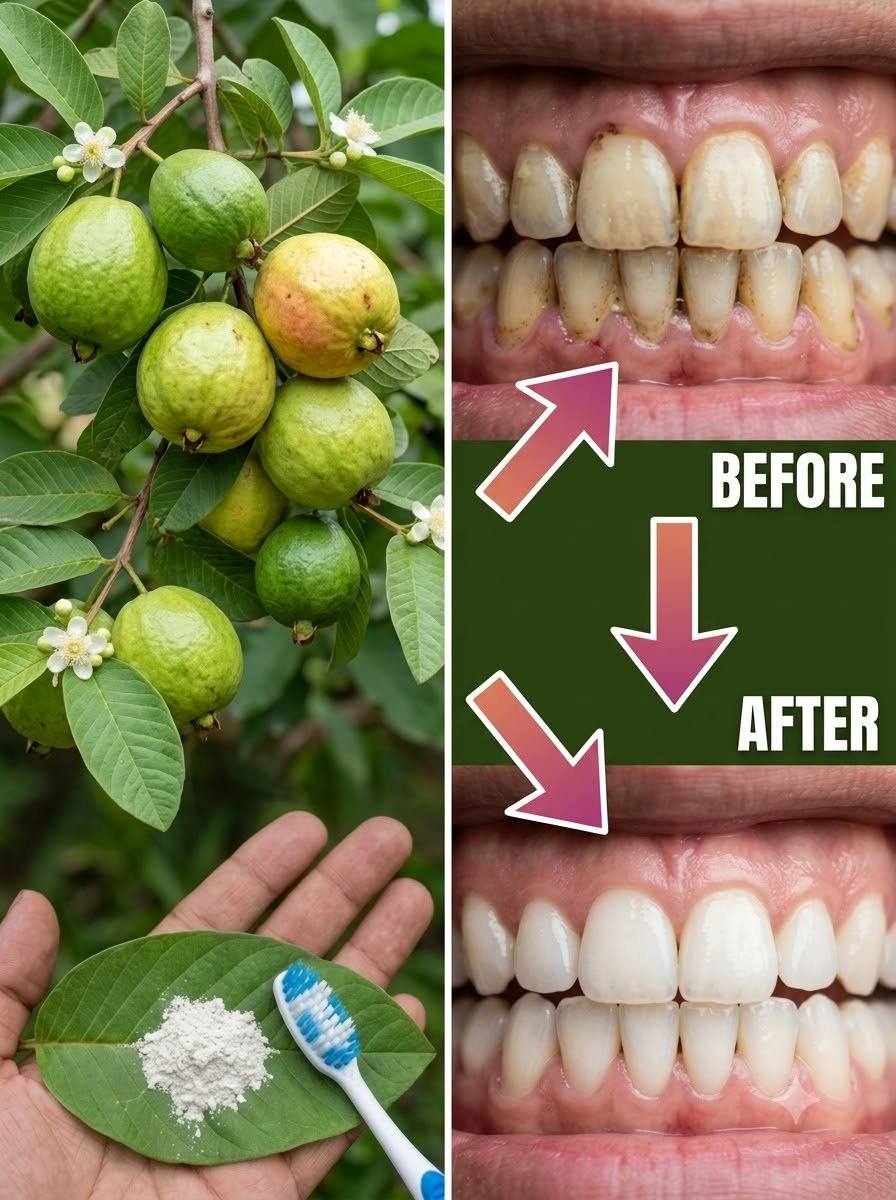
Can Guava Leaves Whiten Teeth?
Guava leaves are sometimes promoted online as a natural teeth-whitening ingredient. However, a homemade guava leaf rinse should not be expected to produce the same whitening effect as professional dental whitening products or treatments.
A cleaner-looking smile can also result from maintaining regular oral hygiene and reducing the buildup of surface stains.
If your teeth have significant yellowing, dark spots, tartar, or persistent discoloration, the underlying cause may need to be evaluated by a dentist.
Guava Leaf Rinse for a Fresher Mouth
Beyond appearance, oral freshness is an important part of everyday hygiene.
A mild herbal rinse can provide a refreshing step after brushing, while the natural compounds found in guava leaves make them an interesting traditional ingredient for oral-care routines.
However, homemade rinses should complement—not replace—daily brushing with fluoride toothpaste, flossing, and regular dental checkups.
Important Tips for Safe Use
Keep these points in mind when preparing your guava leaf rinse:
Always wash fresh leaves thoroughly.
Use clean cookware and containers.
Allow the rinse to cool before using it.
Do not use coarse salt as a tooth scrub.
Avoid vigorous brushing or rubbing.
Do not swallow the homemade rinse.
Prepare a fresh batch rather than keeping it for a long time.
Stop using it if you experience irritation or discomfort.
People with dental problems such as tooth sensitivity, bleeding gums, cavities, persistent bad breath, or gum swelling should seek professional dental advice rather than relying on a homemade rinse.
A Simple Natural Addition to Your Oral-Care Routine
Guava leaves are an interesting example of how traditional plant-based practices can be incorporated into everyday wellness routines.
With just 5–7 fresh guava leaves and a cup of water, you can prepare a simple herbal rinse at home. Used gently and alongside good dental hygiene, it can be an easy way to explore a traditional approach to maintaining a fresh, clean-feeling mouth.
Remember: natural does not automatically mean risk-free, and a homemade guava rinse is best considered a complementary oral-care practice—not a substitute for professional dental treatment.
Frequently Asked Questions
How many guava leaves should I use?
About 5–7 fresh young guava leaves for 1 cup of water is sufficient for this preparation.
How long should guava leaves be simmered?
Simmer them gently for approximately 10 minutes, then allow the liquid to cool before straining.
Can I add salt?
Yes, but salt is optional. If used, choose a tiny amount of fine salt and avoid using it as an abrasive scrub.
Can guava leaves make teeth permanently white?
There is no reason to expect a homemade guava leaf rinse to provide permanent tooth whitening. Its more realistic role is as a traditional, complementary oral-care rinse.
Can I replace toothpaste with guava leaves?
No. A guava leaf rinse should not replace regular brushing with fluoride toothpaste or flossing.