
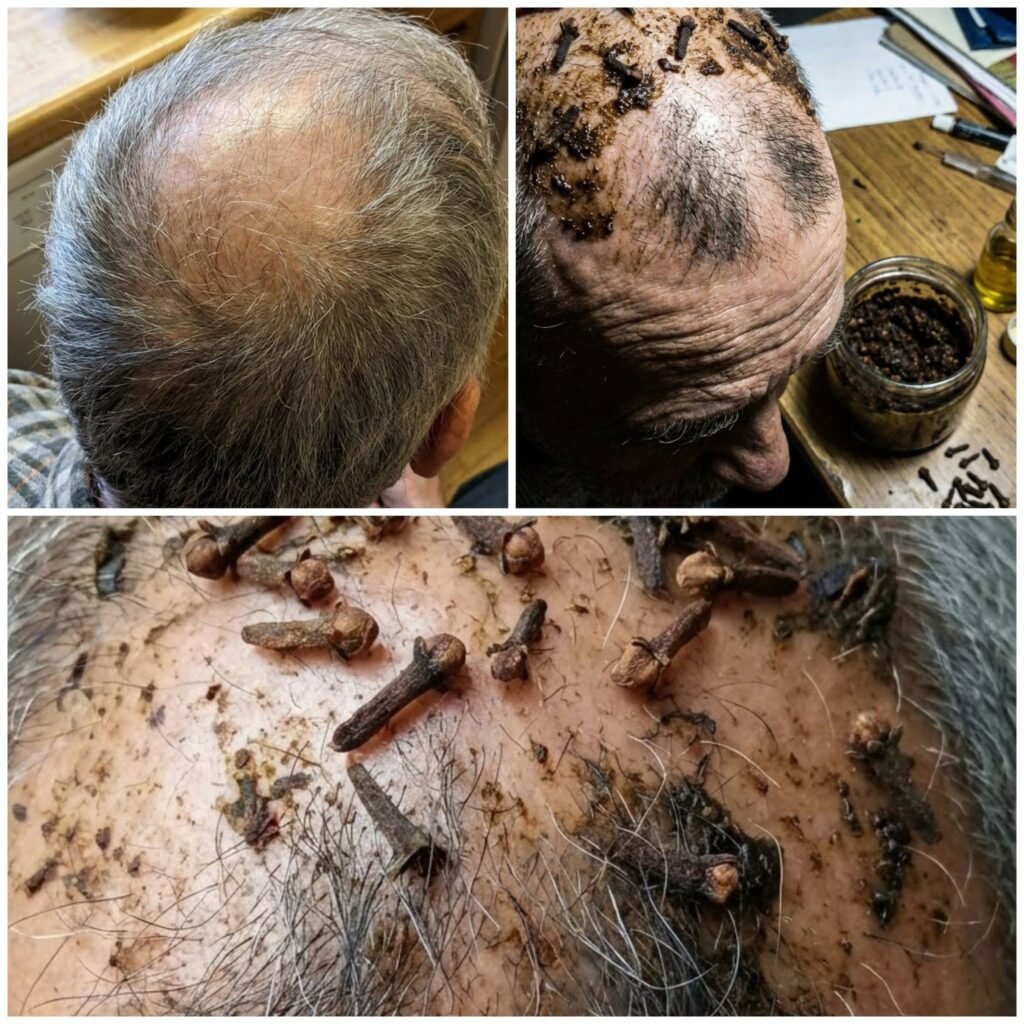
Can Clove Oil Help Hair Grow on Bald Spots? Here’s What the Evidence Says
Hair thinning and bald spots become more common with age, leading many people to search for natural remedies that might encourage healthier hair growth. One remedy that has gained attention is clove oil, an essential oil made from dried clove buds.
While clove oil contains compounds that may support scalp health, it’s important to know what science actually says before expecting dramatic results.
Why Clove Oil Is Popular
Clove oil is rich in eugenol, a natural compound known for its antioxidant, antimicrobial, and anti-inflammatory properties. These qualities may help create a healthier scalp environment, which is important for maintaining healthy hair.
Some laboratory and animal studies suggest that clove oil may improve blood circulation in the skin and help protect hair follicles from inflammation. However, there is no strong clinical evidence showing that clove oil can regrow hair on bald spots or reverse age-related baldness in humans.
Potential Benefits for the Scalp
When used correctly and in moderation, diluted clove oil may:
- Support a healthy scalp by reducing bacteria and fungi
- Help soothe mild scalp irritation
- Improve scalp circulation through massage
- Contribute to healthier-looking hair over time
These benefits may support overall hair health, but they should not be viewed as a guaranteed treatment for hair loss.
How to Use Clove Oil Safely
If you’d like to try clove oil as part of your hair care routine, proper dilution is essential.
What You’ll Need
- 2–3 drops of pure clove essential oil
- 1 tablespoon of a carrier oil such as coconut, jojoba, or olive oil
Directions
- Mix the clove oil thoroughly with the carrier oil.
- Gently massage the mixture into your scalp for 5–10 minutes.
- Leave it on for 30–60 minutes before washing with a mild shampoo.
- Use the treatment once or twice a week.
Scalp massage itself may help improve circulation and can be a relaxing addition to your routine.
Important Safety Tips
- Never apply undiluted clove essential oil directly to your scalp.
- Perform a patch test on a small area of skin 24 hours before first use.
- Stop using it if you notice redness, burning, itching, or irritation.
- Avoid contact with your eyes and broken skin.
If you have sensitive skin, eczema, or scalp conditions, consult a healthcare professional before using essential oils.
Can It Regrow Hair at Age 75?
Age does not completely prevent hair growth, but the likelihood of regrowing hair depends on the underlying cause of hair loss.
If hair follicles are still active, improving scalp health may help support existing hair. However, if follicles have become permanently inactive—as is common with long-standing pattern baldness—clove oil is unlikely to restore significant hair growth.
What Works Best for Hair Loss?
For persistent or worsening hair loss, a combination of evidence-based approaches offers the best chance of success. These may include:
- Eating a balanced diet rich in protein, iron, zinc, and vitamins
- Managing stress
- Treating underlying medical conditions
- Consulting a dermatologist about proven treatments such as minoxidil or other appropriate therapies
Final Thoughts
Clove oil may be a useful addition to a healthy scalp-care routine thanks to its antioxidant and antimicrobial properties. It may help improve scalp comfort and support healthier hair, but claims that it can regrow hair on bald spots or make hair grow “1,000 times faster” are not supported by scientific evidence.
If you’re experiencing significant hair loss, it’s worth speaking with a healthcare professional to identify the cause and discuss treatments that are backed by research.