Bread in a Jar in Minutes — No White Flour, No Yeast, No Sugar
Bread in a Jar in Minutes — No White Flour, No Yeast, No Sugar
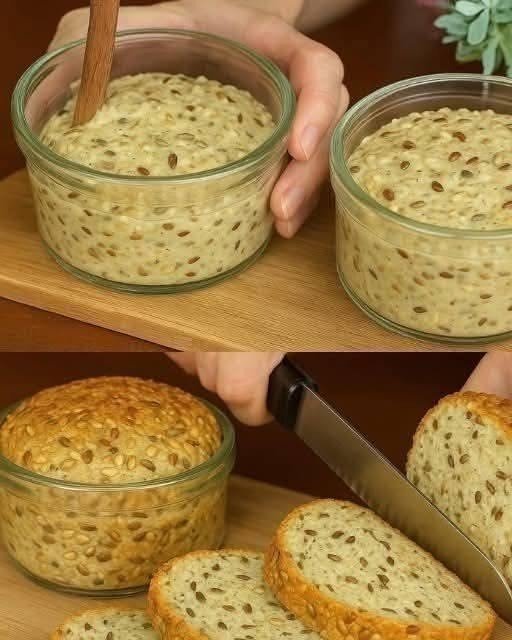
This easy bread in a jar is a wonderful alternative to traditional white-flour bread. It’s made without yeast and without added sugar, and the combination of eggs, milk, flax seeds, and psyllium husk creates a soft, hearty loaf with a pleasantly chewy texture.
The bread is especially convenient because you can prepare it in a small glass baking dish or oven-safe jar, making individual portions perfect for breakfast, sandwiches, or snacks. The flax seeds add a lovely nutty flavour, while psyllium helps bind everything together and gives the bread structure.
Important: Use only jars or glass containers specifically labeled oven-safe. Ordinary glass jars can crack or shatter when exposed to oven heat.
Ingredients
For the Bread
- 3 large eggs
- 1 cup (240 ml) milk
- 2 tablespoons whole flaxseeds
- 2 tablespoons psyllium husk
- 1 cup oat flour or finely ground rolled oats
- 1 teaspoon baking powder
- ¼ teaspoon salt
- 1 tablespoon olive oil or melted butter, optional
- 1–2 tablespoons pumpkin or sunflower seeds, optional, for topping
Optional Flavor Additions
- ½ teaspoon garlic powder
- ½ teaspoon dried oregano
- 1 tablespoon chopped fresh herbs
- 1 tablespoon grated Parmesan
- ½ teaspoon sesame seeds
Instructions
1. Prepare the Jar
Choose two small oven-safe glass baking jars or ramekins, approximately 1–1½ cups in capacity.
Lightly grease the inside with olive oil or cooking spray.
Don’t fill the containers more than about ⅔ full, because the bread will rise as it bakes.
If you don’t have oven-safe jars, use small loaf pans or ramekins instead.
2. Prepare the Flax and psyllium.
Add the milk to a medium mixing bowl.
Stir in the flax seeds and psyllium husk.
Mix thoroughly and allow the mixture to sit for approximately 5–10 minutes.
The psyllium will absorb liquid and create a thick, gel-like mixture.
This step is important because it allows the psyllium to hydrate before baking.
3. Add the Eggs
Crack the three eggs into the bowl.
Whisk thoroughly until the eggs are completely incorporated.
Add the optional olive oil or melted butter.
Mix again.
4. Add the Dry Ingredients
Add:
- Oat flour
- Baking powder
- Salt
Stir until everything is well combined.
The batter should be thick and spoonable, rather than runny.
If it looks excessively dry, add 1–2 tablespoons of milk.
If it looks too wet, allow it to sit for another 2–3 minutes because the psyllium will continue absorbing liquid.
5. Rest the Batter
Let the batter stand for approximately 5 minutes.
During this time, the flax and psyllium continue absorbing moisture.
You’ll notice the mixture becoming thicker.
This resting period helps produce a bread-like texture rather than a soft egg casserole.
6. Fill the Jars
Divide the batter evenly between the prepared oven-safe containers.
Fill each approximately ½ to ⅔ full.
Smooth the tops with the back of a spoon.
If desired, sprinkle pumpkin seeds, sunflower seeds, or sesame seeds over the top.
7. Bake
Preheat the oven to 350°F (175°C).
Place the jars on a baking sheet and carefully transfer them to the oven.
Bake for approximately 25–35 minutes, depending on the size and shape of your containers.
The bread should be:
- Golden on top
- Firm in the center
- Slightly springy when touched
- Cooked through without wet batter
Insert a toothpick into the centre. It should come out mostly clean.
8. Cool
Remove the jars carefully from the oven.
Allow the bread to cool for 10–15 minutes.
Don’t immediately seal hot jars with lids.
Once cool enough to handle, carefully loosen the edges with a small knife or spatula if you want to remove the bread from the container.
9. Slice and Serve
Once slightly cooled, remove the bread and slice it.
Enjoy it with:
- Avocado
- Cottage cheese
- Eggs
- Hummus
- Tuna
- Turkey
- Cream cheese
- Peanut butter
- Fresh vegetables
- Greek yogurt
You can also toast the slices for extra crunch.
Servings
2 small individual loaves
Approximately 4 servings, depending on how thickly you slice them.
Prep Time
10 minutes
Resting Time
10–15 minutes
Baking Time
25–35 minutes
Total Time
Approximately 45–60 minutes
Difficulty
Easy
Important Recipe Notes
What does psyllium do?
Psyllium husk absorbs liquid and forms a gel that helps hold the bread together. It is particularly useful in recipes that don’t contain traditional wheat gluten.
Why use flax seeds?
Flax provides a nutty flavour and adds texture. Ground flax can also be used if you prefer a smoother bread.
Can I use ground flax?
Yes. Replace the 2 tablespoons whole flax seeds with 2 tablespoons ground flaxseed.
Ground flax will distribute more evenly throughout the bread.
Use oven-safe glass
This is extremely important.
Do not put an ordinary drinking glass, recycled food jar, or non-oven-safe container into a hot oven.
Thermal shock can cause glass to crack or shatter.
Tips for Perfect Bread in a Jar
1. Let the psyllium hydrate
Don’t immediately bake the mixture after adding psyllium. Giving it several minutes to absorb the milk makes the batter easier to work with.
2. Don’t overfill the jars
The batter rises during baking. Leave enough space at the top.
3. Don’t cut it while extremely hot
Freshly baked bread is still setting as it cools. Allowing it to cool slightly helps prevent crumbling.
4. Grind your oats finely
If you’re making your own oat flour, blend rolled oats until they have a fine flour-like consistency.
5. Adjust the texture
Different brands of psyllium absorb different amounts of liquid. If your mixture becomes extremely thick, add a small amount of milk.
6. Toast it
The bread becomes particularly delicious when sliced and lightly toasted.
Delicious Variations
Garlic Herb Bread
Add garlic powder, oregano, basil, and parsley.
Serve alongside soup or roasted vegetables.
Seeded Bread
Add sunflower seeds, pumpkin seeds, sesame seeds, and extra flax seeds.
Cheesy Bread
Add 2 tablespoons grated Parmesan or shredded cheddar.
Mediterranean Bread
Add oregano, chopped olives, sun-dried tomatoes, and a little feta.
Cinnamon Bread
For a lightly sweet version, add cinnamon and a sugar-free sweetener of your choice.
Savory Breakfast Bread
Add black pepper, chives, spinach, and a little grated cheese.
Serving Ideas
This bread works particularly well as a breakfast base.
Avocado Toast
Toast a slice and top with mashed avocado, black pepper, and a squeeze of lemon.
Egg Sandwich
Add scrambled or fried eggs with spinach and tomato.
Cottage Cheese Toast
Spread cottage cheese over toasted bread and top with cucumber, tomatoes, and herbs.
Hummus Toast
Spread hummus over a toasted slice and add cucumber, tomato, and parsley.
Peanut Butter Toast
For a sweeter option, spread natural peanut butter over a warm slice.
Approximate Nutritional Information
Using the ingredients listed above and assuming 4 servings, each serving provides approximately the following:
- Calories: 190–220
- Protein: 9–11 g
- Carbohydrates: 20–23 g
- Fat: 8–10 g
- Fiber: 5–7 g
- Sugar: 2–4 g
- Sodium: approximately 200–300 mg
Actual nutrition will vary depending on the type of milk, oat flour, toppings, and optional ingredients used.
The recipe contains no added white flour and no added sugar.
Potential Benefits
Oat Flour
Oats provide carbohydrates and dietary fibre, including beta-glucan, a type of soluble fibre.
Flax Seeds
Flax seeds provide fibre, plant-based protein, and healthy fats, including alpha-linolenic acid (ALA).
Psyllium Husk
Psyllium is particularly rich in soluble fibre and absorbs water, which is why it works so well as a binder in this bread.
Eggs
Eggs contribute high-quality protein and help give the bread structure.
Milk
Milk adds protein, calcium, and moisture to the recipe.
Frequently Asked Questions
Is this bread completely flour-free?
The version above uses oat flour, so it is free from white wheat flour but is not flour-free.
If you want a version without oat flour, you’ll need a different formulation because the eggs, flax, and psyllium alone produce a much denser, more egg-based loaf.
Is this bread gluten-free?
Oats are naturally gluten-free, but they can be contaminated during processing. If you need to avoid gluten strictly, choose certified gluten-free oat flour or oats.
Does this recipe contain yeast?
No. There is no yeast in this recipe. Baking powder provides the leavening.
Does it contain added sugar?
No. There is no added sugar in the basic recipe.
Can I replace milk with water?
Yes, although milk gives the bread a richer flavour and softer texture. Unsweetened plant-based milk can also be used.
Can I use almond milk?
Yes. Unsweetened almond milk works well.
Can I leave out the flax?
You can, but the texture will change. Flax contributes structure, fibre, and texture.
Can I use ground psyllium instead of whole psyllium husk?
Yes, but ground psyllium generally absorbs liquid more quickly. Start with a slightly smaller amount and adjust the batter consistency if necessary.
Why is my bread too dense?
The most common reasons are too much psyllium, insufficient leavening, overly thick batter, or underbaking.
Why is my bread wet inside?
It may need additional baking time. Container size also makes a major difference. Deeper containers require longer baking.
Can I make it in a loaf pan?
Yes. A small loaf pan works very well. You may need to increase the baking time depending on its size and depth.
Can I make it in an air fryer?
You can, provided you use an appropriate oven/air-fryer-safe container. Start around 320–340°F (160–170°C) and check frequently because air fryers vary considerably.
How should I store it?
Cool the bread completely, then store it in an airtight container in the refrigerator for approximately 3–4 days.
Can I freeze it?
Yes. Slice the cooled bread, separate slices with parchment paper, and freeze in an airtight freezer bag or container for up to approximately 2 months for best quality.
Storage & Reheating
For the best texture, allow the bread to cool completely before storing.
Refrigerate in an airtight container.
When ready to eat, toast individual slices in a toaster, toaster oven, or dry skillet.
Frozen slices can generally go directly into a toaster or toaster oven.
Final Thoughts
This No-White-Flour Bread in a Jar is a simple and satisfying homemade alternative when you’re looking for something different from traditional bread. With eggs, flax seeds, psyllium, and oat flour, it develops a hearty texture and mild nutty flavour without yeast or added sugar.