Avocado Seed for Ovarian Cysts: Traditional Uses, Safety, and What Science Says
Avocado Seed for Ovarian Cysts: Traditional Uses, Safety, and What Science Says
Introduction
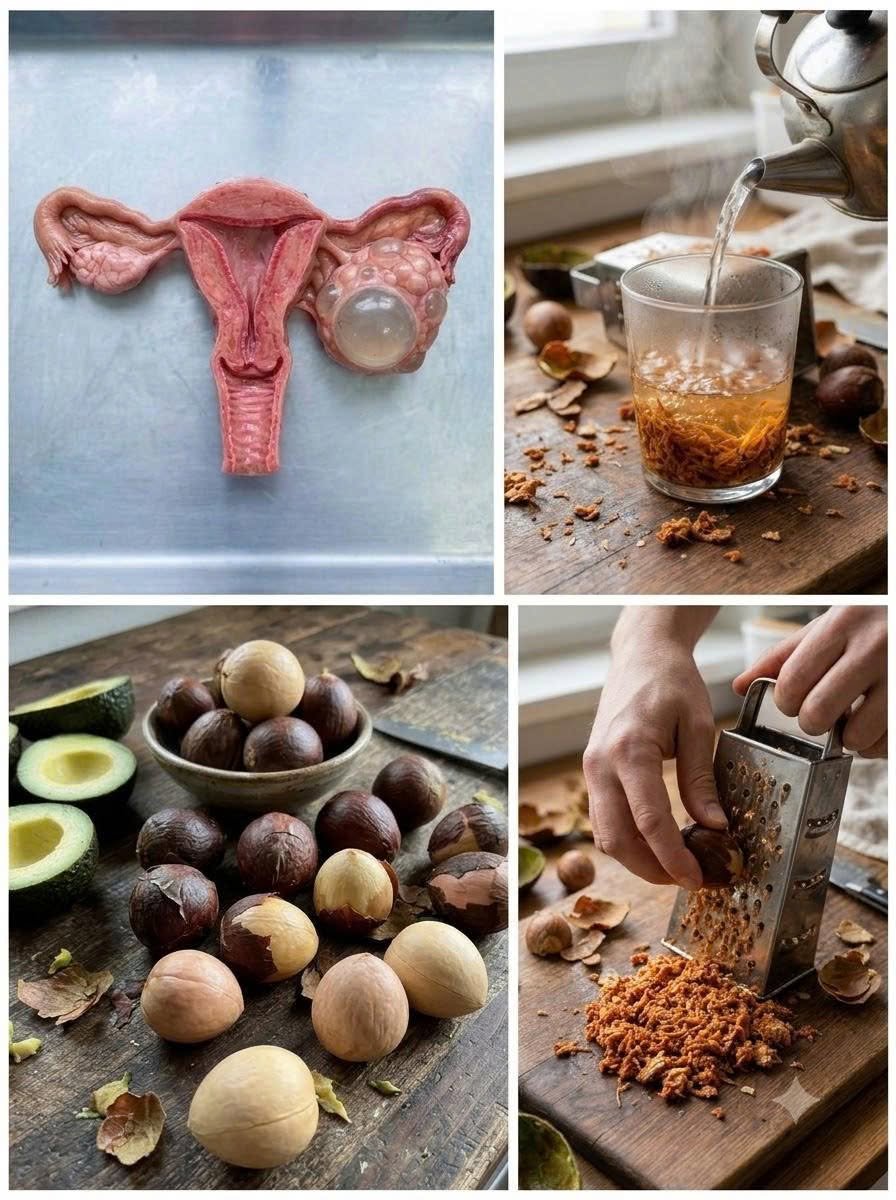
Avocado is widely known for its nutritious flesh, but its large seed has also appeared in traditional herbal practices. In some communities, grated avocado seed is steeped in hot water to make a homemade herbal drink believed to support women’s reproductive health.
One traditional recipe involves grating a fresh avocado seed, steeping the grated material in hot water, and drinking the strained liquid. Some traditional claims suggest that this preparation may help with ovarian cysts.
But can avocado seed tea actually shrink ovarian cysts or improve ovarian health?
Currently, there is no reliable clinical evidence that drinking avocado seed tea can shrink, dissolve, or treat ovarian cysts. Furthermore, the safety of consuming avocado seeds has not been adequately established in humans. For these reasons, this preparation should not be recommended as an oral treatment for ovarian cysts.
In this article, we explore the traditional preparation, the available scientific evidence, potential safety concerns, and medically recognized approaches to managing ovarian cysts.
What Is an Ovarian Cyst?
An ovarian cyst is a fluid-filled sac or pocket that develops in or on an ovary. Ovarian cysts are common, particularly during the reproductive years.
Many ovarian cysts develop naturally as part of the menstrual cycle. These are known as functional cysts, and many resolve on their own within several weeks or months.
Other cysts may be associated with conditions such as endometriosis or may have different tissue characteristics that require further evaluation.
According to the American College of Obstetricians and Gynecologists (ACOG), the appropriate management of an ovarian cyst depends on factors such as its size, appearance, symptoms, and the person’s age and menopausal status.
Some cysts cause no noticeable symptoms. Others may be associated with:
- Pelvic pain or pressure.
- Abdominal bloating.
- Pain during sexual intercourse.
- Changes in menstrual bleeding.
- Frequent urination or difficulty emptying the bladder.
- A feeling of fullness after eating a small amount.
These symptoms are not specific to ovarian cysts, so medical assessment is important when they occur.
Source: ACOG — Ovarian Cysts.
Traditional Avocado Seed Tea Recipe
Avocado seed tea is sometimes prepared as a traditional herbal infusion. The following describes the preparation circulating in traditional remedy practices; it is not a clinically validated treatment for ovarian cysts.
Ingredients
- 1 medium-sized fresh avocado seed.
- 1 cup (250 mL) of hot water.
Traditional Preparation Method
Step 1: Prepare the seed.
Wash the avocado seed thoroughly. Traditional recipes commonly call for grating the seed finely.
Step 2: Measure the grated material.
Some versions of this recipe specify two level tablespoons of grated avocado seed.
Step 3: Add hot water.
Place the grated material in a heat-safe glass cup and pour approximately 250 mL of hot water over it.
Step 4: Allow it to steep.
Cover the cup and allow the mixture to cool until warm.
Step 5: Strain the liquid.
Strain out the solid material before handling or disposing of the preparation.
Important Safety Note
Although this preparation appears in traditional remedy instructions, there is no established safe oral dose of avocado seed for treating ovarian cysts. The safety of drinking an infusion made from grated avocado seed has not been adequately established in humans.
The suggested instructions of one cup before breakfast and another after dinner for four weeks should not be considered a medically recommended dosage or treatment plan. I cannot recommend drinking this preparation for ovarian cysts because its safety and effectiveness are unproven.
If you have already consumed avocado seed tea and develop concerning symptoms, stop using it and seek medical advice.
What Does Science Say About Avocado Seed and Ovarian Cysts?
1. Avocado Seeds Contain Compounds That Are Being Studied
Avocado seeds contain various naturally occurring substances, including polyphenols and other phytochemicals.
Laboratory researchers have investigated avocado seed extracts for antioxidant and other biological activities. However, the composition of a laboratory extract may differ considerably from that of a homemade infusion.
More importantly, finding potentially active compounds in a plant does not establish that consuming the plant is safe or that it can treat a specific medical condition.
At present, there is insufficient clinical evidence to show that avocado seed tea improves ovarian function or reduces the size of ovarian cysts.
2. There Is No Proven Link Between Avocado Seed Tea and Cyst Shrinkage
An ovarian cyst is a physical structure within or on the ovary. Whether it resolves depends on its type, underlying cause, and other clinical factors.
There are no established clinical trials demonstrating that drinking avocado seed tea reliably dissolves ovarian cysts or prevents their growth.
Some functional ovarian cysts disappear naturally over time. If a cyst becomes smaller after someone uses a traditional remedy, that change alone cannot establish that the remedy caused the improvement.
A follow-up ultrasound and appropriate medical evaluation are more reliable ways to assess changes in a cyst.
3. The Safety of Consuming Avocado Seeds Remains Uncertain
Avocado flesh is widely consumed as food, but the safety of consuming the seed is a separate question.
Research on avocado seeds is still limited, and findings from laboratory or animal studies cannot establish a safe dose for humans.
Potential concerns include exposure to compounds whose effects at particular doses are not well understood, differences in preparation strength, and possible interactions with medications.
Without adequate human safety data, regular consumption of avocado seed tea—especially twice daily for four weeks—cannot be considered an established safe practice.
Evidence-Based Ways to Manage Ovarian Cysts
The good news is that an ovarian cyst does not always require medication or surgery. The appropriate approach depends on its characteristics and whether it causes symptoms.
1. Medical Monitoring
Many simple ovarian cysts resolve without treatment. A healthcare professional may recommend watchful waiting, which involves monitoring symptoms and repeating an ultrasound after an appropriate interval.
This approach helps determine whether the cyst is disappearing, remaining stable, or changing in size or appearance.
2. Treatment Based on the Type of Cyst
Some cysts require additional investigation or treatment, particularly if they are large, persistent, painful, or have concerning features on imaging.
Depending on the circumstances, a clinician may recommend further tests, medication for specific symptoms or underlying conditions, or surgery.
Hormonal contraceptives may sometimes help prevent new functional cysts from developing, but they do not reliably shrink an existing functional cyst.
3. Healthy Lifestyle Habits
A balanced diet, adequate sleep, regular physical activity, and appropriate management of existing health conditions support general well-being.
However, there is no convincing evidence that a particular food, herbal tea, or detox drink can dissolve an ovarian cyst.
If you are considering an herbal supplement, discuss it with your healthcare professional, especially if you take medication, are trying to conceive, or are pregnant or breastfeeding.
4. Know When to Seek Urgent Care
Ovarian cysts can occasionally rupture or contribute to ovarian torsion, a condition in which the ovary twists and its blood supply may be compromised.
Seek emergency medical assessment if you experience:
- Sudden, severe pelvic or lower abdominal pain.
- Pelvic pain accompanied by nausea or vomiting.
- Severe pain with faintness, dizziness, or weakness.
- Sudden abdominal pain accompanied by significant bleeding or other concerning symptoms.
Do not attempt to manage these symptoms with an herbal remedy.
Source: NHS — Ovarian Cysts.
Frequently Asked Questions
Can avocado seed tea dissolve ovarian cysts?
There is no reliable clinical evidence that avocado seed tea dissolves or shrinks ovarian cysts. Some cysts disappear naturally, while others need monitoring or treatment depending on their type and characteristics.
How long does it take for an ovarian cyst to disappear naturally?
The timeframe varies. Many functional cysts resolve within approximately 6–12 weeks, although other types may persist longer. Follow-up should be based on your ultrasound findings and healthcare professional’s advice.
Is it safe to drink avocado seed tea every day?
The safety of regular avocado seed consumption has not been adequately established in humans. There is no validated daily dose for treating ovarian cysts, so drinking it every day or following a four-week regimen cannot be recommended for this purpose.
Can natural remedies replace ovarian cyst treatment?
No natural remedy has been established as a reliable replacement for appropriate ovarian cyst evaluation and treatment. Some cysts require only monitoring, while others may need additional investigation or medical intervention.
Can ovarian cysts affect fertility?
The effect on fertility depends on the type of cyst and any underlying condition. Many ovarian cysts do not prevent pregnancy, but conditions such as endometriosis may affect fertility. Discuss your reproductive goals with a gynecologist if you have concerns.
Final Thoughts
Avocado seed tea is mentioned in some traditional herbal practices, but its proposed use for ovarian cysts has not been supported by reliable clinical evidence. Its safety as a regularly consumed drink is also uncertain.
Although natural ingredients can be interesting subjects for scientific research, traditional use alone does not demonstrate that a remedy is effective or safe.
If you have an ovarian cyst, the most appropriate next step is to establish its type and characteristics with a qualified healthcare professional. Many cysts resolve naturally, and monitoring can help determine whether further treatment is necessary.
Protect your reproductive health by choosing evidence-based care, avoiding unverified herbal treatments, and seeking urgent medical attention for sudden or severe pelvic pain.