Aloe Vera Hair Oil: Benefits, Uses, and How to Make It at Home
Aloe Vera Hair Oil: Benefits, Uses, and How to Make It at Home
Natural hair care has become increasingly popular as people look for simple alternatives to heavily formulated hair products. Among the many natural ingredients used in hair-care routines, aloe vera is one of the most widely recognized.
Known for its moisturizing and soothing properties, aloe vera has been used in beauty routines for generations. When combined with a suitable carrier oil, aloe vera can be used as part of a hair-care routine to help condition the scalp and improve the look and feel of dry, damaged hair.
What Makes Aloe Vera Beneficial for Hair?
Aloe vera gel contains water, vitamins, minerals, enzymes, and other plant compounds. Its high water content makes it particularly useful for adding moisture, while its soothing properties can help provide a refreshing feeling on the scalp.
However, it is important to keep expectations realistic. Aloe vera can support scalp and hair care, but there is limited evidence that homemade aloe vera hair oil can independently make hair grow faster or reverse significant hair loss.
Benefits of Aloe Vera Hair Oil
1. Helps Moisturize Dry Hair
Dry hair can become rough, brittle, and difficult to manage. Environmental exposure, frequent heat styling, and chemical treatments can all contribute to dryness.
Aloe vera is rich in water and can help provide moisture to the hair and scalp. When used with a suitable carrier oil, it can leave hair feeling softer and smoother.
2. May Soothe a Dry or Irritated Scalp
- A dry or uncomfortable scalp can be frustrating. Aloe vera has soothing properties that may help provide temporary comfort to a dry scalp.
- Its cooling texture can also make it a popular ingredient in homemade scalp treatments.
- If you experience persistent itching, redness, scaling, or inflammation, however, it is better to consult a dermatologist rather than relying only on a home remedy.
3. Helps Improve Hair Manageability
- Well-conditioned hair is generally easier to comb and style. Aloe vera and natural oils can help reduce the dry, rough feeling associated with damaged hair.
- Regular conditioning may also make hair appear smoother and healthier.
4. Can Help Reduce the Appearance of Dryness and Frizz
- Frizzy hair often becomes more noticeable when the hair lacks moisture. Aloe vera can provide hydration, while carrier oils help coat the hair and reduce moisture loss.
- This combination may leave the hair looking smoother and more manageable.
5. Supports a Healthy-Looking Scalp
- A healthy scalp is an important part of a good hair-care routine. Gentle scalp massage while applying hair oil can also make the application more relaxing.
- However, scalp massage should not be considered a proven treatment for medical hair-loss conditions.
6. Helps Improve Hair’s Shine
- Hair can appear dull when its outer surface is dry or damaged. Conditioning ingredients can help smooth the hair’s surface, allowing it to reflect more light.
- Using aloe vera with a lightweight carrier oil may therefore help hair look softer and shinier.
Aloe Vera and Hair Growth
- Aloe vera is often promoted as a natural ingredient that can stimulate hair growth. However, there is not enough strong clinical evidence to conclude that aloe vera hair oil directly causes faster hair growth.
- Healthy hair growth depends on many factors, including genetics, nutrition, hormones, scalp health, age, and overall health.
- Aloe vera can be included in a healthy hair-care routine, but it should not replace medical evaluation when hair loss is sudden, severe, or persistent.
How to Make Aloe Vera Hair Oil at Home
Making a simple aloe vera hair treatment at home requires only a few ingredients.
Ingredients
- Fresh aloe vera gel
- Coconut oil or olive oil
- A clean, dry glass container
Instructions
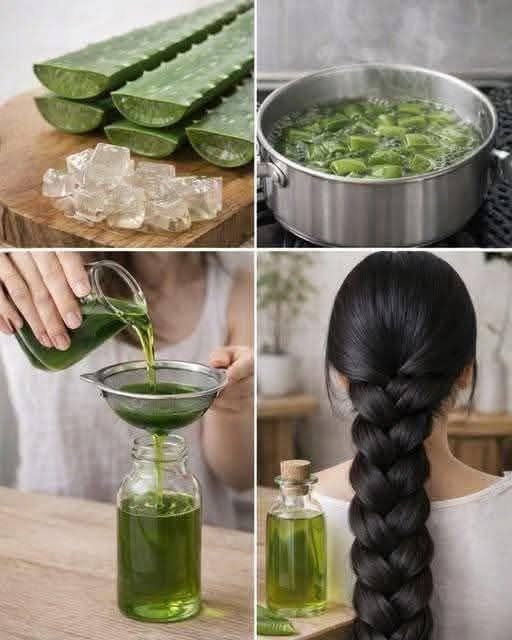
- Wash the aloe vera leaf thoroughly.
- Cut away the outer edges and carefully remove the clear inner gel.
- Rinse the gel to remove any remaining yellow latex.
- Blend or mash the gel until smooth.
- Combine a small amount of aloe vera gel with your chosen carrier oil.
- Gently warm the mixture over low heat. Avoid overheating or boiling it.
- Allow the mixture to cool completely.
- Strain it if necessary and transfer it to a clean container.
- Store it properly and use it promptly because fresh aloe vera mixtures can spoil quickly.
For better safety and shelf life, homemade products should be prepared in small quantities rather than stored for long periods.
How to Use Aloe Vera Hair Oil
To use the mixture:
- Apply a small amount to the scalp and hair.
- Gently massage the scalp with your fingertips.
- Work the product through the lengths and ends of the hair.
- Leave it on for around 30 minutes to a few hours.
- Wash thoroughly with a gentle shampoo.
- Follow with conditioner if needed.
You do not necessarily need to use it every day. Depending on your hair type and how your scalp responds, occasional use may be sufficient.
Which Hair Types Can Use Aloe Vera?
Aloe vera can be incorporated into routines for many hair types, including:
- Dry hair
- Curly hair
- Frizzy hair
- Damaged hair
- Normal hair
The best amount and frequency depend on your hair’s condition. People with fine or oily hair may prefer using a smaller amount of oil to avoid making the hair feel heavy.
Safety Tips Before Using Aloe Vera
- Natural does not always mean risk-free. Before applying aloe vera or a homemade hair treatment to your scalp, perform a small patch test.
- Stop using the product if you develop burning, redness, swelling, itching, or another unusual reaction.
- Fresh homemade mixtures can also become contaminated or spoil if they are stored improperly. Use clean utensils and containers, and avoid keeping homemade aloe vera oil for extended periods.
- If you have significant hair loss, bald patches, severe dandruff, scalp sores, or persistent irritation, speak with a qualified healthcare professional or dermatologist.
Aloe Vera Hair Oil vs. Commercial Hair Products
- Homemade aloe vera hair oil can be appealing because the ingredients are simple and easy to find. However, commercial hair products often undergo controlled manufacturing and preservation processes that help maintain product quality and safety.
- If you prefer homemade treatments, prepare small batches, keep them clean, and monitor how your scalp and hair respond.
Frequently Asked Questions
Does aloe vera make hair grow faster?
There is not enough strong evidence to say that aloe vera directly accelerates hair growth. It may support a healthy-looking scalp and improve hair conditioning, but many factors influence hair growth.
How often can I use aloe vera hair oil?
Depending on your hair type, you can try using it once or twice a week. Reduce the frequency if your scalp becomes oily or irritated.
Can aloe vera help with dry hair?
Yes, aloe vera can provide moisture and may help dry hair feel softer and more manageable.
Can I leave aloe vera hair oil overnight?
Some people choose to leave hair treatments on overnight, but this is not necessary. If you experience scalp irritation or discomfort, wash it off and discontinue use.
Is aloe vera good for curly or frizzy hair?
Aloe vera can be useful as a moisturizing ingredient for curly and frizzy hair. Combining it with a suitable conditioner or lightweight oil may help improve softness and manageability.
Final Thoughts
Aloe vera can be a useful natural ingredient in a simple hair-care routine. Its moisturizing and soothing properties may help dry hair feel softer, improve manageability, and provide comfort to a dry scalp.
However, aloe vera hair oil should not be viewed as a guaranteed treatment for hair loss or a proven method for dramatically increasing hair growth. Consistent hair care, a balanced diet, gentle styling practices, and appropriate treatment of scalp conditions are all important for maintaining healthy-looking hair.
For persistent or unexplained hair loss or scalp problems, professional medical advice is the safest approach.