ALOE VERA HAIR OIL
ALOE VERA HAIR OIL
Nutritional Information
Per serving (approximate values):
- Calories: 120
- Protein: 0.5g
- Carbohydrates: 3g
- Fat: 13g
- Fiber: 0.2g
- Sodium: 2mg
Ingredients
- 2-3 large, mature fresh Aloe Vera leaves (about 400-500g total)
- 1 cup (240ml) carrier oil of choice (e.g., organic extra virgin coconut oil, olive oil, sweet almond oil, or jojoba oil)
- Optional: 5-10 drops essential oil (e.g., rosemary, lavender, tea tree) for fragrance and added benefits
Instructions
- Prepare the Aloe Vera Leaves: Thoroughly wash the fresh aloe vera leaves under cool running water. Pat them dry with a clean cloth.
- Remove the Aloin: Carefully cut off the thorny edges from both sides of each aloe leaf. Stand the leaves upright in a glass or bowl for about 10-15 minutes. This allows the yellow aloin (a bitter, laxative-like substance) to drain out. Discard the drained aloin.
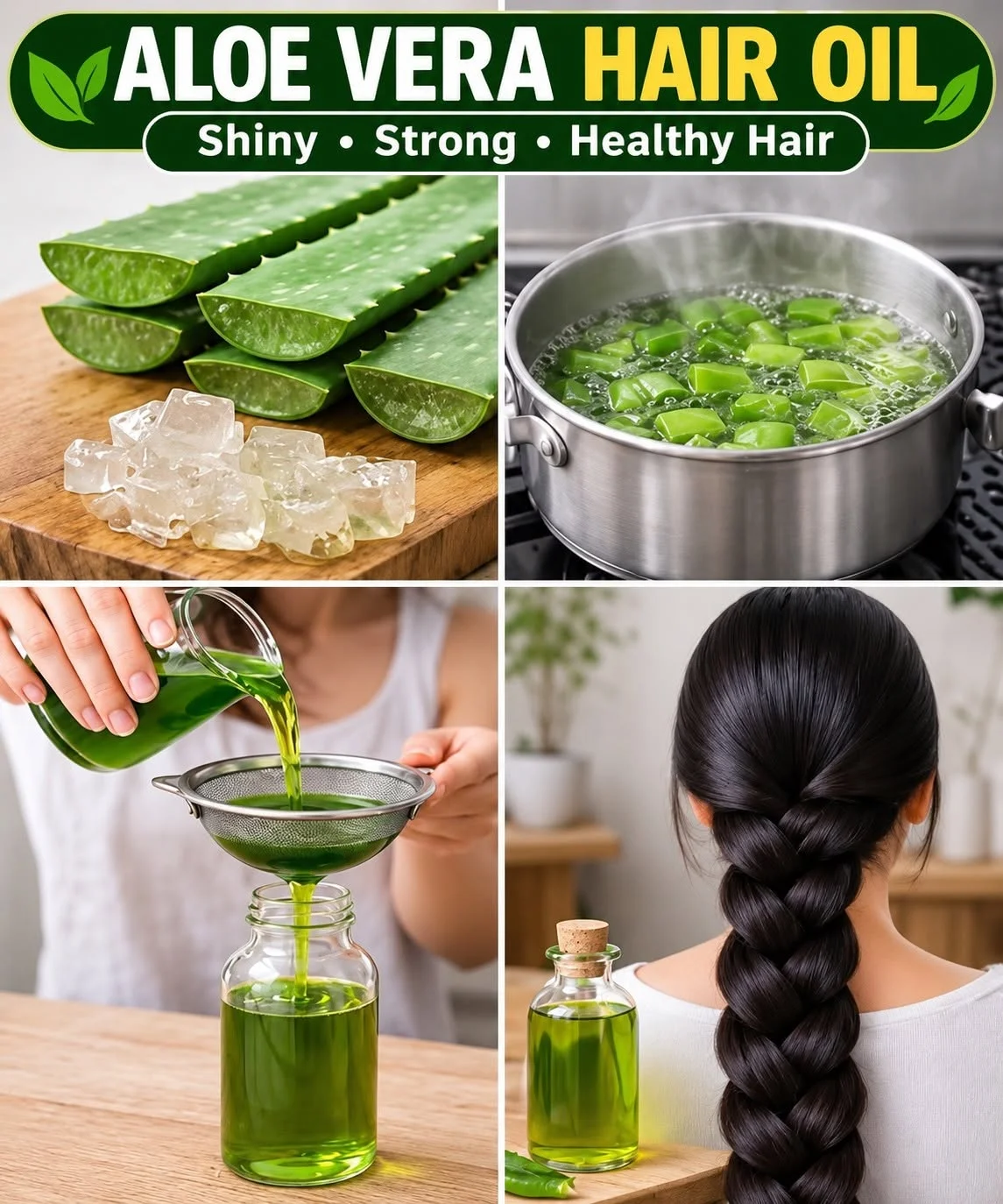
- Extract the Aloe Gel: Lay the de-thorned leaves flat on a cutting board. Using a sharp knife or a vegetable peeler, carefully slice off the green outer skin from one side of the leaf, exposing the clear, jelly-like inner gel. Then, use a spoon or the knife to scoop out the clear aloe vera gel. Try to avoid getting any green skin bits into the gel.
- Process the Aloe Gel: Place the extracted aloe vera gel into a blender or food processor. Blend until it forms a smooth, lump-free liquid. Alternatively, you can finely chop the gel into very small pieces if you don’t have a blender.
- Combine with Carrier Oil: In a clean, heavy-bottomed saucepan or pot, pour in your chosen carrier oil. Add the blended or finely chopped aloe vera gel to the oil.
- Infuse the Oil (Slow Cook Method): Place the saucepan over very low heat on your stovetop. The key is to infuse the aloe vera’s properties into the oil slowly, without burning the oil or the aloe. Stir occasionally.
- Continue Heating: Continue to heat the mixture for approximately 30-45 minutes. You will notice the aloe vera gel starting to change color, turning slightly golden or brownish, and the water content evaporating. The mixture will start to bubble gently, and the aloe solids will begin to separate and crisp up at the bottom of the pan. It’s crucial to keep the heat very low to prevent frying the aloe or scorching the oil. The goal is to extract the beneficial compounds, not to cook it aggressively.
- Check for Doneness: The oil is ready when the aloe vera solids at the bottom of the pan turn light brown and crispy, and there are no more significant bubbles (indicating most of the water has evaporated). The oil itself will have absorbed a subtle green tint from the aloe.
- Cool the Mixture: Carefully remove the saucepan from the heat and allow the oil mixture to cool down completely to room temperature. This is important before straining.
- Strain the Oil: Place a fine-mesh sieve or a cheesecloth-lined funnel over a clean, sterilized glass bottle or jar. Slowly pour the cooled aloe vera oil mixture through the sieve/cheesecloth to separate the infused oil from the crispy aloe vera solids. Gently press the solids with the back of a spoon to extract any remaining oil.
- Add Essential Oils (Optional): Once strained, if desired, add 5-10 drops of your chosen essential oil(s) to the aloe vera oil. Stir gently to combine.
- Bottle and Store: Pour the finished Aloe Vera Hair Oil into a clean, sterilized, airtight glass bottle. Label clearly with the date of preparation.
Cooking Tips and Variations
For the best results with your DIY Aloe Vera Hair Oil, start by selecting the freshest and largest aloe vera leaves you can find. Mature leaves contain a higher concentration of beneficial compounds. When extracting the gel, be meticulous about removing the yellow aloin; it can be an irritant and has a strong, unpleasant odor. Patience is key during the infusion process; maintain very low heat to ensure the aloe’s properties are gently transferred to the oil without denaturing them or burning the oil. A double boiler method can also be used for even gentler heating, preventing direct contact with the heat source.
To enhance the hair oil’s benefits, consider customizing your carrier oil. For dry and damaged hair, coconut oil or extra virgin olive oil are excellent choices due to their deeply moisturizing properties. If you have an oily scalp, jojoba oil, which closely mimics the scalp’s natural sebum, or lightweight grapeseed oil can be more suitable. For promoting hair growth, argan oil or castor oil make fantastic additions to the base. You can also create a blend of carrier oils to combine their unique advantages.
Elevate your hair oil with essential oils. Rosemary essential oil is widely recognized for stimulating hair growth and improving circulation to the scalp. Lavender essential oil offers a soothing aroma and can promote a healthy scalp environment. Tea tree oil is excellent for addressing dandruff and scalp irritation due to its antiseptic properties. Always perform a patch test with essential oils before full application and remember that a little goes a long way; essential oils are highly concentrated. For an extra nourishing boost, you can also add a few drops of Vitamin E oil to your finished product, which acts as an antioxidant and can extend the oil’s shelf life.
Storage and Reheating
Proper storage is crucial for maintaining the efficacy and extending the shelf life of your homemade Aloe Vera Hair Oil. Always store the oil in a clean, sterilized, airtight glass bottle. Amber or dark-colored glass bottles are preferable as they protect the oil from light degradation, which can break down its beneficial compounds. Keep the bottle in a cool, dark place, away from direct sunlight and heat, such as a cupboard or pantry. While not strictly necessary, refrigerating the oil can further prolong its freshness, especially if you live in a warm, humid climate or if you’ve added any water-based ingredients (though this recipe aims to remove water). If refrigerated, the oil may solidify, particularly if using coconut oil. Simply place the bottle in a bowl of warm water for a few minutes to liquify it before use.
Homemade hair oils, due to the absence of synthetic preservatives, generally have a shorter shelf life than commercial products. When stored correctly, your Aloe Vera Hair Oil should last anywhere from 3 to 6 months. Always check for any signs of spoilage before use: an off odor, a change in color, or the appearance of mold. If you notice any of these, it’s best to discard the oil and make a fresh batch. As this is a topical product, reheating it is not applicable or recommended. If it solidifies, gently warming it to room temperature is sufficient.
Frequently Asked Questions
How often should I use the Aloe Vera Hair Oil?
The frequency of use depends on your hair type and concerns. For general hair health and shine, using it 1-2 times a week as a pre-shampoo treatment or overnight mask is often sufficient. If you have a dry, itchy scalp or are looking to promote hair growth, you might consider using it 2-3 times a week as a scalp massage oil. For very dry or damaged hair, a small amount can be used as a leave-in conditioner on the ends after washing. Listen to your hair and adjust as needed.
Can this hair oil be used on all hair types?
Yes, Aloe Vera Hair Oil is generally beneficial for all hair types. However, those with oily hair might want to use it more sparingly, focusing on the ends or as a pre-shampoo treatment rinsed out thoroughly. For dry, curly, or damaged hair, it can be particularly nourishing and hydrating. The choice of carrier oil can also be tailored to specific hair needs, making it versatile for everyone.
What if my hair feels greasy after using the oil?
If your hair feels greasy, it usually means you’ve used too much oil or haven’t rinsed it out thoroughly enough. Start with a smaller amount, especially if applying it as a leave-in. When using it as a treatment, ensure you shampoo your hair twice if necessary to remove all residue. For scalp treatments, focus on massaging it in and then washing it out after a few hours or overnight. Experiment with the quantity and rinsing technique to find what works best for your hair.