
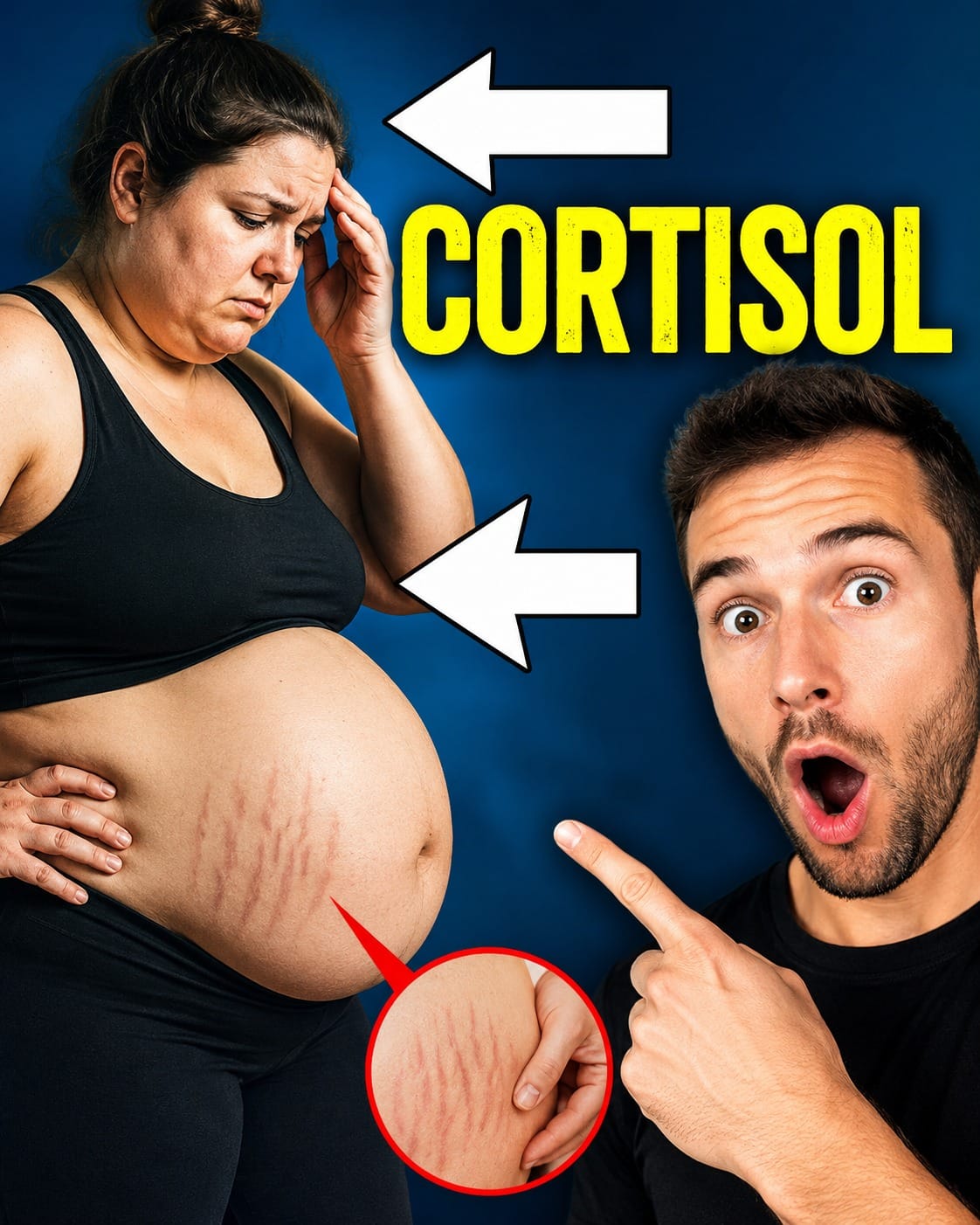
That puffy face in the mirror. The belly that keeps thickening while your diet stays the same. The dark circles, the oily skin, the tired eyes, the thin arms, the bruises that show up too easily, and the wound that seems to close in slow motion — those are not random insults from aging. They are the fingerprints of cortisol when it starts running your body like a fire alarm that never shuts off.
Cortisol is supposed to save you in a crisis. It spikes blood sugar, sharpens alertness, and pushes you through danger. But when stress becomes your daily weather, that same hormone turns into a wrecking ball, smashing sleep, skin, fat storage, muscle, and repair.
That’s why you wake up already tired. That’s why your face looks fuller even though you didn’t “suddenly gain weight.” That’s why your body feels like it’s working against you while you’re doing everything “right.”
The ugly truth is that your body is brilliant — it’s just been forced into emergency mode so long that it forgot how to stand down. And the health industry loves complexity, because complexity keeps people buying more, chasing more, and understanding less.
The Stress Signal That Starts the Collapse
Think of cortisol like a building’s emergency siren. Great when there’s a fire. Disaster when it screams all night long.
The first thing people notice is sleep trouble. Cortisol and melatonin are opposites: one says move, survive, react, the other says repair, restore, shut down. When cortisol wins, your eyes look hollow, the dark circles deepen, and the next morning you can feel it in the mirror before you even brush your teeth.
Then comes the skin. Cortisol drives the oil glands harder, and the face starts to look shinier, thicker, more irritated. For adults, that sudden flare-up can feel insulting — like your skin is reliving puberty while the rest of you is trying to keep it together.
And nobody built a Super Bowl ad around a hormone balance problem, so most people blame coffee, age, or bad luck. But the signal is coming from inside the body, and it’s loud.
Here’s where the pattern gets even uglier: when stress stays high, the body keeps choosing survival over maintenance. That means less healing, less clean sleep, less calm, and more of the same spiral tomorrow.
Why the Face, Neck, and Belly Change First
High cortisol doesn’t just raise stress — it changes where your body stores fuel. It favors the face, the neck, and the abdomen, like a warehouse manager dumping supplies into three already crowded rooms while the rest of the building goes empty.
The face gets rounder. The neck can collect that heavy upper-back pad. The middle thickens into that stubborn apple shape that seems to appear no matter how carefully you eat.
That’s not vanity weight. It’s a stress map written in fat.
When you see a puffy face and a growing belly together, you’re often seeing the same storm from two angles. One side is fluid balance getting thrown off. The other side is fat being stored in the places cortisol prefers when it thinks danger is permanent.
Over time, the arms and legs can look thinner at the same time the trunk gets larger. It’s like watching a house strip the furniture from the bedrooms just to keep the furnace burning in one room. Nothing about that is efficient. Everything about it is survival gone wrong.
That’s why people can feel trapped in a body that no longer looks like theirs. The mirror changes first. Then the clothes. Then the confidence.
Why Men Feel the Shift in a Different Way
For men, the hit often shows up in the frame. The shoulders start to round forward, posture collapses a little, and the body looks less powerful even before the scale moves.
Cortisol breaks down protein and pulls from muscle tissue to keep blood sugar available. That means the big muscles in the arms, legs, and glutes can start shrinking while the belly stays stubbornly inflated. It’s like a truck losing its engine parts to keep the headlights on.
The first thing men notice is usually not “I lost muscle.” It’s more like, “Why do I look softer, smaller, and older even though I’m still training?”
That’s the trap. The body is spending its raw biological fuel on emergency chemistry instead of repair. So the gym can feel like pushing against wet cement while the real problem keeps chewing through the background.
When the shift finally becomes obvious, it can hit hard: thinner arms, a flatter butt, a heavier middle, and a posture that looks braced for impact even while sitting at a desk. That’s the body living like it expects the next threat to arrive any second.
Why Women Notice It in the Skin, Hair, and Recovery
For women, cortisol often announces itself through the face and the skin first. Oily flare-ups, puffy features, easy bruising, red or purple stretch marks, and hair shedding can all stack together like warning lights on a dashboard.
The reason is brutal: cortisol tells the body to make glucose at all costs, and protein gets raided to do it. Collagen gets sacrificed. Skin loses resilience. Hair follicles lose their rhythm. Bruises bloom faster because the tissue underneath is being treated like spare parts.
It’s like a silk blouse being rubbed against rough concrete every day. At first it just looks a little dull. Then the fabric starts fraying, and one day you realize it’s not holding shape the way it used to.
The emotional payoff here is huge: once women recognize the pattern, they stop blaming themselves for “falling apart.” They stop calling it laziness, age, or lack of discipline. They see the stress chemistry for what it is — a body stuck in defense mode, not a body failing.
And that changes everything, because you can’t fix what you keep mislabeling.
The Deepest Damage Happens When Repair Gets Delayed
Slow wound healing is one of the clearest signs that cortisol has stopped being a short-term rescue signal and started acting like a saboteur. Healing costs energy, blood flow, protein, and peace. Cortisol steals all four.
So the cut that should close quickly hangs open. The scratch lingers. The body keeps acting like there’s an emergency somewhere else more important than repair.
That’s the cruelest part: the body is not broken. It is over-prioritized in the wrong direction.
The cheapest fix in health is usually the one the loudest industries ignore. Nobody makes a fortune telling people to calm the stress system, protect sleep, and stop feeding the fire with bad habits. There’s no logo on that advice. No glossy campaign. No empire.
But the body listens anyway.
When cortisol finally starts settling down, people often notice the shift in the quiet things first: sleep feels deeper, the face looks less swollen, the skin stops acting so angry, and the body feels less like it’s bracing for impact all day long. That is the nervous system exhaling.
P.S.
One common habit wrecks the whole process before it even starts: treating the evening like it’s harmless when your nervous system is already on edge. Late-night stimulation, junk sleep, and constant stress signals keep cortisol pinned high and make every other fix work harder than it should.
There’s a second layer most people miss, and it changes how the body handles cortisol’s fallout: the mineral side of the story.
This article is for informational purposes only and does not replace professional medical advice. Please consult your healthcare provider for personalized guidance.