
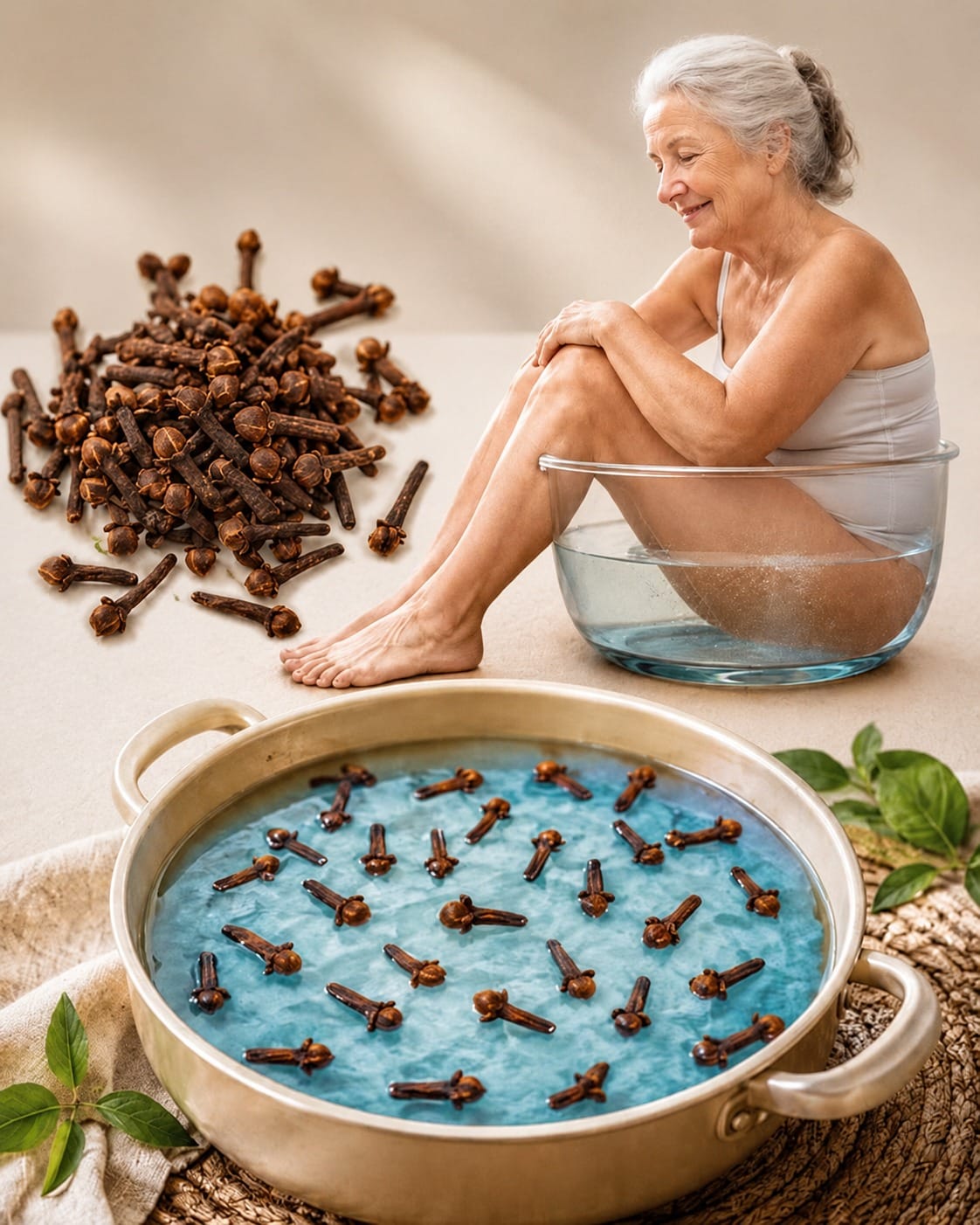
Clove Water Hits the Pelvic Skin Like a Fire-Smothering Flush
That clove water in the bowl is not just warm spice water. It floods the lower pelvic skin with eugenol-rich compounds that act like a molecular broom, sweeping away stale odor, sweat residue, and that raw, rubbed-up feeling that makes women keep shifting in their seat.
The smell hits your nose first — sharp, woody, almost medicinal — and that’s the clue. Something in the surface layer is being changed, not covered up. It’s the difference between spraying perfume on a gym bag and opening the bag, dumping it out, and washing the lining.
What women are really fighting is not “dirty skin.” It’s the trapped, damp, overworked surface that turns the area into a sour little greenhouse. Tight clothes, heat, friction, sitting too long — all of it presses moisture deeper until the skin starts acting like a clogged drain with a bad odor rising from the bottom.
That’s the part nobody talks about: the body isn’t failing you, it’s trying to defend itself against a surface environment that turned hostile.
And once you understand that, the whole clove-water trick stops sounding strange. Because the real battle is not inside the body yet. It starts on the skin — and what happens there can change everything that follows.
The Cellular Reset Hidden Inside a Simple Sit Bath
Call it the Surface Defense Reset. That’s what clove water does when it’s used externally as a sitz bath: it changes the terrain the skin is sitting in.
Think of the lower pelvic area like a fabric car seat after a long summer drive. If heat and moisture stay trapped in the fibers, the seat doesn’t just feel sticky — it starts holding onto every trace of sweat, every bit of residue, every sour note. Clove water works like a warm rinse that pulls the environment back toward clean.
That’s why the first shift is usually not dramatic in a flashy way. It’s subtle, then obvious. The area stops feeling like it’s wearing yesterday’s heat. The skin stops screaming for attention. The constant urge to freshen up, wipe again, check again — it backs off.
But that’s only the surface story. Underneath, something stranger is happening.
When the outer skin gets too damp and too warm, it behaves like a greenhouse with the vents shut. Everything inside turns stale faster. Clove compounds change those conditions fast, making the environment less friendly to odor and buildup without turning the area into a chemistry experiment.
And that’s exactly why this stays buried in the wellness shadows. Not because it doesn’t work — because it doesn’t PAY. Wall Street doesn’t build empires around a spice sitting in your kitchen cabinet.
The next shift is where women start feeling the difference in a way they can’t ignore.
Why Odor Gets Crushed Before It Ruins the Day
Odor is vicious because it attacks confidence before the body even gets a vote. You stand up, catch a hint of something off, and suddenly the whole morning belongs to that one smell.
Clove water doesn’t mask that problem. It hits the surface residue feeding it. Those aromatic compounds act like rust-stripping agents for stale buildup, loosening what clings after sweating and long hours in tight clothes.
Picture a kitchen sponge left in the sink overnight. It doesn’t smell because it’s “bad.” It smells because warm moisture and residue turned it into a breeding ground for funk. Clove water changes the conditions that let that funk stick around.
The result feels almost unfair. The skin smells fresher, the area feels lighter, and the whole body stops carrying that low-grade embarrassment around like a hidden backpack.
For women dealing with daily irritation, the payoff is even more physical. It’s not just odor. It’s the burn, the rub, the angry little flare-up that makes every movement feel louder than it should.
Warm clove water acts like a heat-driven bio-rinse across the outer skin, softening the rough edge of that friction. The sensation is immediate: less scratch, less sting, less “I need to fix this right now.”
And once that surface tension drops, the body does something remarkable — it stops acting like it’s under attack.
Why the Lower Pelvic Area Feels the Shift First
The lower pelvic area is sensitive because it lives at the crossroads of heat, moisture, fabric, and movement. It’s not a sealed vault. It responds instantly to what’s touching it.
That’s why women notice the change there before they notice anything else. The skin stops feeling trapped. The air around it feels cleaner. Even the clothes feel easier to wear because there’s no sticky resistance dragging against the body.
Think of a frayed shirt collar that keeps scraping the same patch of skin. The problem isn’t dramatic, but it’s relentless. Once the friction stops, you suddenly realize how much energy you were wasting just tolerating the scrape.
That’s the real relief: not a miracle, not a fantasy — just a body that finally gets to stop bracing itself.
The first thing people notice is how ordinary life changes. Sitting feels less annoying. Walking feels less distracting. Getting dressed doesn’t come with that tiny dread of “what’s waiting for me down there?”
Then the pattern gets clearer. Warm weather becomes less punishing. Long days feel less sticky. The same clothes that used to feel like a problem start feeling normal again.
And that’s the part most products never touch. They cover the smell, but they don’t change the surface conditions that made it show up in the first place.
The Part That Ruins the Whole Thing If You Get It Wrong
The wrench is simple: too much clove. Push the water too strong and the same bath that should calm the skin can turn into a hot, irritated burn.
You can see the mistake in the steam — too dark, too concentrated, too sharp. The scent should be present, not aggressive. When the bowl looks like a spice bomb instead of a balanced soak, the skin pays for it fast.
That’s why pairing matters just as much as the herb itself. The wrong concentration, the wrong temperature, the wrong habit before or after the bath — and the whole effect gets flipped upside down.
One more piece decides whether the reset holds or falls apart, and it’s the part almost everyone misses.
P.S.
Don’t sabotage the bath with soap residue still clinging to the skin. That slick, perfumed film can trap heat and leave the area feeling even more sealed in — like putting a plastic wrap over a surface that was finally starting to breathe.
The next question is the one that separates a useful sitz bath from a wasted one: what you do in the first 10 minutes after the soak determines whether the reset lasts or evaporates.
This article is for informational purposes only and does not replace professional medical advice. Please consult your healthcare provider for personalized guidance.