
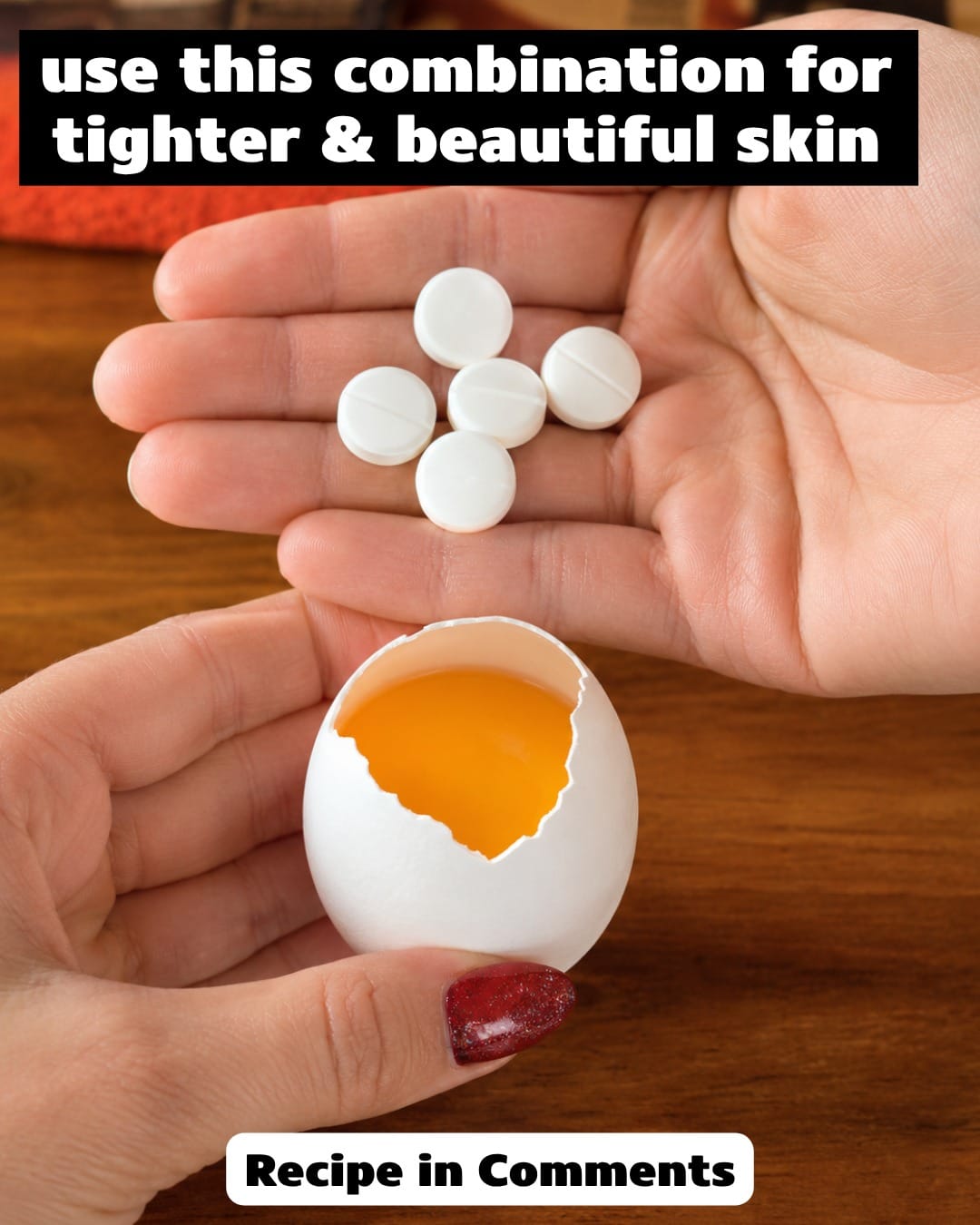
The aspirin and egg white face mask for tighter, fresher-looking skin
There are two things happening when you put aspirin and egg white on your face, and they work on completely different timelines. One gives you a genuine, gradual improvement in skin texture. The other gives you a tight, lifted feeling that looks great for a few hours and then relaxes. Both are useful. They’re just not the same thing, and it helps to know which is which before you expect miracles.
Here’s the full breakdown, the recipe, and the parts you actually need to be careful about.
What aspirin is really doing on your skin
Aspirin is acetylsalicylic acid. The moment you crush it and add a little water, it starts breaking down into salicylic acid. That’s a beta-hydroxy acid, the same BHA you’ll find on the label of expensive exfoliating serums and acne treatments.
Salicylic acid is oil-soluble, which means it can work its way into pores and loosen the glue that holds dead skin cells on the surface. When those dull, dead cells lift away, the fresh skin underneath looks smoother and reflects light more evenly. It also calms redness, which is no surprise once you remember that aspirin is an anti-inflammatory by design.
This is the part of the mask that gives you real, gradual results. Use it consistently over a few weeks and your skin texture genuinely improves. Blackheads soften, rough patches smooth out, and your makeup sits better. This effect builds slowly and it sticks around.
What egg white is really doing
Egg white is the dramatic part, and also the temporary part.
Egg white is mostly protein and water. As it dries on your skin, the water evaporates and the proteins contract into a thin, taut film. That film physically pulls your skin tight. It’s the same reason a sheet of drying glue puckers. For a little while your pores look smaller and fine lines look softer, because the surface is being held under gentle tension.
The catch is that this is a surface effect. The minute you rinse the egg white off, the tension releases and your skin goes back to normal. There’s no lasting firming, no collagen being built, nothing structural changing. So if you’ve got a wedding or a video shoot in three hours, this is a brilliant trick. If you’re hoping to permanently tighten loose skin, egg white isn’t the tool, and I’d rather tell you that now than have you feel cheated in a month.
The recipe
You only need three things, and you probably have all of them already.
One uncoated aspirin tablet, one egg white, and a few drops of water.
Crush the aspirin into a fine powder. The back of a spoon against a small bowl works well. Add three or four drops of water and let it sit for a minute so it dissolves into a soft paste. Separate one egg and whisk the white lightly, just until it turns a little frothy. Stir the aspirin paste into the egg white until it’s evenly mixed.
Apply a thin, even layer to clean, dry skin. Keep it away from the eye area and your lips. Leave it on for ten to fifteen minutes, until it feels tight and dry to the touch. Rinse off with lukewarm water, pat your face dry, and follow with a moisturizer. That last step matters, because exfoliating acids can leave skin feeling a bit stripped if you don’t put moisture back.
Use this once a week. Not more. Salicylic acid is effective precisely because it’s working on your skin, and overdoing it leads to dryness and irritation rather than faster results.
When to use it and what to expect
Do this at night. Salicylic acid makes your skin more sensitive to the sun, so an evening slot gives your skin time to settle before daylight, and it also means you can take advantage of the egg white tightening before bed when you’re not rushing anywhere.
In the short term, right after you rinse it off, expect that lifted, smooth feeling and a slightly brighter look. That’s the egg white plus freshly exfoliated skin working together. Take a photo if you want, because it does look good.
Over four to six weeks of weekly use, expect the slower payoff: more even texture, fewer rough or flaky patches, softer-looking pores, and skin that takes makeup more smoothly. That’s the salicylic acid earning its keep.
What you should not expect is loose skin becoming firm, deep wrinkles disappearing, or any kind of permanent lift. Those need different approaches entirely, and no kitchen mask is going to deliver them. I’d rather you go in with realistic expectations and be pleasantly surprised than the other way around.
Who should skip this, and how to stay safe
This is where I need you to actually pay attention, because aspirin is a real drug and egg white is a raw food.
If you’re allergic to aspirin or salicylates, don’t use this at all. That includes anyone whose asthma is triggered by aspirin, because a topical reaction is possible. There’s no version of this mask that’s safe for you, and that’s fine, there are plenty of other DIYs.
Patch test every single time you try a new mask, and especially this one. Put a small amount on the inside of your forearm and wait twenty-four hours. If you see redness, itching, or any reaction, skip it.
If you’re pregnant or breastfeeding, check with your doctor before using anything aspirin-based on your skin, even topically. The amount that absorbs is small, but it’s not zero, and it’s not worth guessing.
Because salicylic acid increases sun sensitivity, sunscreen the next morning is not optional. This is true even on cloudy days and even if you’re mostly indoors near windows.
And since you’re working with raw egg, keep the mask away from any broken skin, cuts, or active breakouts, and don’t let it get near your mouth. Wash your hands and your bowl properly afterward. Raw egg on intact skin for fifteen minutes is low risk, but there’s no reason to be careless about it.
Last thing: don’t stack this with your other actives on the same night. If you already use retinol or another exfoliating acid, give your skin a break that evening and just do the mask. Layering acids on acids is how people end up with irritated, peeling skin and then blame the wrong ingredient.