
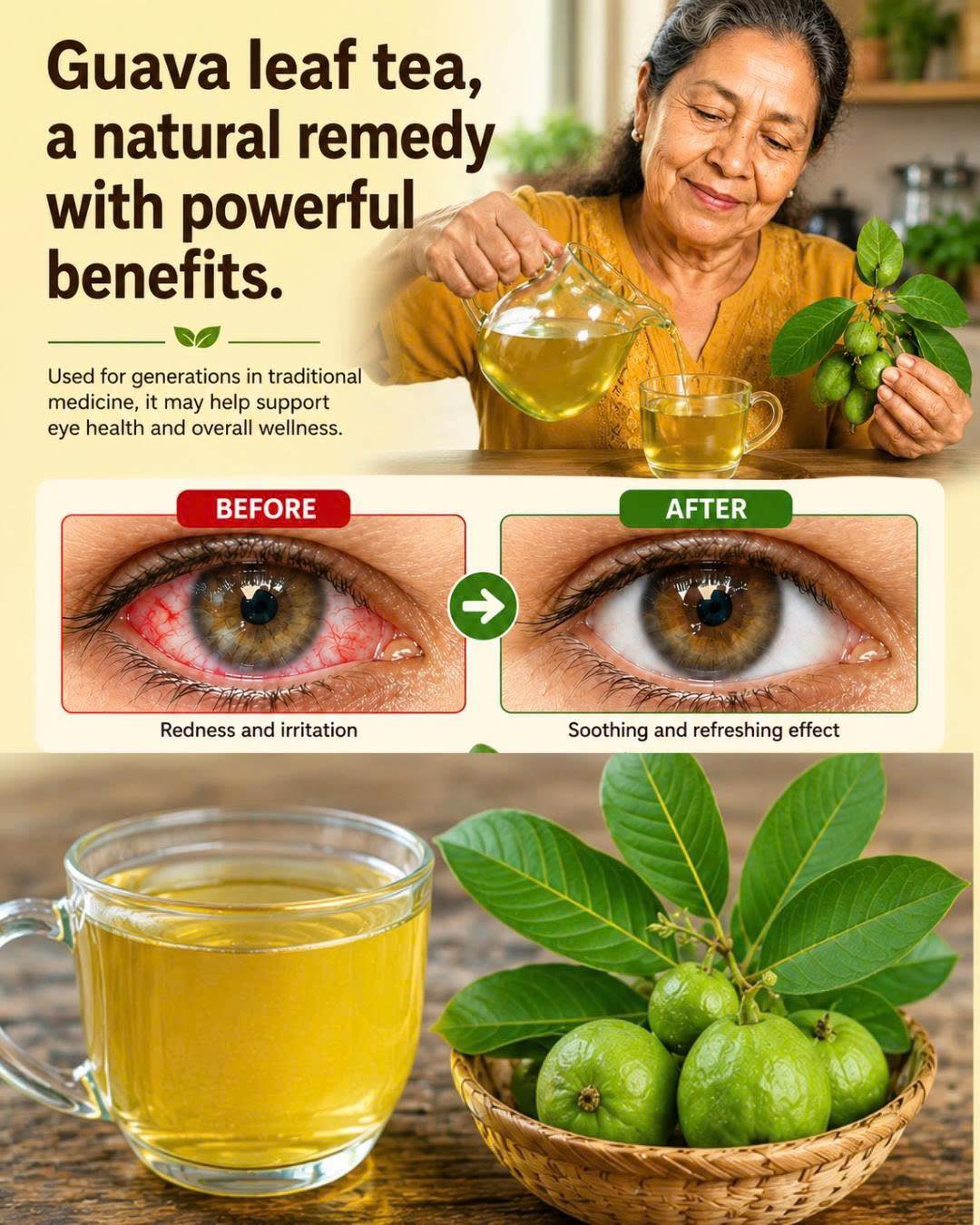
Have you ever reached the end of the day with tired, red, or irritated eyes — as if you had spent hours staring at a screen or sitting under the sun?
Many older adults begin noticing burning sensations, dryness, or visual fatigue and assume it is simply part of aging. Then they come across viral internet remedies: guava leaf tea, homemade eye washes, or “natural” solutions promising quick relief.
But there is one important detail that many people never explain clearly.
Caring for your eyes does not mean trying every homemade remedy without caution. At the same time, it also does not mean ignoring healthy habits that may gently support visual wellness.
In this article, you’ll learn what is actually known about guava leaves, why some natural remedies may be risky for the eyes, and which daily habits may truly help support eye comfort and long-term visual health.
Why Eye Fatigue Becomes More Common With Age
Our eyes naturally change over time.
First, many people begin holding their phone farther away to read. Then comes increased light sensitivity, dry eyes, or that heavy feeling in the evening after a long day.
The problem is that many people slowly become used to these discomforts and stop paying attention to them.
Common Symptoms Often Ignored
- Red eyes at the end of the day
- Mild burning sensations
- Dryness
- Occasional itching
- Sensitivity to light
- Feeling like there is sand in the eyes
- Eye strain after reading or screen use
- Frequent need to rest the eyes
These symptoms do not always indicate something serious, but they may signal that your eyes need more rest, hydration, or professional evaluation.
And this is where guava leaves often enter the conversation.
Why Guava Became Popular in Natural Remedies
Guava has long been part of traditional wellness practices in many Latin American countries.
The fruit is valued for its sweet aroma, refreshing flavor, and nutritional content. Guava leaves are also commonly used in herbal teas and traditional remedies.
Modern nutritional studies have found that guava contains:
- Vitamin C
- Antioxidants
- Plant compounds
- Polyphenols
These nutrients may support general wellness as part of a balanced diet.
However, there is a very important distinction many viral videos fail to mention:
There is no strong scientific evidence proving that washing the eyes with guava leaf water can treat eye conditions safely or effectively.
And that difference matters more than people realize.
What Is Actually Known About Guava and Wellness
Guava fruit may contribute valuable nutrients when consumed as part of a healthy lifestyle.
Guava leaves also contain plant compounds currently being studied for their antioxidant properties.
| Part of the Guava Plant | Potential Nutritional Support |
|---|---|
| Fresh guava fruit | Vitamin C and antioxidants |
| Guava leaves | Polyphenols and plant compounds |
| Guava leaf tea | Traditional hydration beverage |
| Guava pulp | Fiber and nutrients |
This does not mean guava cures eye diseases or replaces medical care.
It simply means guava can be part of a balanced diet that supports overall health.
The Hidden Risk of Using Homemade Remedies Directly in the Eyes
Many people assume that if something is “natural,” it must be harmless.
But the eyes are extremely sensitive organs.
Homemade mixtures, poorly filtered liquids, or contaminated leaves may actually cause:
- Irritation
- Allergic reactions
- Infection
- Increased redness
- Worsening discomfort
Even remedies that seem gentle may become risky if not prepared under proper hygienic conditions.
This is why many eye specialists recommend extreme caution before applying homemade substances directly into the eyes.
Sometimes the biggest danger is not the remedy itself — but delaying proper medical evaluation while experimenting with internet solutions.
8 Natural Habits That May Support Eye Wellness
1. Rest Your Eyes Throughout the Day
Long hours of reading, watching TV, or using smartphones may increase visual fatigue.
Simple visual breaks can help reduce strain.
A common recommendation is to periodically look away from screens and focus on distant objects for a few moments.
Sometimes tired eyes simply need rest.
2. Improve Sleep Quality
Poor sleep may contribute to:
- Dry eyes
- Eye heaviness
- Increased sensitivity
- Fatigue
Sleep allows the body — including the eyes — to recover after a long day.
Better sleep habits may support overall visual comfort.
3. Stay Properly Hydrated
The eyes rely on proper hydration to remain comfortable.
Some people notice more dryness when they go long periods without drinking enough water.
You do not need excessive amounts — simply maintain consistent hydration throughout the day.
4. Reduce Excessive Screen Time
Phones, televisions, tablets, and computers expose the eyes to prolonged focus and reduced blinking.
This may contribute to:
- Eye fatigue
- Dryness
- Irritation
- Headaches
Regular screen breaks may help reduce discomfort.
5. Eat More Antioxidant-Rich Foods
No single food is magical for vision, but balanced nutrition may support overall eye health.
Foods commonly associated with eye-friendly nutrition include:
- Guava
- Carrots
- Spinach
- Tomatoes
- Citrus fruits
- Fatty fish
- Nuts
- Green vegetables
The key is dietary variety rather than obsessing over one ingredient.
6. Avoid Rubbing Your Eyes Constantly
Frequent eye rubbing may worsen irritation and introduce bacteria or dirt into sensitive tissues.
Many people believe rubbing provides relief, but it may actually increase discomfort.
7. Use Home Remedies Carefully
If you enjoy guava leaf tea as a traditional beverage, moderate consumption is generally considered more reasonable than applying homemade liquids directly to the eyes.
Professional guidance is especially important if symptoms include:
- Blurred vision
- Persistent redness
- Eye pain
- Strong burning sensations
- Discharge
- Severe light sensitivity
In eye care, caution is often more valuable than viral trends.
8. Seek Help Before Symptoms Get Worse
This may be the most important habit of all.
Many people wait weeks or months before seeking professional evaluation.
But early attention often brings greater peace of mind and better understanding of what is happening.
When it comes to vision, delaying care can sometimes make problems harder to manage.
Signs You Should Never Ignore
Seek professional medical attention if you experience:
- Sudden vision loss
- Severe eye pain
- Double vision
- Persistent redness
- Strong light sensitivity
- Significant swelling
- New flashes or floaters
- Heavy eye discharge
These symptoms should not be treated only with homemade remedies.
Safer Ways to Enjoy Guava
If you enjoy guava, safer options include:
- Eating fresh guava fruit
- Drinking mild guava leaf tea occasionally
- Washing fruits and leaves thoroughly
- Avoiding excessive sugar
- Speaking with a healthcare professional if you have medical conditions
Remember: consuming guava as food is very different from placing homemade mixtures directly into the eyes.
The Evening Routine Many Older Adults Are Rediscovering
Interestingly, many people report improvements in eye comfort after adopting very simple nighttime habits:
- Turning off screens earlier
- Resting the eyes before bed
- Sleeping in darker rooms
- Reducing prolonged nighttime screen exposure
These habits may sound simple, but sometimes the simplest changes provide the greatest relief.
Final Thoughts: Your Eyes Need Care, Not Miracles
Guava and guava leaves may be part of interesting traditional wellness practices and balanced nutrition.
But they should not be viewed as miracle cures for eye problems.
The biggest difference usually comes from consistent daily habits:
- Better sleep
- Eye rest
- Balanced nutrition
- Reduced screen time
- Proper hydration
- Professional evaluation when needed
Your eyes work hard for you every single day.
Do not wait until discomfort becomes “normal” before taking better care of them.
Sometimes the most powerful changes are also the simplest ones.
Frequently Asked Questions
Are guava leaves safe for the eyes?
There is not enough scientific evidence to recommend homemade guava leaf preparations directly for eye use. Caution is strongly advised.
Can guava support eye health?
Guava contains antioxidants and vitamin C that may support general wellness as part of a balanced diet.
Why do my eyes feel more tired as I age?
Natural aging, screen use, dryness, poor sleep, and eye strain may all contribute to visual fatigue.
Should I see a doctor for persistent eye discomfort?
Yes. Persistent symptoms should always be evaluated by a qualified healthcare professional.
Medical Disclaimer
This article is for informational purposes only and does not replace professional medical advice, diagnosis, or treatment. Always consult a healthcare professional for personalized guidance regarding eye health.