
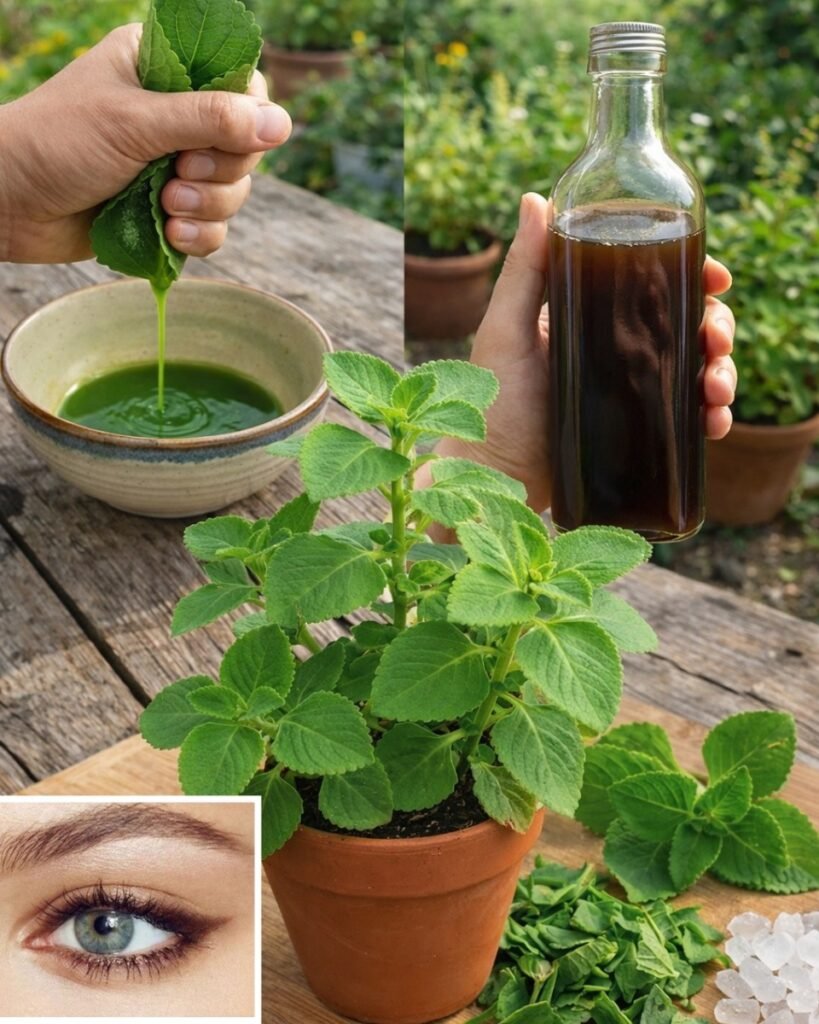
Plectranthus Amboinicus (Indian Borage) Benefits: Gentle Herbal Support for Tired Eyes & Overall Wellness
Ingredients (Simple and Measurable)
Option A: Fresh Herbal Juice (Quick Method)
- 1 packed cup fresh Plectranthus amboinicus leaves (rinsed well)
- 1/2 cup clean water (to help blending)
- Clean cloth or fine strainer
Option B: Herbal Infused Drink (Gentler Method)
- 1 packed cup fresh Plectranthus amboinicus leaves (or 2–3 tablespoons dried if you have it)
- 2 cups hot water
- Glass bottle or jar with lid
How to Prepare
How to Make Fresh Plectranthus amboinicus Juice
- Rinse the leaves thoroughly and drain.
- Blend the leaves with 1/2 cup water until smooth.
- Strain through a clean cloth to collect the green juice.
- Store in the fridge and use within 24 hours for freshness.
Taste note: Fresh herbal juice can be strong and grassy. That’s normal.
How to Make a Mild Plectranthus amboinicus Infusion
- Add leaves to a jar or teapot.
- Pour in 2 cups hot water (not aggressively boiling).
- Cover and steep 10–15 minutes.
- Strain and drink warm, or cool and store in the fridge for up to 2 days.
This method is usually easier on sensitive stomachs.
How to Use + Best Time to Take
For general “eye fatigue” support
- Start with 2–4 tablespoons of the fresh juice (not a full glass).
- Or drink 1/2–1 cup of the infusion.
Best timing
- Morning: if you wake up puffy or feel dry.
- Mid-afternoon: if screen time causes heaviness.
- Evening: if you want a calming, low-caffeine ritual.
What not to do (important)
- Do not put herbal juice into your eyes.
- Do not use this as a replacement for prescribed eye drops or medical care.
If you want a topical step, a safer option is a cool compress (plain clean cloth + cool water). Keep the herb drink as an internal support.
Why It Works (Science Insight, Without the Hype)
Even without a “miracle” claim, this type of leafy-herb drink can support tired-looking eyes in a few practical ways:
1) Hydration supports tear film + comfort
Dryness often makes eyes feel gritty or strained. A hydrating drink routine can support the body’s fluid balance—especially if you’re not drinking enough water.
2) Plant compounds may support inflammation balance
Many leafy herbs contain natural polyphenols and antioxidants, which help the body manage oxidative stress. When your body feels inflamed or run down, the eye area often shows it first.
3) A calmer nervous system reduces “tight eye” tension
Eye fatigue is not only about the eyes. It’s also neck tension, stress hormones, sleep debt, and screen overload. A warm infusion in the evening can support a more relaxed wind-down routine.
This is supportive wellness not a treatment for eye disease.
Who Benefits Most
This gentle remedy may be helpful for people who:
- Spend long hours on screens
- Wake up with mild puffiness or dryness
- Feel “heavy eyes” during stress or poor sleep weeks
- Want a simple, natural hydration ritual
It is not meant to treat:
- Eye infections
- Glaucoma
- Cataracts
- Vision loss
- Severe allergies or swelling
Quick Relief Timeline (Realistic Expectations)
Here’s the honest timeline most people can expect:
- Same day: You may feel slightly more refreshed if dehydration is part of the problem.
- 3–7 days: Some people notice less “heavy” eye feeling when paired with better sleep and water intake.
- 2–4 weeks: The biggest changes usually come from consistency: hydration + less salt late at night + better sleep + screen breaks.
If nothing improves after two weeks, the root cause may be something else.
Quick Notes, Safety, and Simple Adjustments
Safety first
- Always wash leaves well before blending or steeping.
- Start small. Herbal juices can be strong.
- Stop if you notice stomach upset, itching, or discomfort.
If you’re pregnant, breastfeeding, or on medications
Avoid experimenting with concentrated herbal drinks unless your clinician says it’s okay.
Red flags: when to see a doctor
Get medical advice quickly if you have:
- Eye pain, sudden vision changes, light sensitivity
- Thick discharge, fever, or one-sided swelling
- New severe dryness that doesn’t improve
Final Takeaway
This herb-based drink method is a simple, gentle wellness routine that supports tired eyes through hydration and plant-based antioxidants. It is not a cure, but it can be a calming daily habit—especially if screen strain and dehydration are your main triggers.