
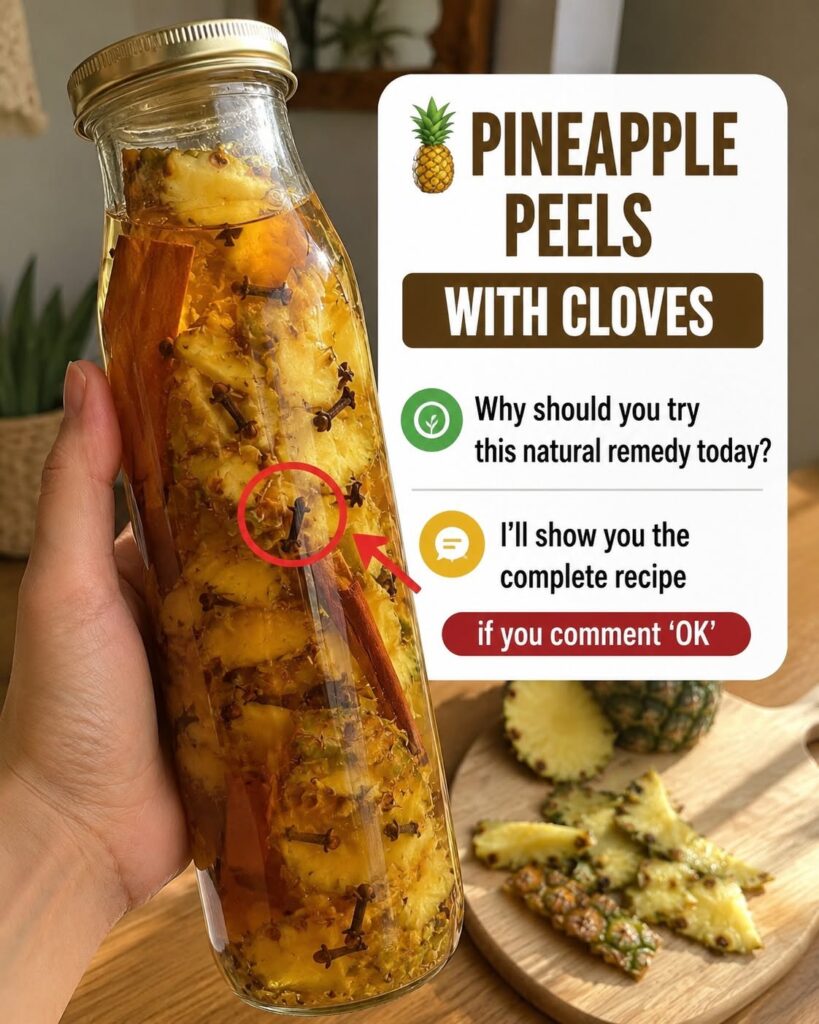
That golden peel simmering with cloves is not “just tea.” It releases bromelain, sharp plant acids, and fire-breathing aromatic compounds that hit the gut like a reset button for a system that’s been dragging itself through the day on fumes.
And that matters when your stomach feels like a balloon after dinner, your belly sits heavy for no obvious reason, and every meal seems to leave behind a sour, sloshing aftershock. The wrong foods don’t just sit there — they ferment, bloat, and leave your second brain in the belly acting like a clogged drain full of greasy runoff.
The wellness machine loves to sell complicated fixes with shiny labels and impossible promises. Meanwhile, the produce aisle keeps hiding one of the cheapest internal scrubbers you can throw into a pot right now.
What’s happening here is simpler — and stranger — than most people realize.
The Pineapple Peel Reset
When pineapple peels hit hot water, they start bleeding out raw biological fuel the body actually recognizes. Bromelain gets the headlines, but the real action is the way this infusion forces a cleaner breakdown of food so your gut doesn’t have to wrestle every bite like it’s trying to move a sofa through a narrow hallway.
Think of your digestion like a kitchen sink trap that’s been collecting sticky residue for months. Add the wrong meal on top of that mess and everything backs up: pressure rises, gas builds, and that heavy, stuffed feeling settles in like wet concrete.
Cloves slam into that picture with their own punch. Their concentrated compounds act like internal flame killers, cutting down the irritated, overworked feeling that makes your belly feel raw, tight, and strangely loud after eating.
After a few days of consistency, the shift shows up in the little things first: less post-meal heaviness, fewer hours spent unbuttoning your waistband, and mornings that don’t begin with a stomach that feels packed with bricks.
The ugly contrast is obvious once you notice it. Without those compounds, your gut keeps grinding through meals with half the tools it needs, and every dinner becomes another load dumped onto a system that already feels overstuffed.
That’s why this old-school drink keeps showing up in kitchens where people are tired of feeling sluggish after eating.
Why the Aroma Hits So Hard
Cloves do more than smell intense. They flood the mouth and upper digestive tract with a signal so strong it feels like someone opened a window in a stale room and let cold air rush through the whole house.
That matters because digestion doesn’t start in the stomach — it starts the moment your senses wake up the system. A strong aromatic drink can flip the switch from “everything is stuck” to “start breaking this down now.”
For the person who wakes up with a sour mouth, a puffy belly, and no appetite until noon, that shift is everything. You pour the drink, inhale the steam, and the whole body starts acting less like a traffic jam and more like a road that finally got a tow truck.
Wall Street doesn’t build empires around pineapple peels. Nobody puts a logo on a clove and sells it for $89 a bottle. And that’s why the simplest fixes get buried while people keep paying for fancy bottles that do less.
The Second Place You Feel It
The first thing many people notice is that their meals stop hitting like a brick wall. The body isn’t fighting as hard to process food, so the after-dinner slump loses some of its grip and the afternoon doesn’t feel quite so poisoned by heaviness.
That’s the difference between a sluggish furnace and one that finally catches. One keeps coughing smoke into the room; the other burns cleaner and quits wasting fuel.
Over time, the pattern gets clearer: less bloating, less belching, less of that uncomfortable pressure that makes you want to lie down and disappear after eating. The drink doesn’t act like a miracle — it acts like the missing tool your body was never handed in the first place.
And that’s why nobody told you. Not because it doesn’t work, but because it doesn’t pay.
There’s one small move that can ruin the whole thing before it even reaches your cup.
Don’t Waste the Peel
Boiling the peel too hard, too long, or with a sugar bomb dumped on top strips the drink of the very edge that makes it useful. You end up with sweet yellow water instead of a sharp infusion that actually does something inside the body.
Keep the peels clean. Keep the spice whole. Keep the drink close to its original shape, because once you start turning it into dessert, you’re feeding the problem instead of pressing on it.
The next layer is even more interesting: one simple pairing changes how deeply these plant compounds hit the body, and it’s the part most people completely miss.
This article is for informational purposes only and does not replace professional medical advice. Please consult your healthcare provider for personalized guidance.
That golden peel simmering with cloves is not “just tea.” It releases bromelain, sharp plant acids, and fire-breathing aromatic compounds that hit the gut like a reset button for a system that’s been dragging itself through the day on fumes.
And that matters when your stomach feels like a balloon after dinner, your belly sits heavy for no obvious reason, and every meal seems to leave behind a sour, sloshing aftershock. The wrong foods don’t just sit there — they ferment, bloat, and leave your second brain in the belly acting like a clogged drain full of greasy runoff.
The wellness machine loves to sell complicated fixes with shiny labels and impossible promises. Meanwhile, the produce aisle keeps hiding one of the cheapest internal scrubbers you can throw into a pot right now.
What’s happening here is simpler — and stranger — than most people realize.
The Pineapple Peel Reset
When pineapple peels hit hot water, they start bleeding out raw biological fuel the body actually recognizes. Bromelain gets the headlines, but the real action is the way this infusion forces a cleaner breakdown of food so your gut doesn’t have to wrestle every bite like it’s trying to move a sofa through a narrow hallway.
Think of your digestion like a kitchen sink trap that’s been collecting sticky residue for months. Add the wrong meal on top of that mess and everything backs up: pressure rises, gas builds, and that heavy, stuffed feeling settles in like wet concrete.
Cloves slam into that picture with their own punch. Their concentrated compounds act like internal flame killers, cutting down the irritated, overworked feeling that makes your belly feel raw, tight, and strangely loud after eating.
After a few days of consistency, the shift shows up in the little things first: less post-meal heaviness, fewer hours spent unbuttoning your waistband, and mornings that don’t begin with a stomach that feels packed with bricks.
The ugly contrast is obvious once you notice it. Without those compounds, your gut keeps grinding through meals with half the tools it needs, and every dinner becomes another load dumped onto a system that already feels overstuffed.
That’s why this old-school drink keeps showing up in kitchens where people are tired of feeling sluggish after eating.
Why the Aroma Hits So Hard
Cloves do more than smell intense. They flood the mouth and upper digestive tract with a signal so strong it feels like someone opened a window in a stale room and let cold air rush through the whole house.
That matters because digestion doesn’t start in the stomach — it starts the moment your senses wake up the system. A strong aromatic drink can flip the switch from “everything is stuck” to “start breaking this down now.”
For the person who wakes up with a sour mouth, a puffy belly, and no appetite until noon, that shift is everything. You pour the drink, inhale the steam, and the whole body starts acting less like a traffic jam and more like a road that finally got a tow truck.
Wall Street doesn’t build empires around pineapple peels. Nobody puts a logo on a clove and sells it for $89 a bottle. And that’s why the simplest fixes get buried while people keep paying for fancy bottles that do less.
The Second Place You Feel It
The first thing many people notice is that their meals stop hitting like a brick wall. The body isn’t fighting as hard to process food, so the after-dinner slump loses some of its grip and the afternoon doesn’t feel quite so poisoned by heaviness.
That’s the difference between a sluggish furnace and one that finally catches. One keeps coughing smoke into the room; the other burns cleaner and quits wasting fuel.
Over time, the pattern gets clearer: less bloating, less belching, less of that uncomfortable pressure that makes you want to lie down and disappear after eating. The drink doesn’t act like a miracle — it acts like the missing tool your body was never handed in the first place.
And that’s why nobody told you. Not because it doesn’t work, but because it doesn’t pay.
There’s one small move that can ruin the whole thing before it even reaches your cup.
Don’t Waste the Peel
Boiling the peel too hard, too long, or with a sugar bomb dumped on top strips the drink of the very edge that makes it useful. You end up with sweet yellow water instead of a sharp infusion that actually does something inside the body.
Keep the peels clean. Keep the spice whole. Keep the drink close to its original shape, because once you start turning it into dessert, you’re feeding the problem instead of pressing on it.
The next layer is even more interesting: one simple pairing changes how deeply these plant compounds hit the body, and it’s the part most people completely miss.
This article is for informational purposes only and does not replace professional medical advice. Please consult your healthcare provider for personalized guidance.
That golden peel simmering with cloves is not “just tea.” It releases bromelain, sharp plant acids, and fire-breathing aromatic compounds that hit the gut like a reset button for a system that’s been dragging itself through the day on fumes.
And that matters when your stomach feels like a balloon after dinner, your belly sits heavy for no obvious reason, and every meal seems to leave behind a sour, sloshing aftershock. The wrong foods don’t just sit there — they ferment, bloat, and leave your second brain in the belly acting like a clogged drain full of greasy runoff.
The wellness machine loves to sell complicated fixes with shiny labels and impossible promises. Meanwhile, the produce aisle keeps hiding one of the cheapest internal scrubbers you can throw into a pot right now.
What’s happening here is simpler — and stranger — than most people realize.
The Pineapple Peel Reset
When pineapple peels hit hot water, they start bleeding out raw biological fuel the body actually recognizes. Bromelain gets the headlines, but the real action is the way this infusion forces a cleaner breakdown of food so your gut doesn’t have to wrestle every bite like it’s trying to move a sofa through a narrow hallway.
Think of your digestion like a kitchen sink trap that’s been collecting sticky residue for months. Add the wrong meal on top of that mess and everything backs up: pressure rises, gas builds, and that heavy, stuffed feeling settles in like wet concrete.
Cloves slam into that picture with their own punch. Their concentrated compounds act like internal flame killers, cutting down the irritated, overworked feeling that makes your belly feel raw, tight, and strangely loud after eating.
After a few days of consistency, the shift shows up in the little things first: less post-meal heaviness, fewer hours spent unbuttoning your waistband, and mornings that don’t begin with a stomach that feels packed with bricks.
The ugly contrast is obvious once you notice it. Without those compounds, your gut keeps grinding through meals with half the tools it needs, and every dinner becomes another load dumped onto a system that already feels overstuffed.
That’s why this old-school drink keeps showing up in kitchens where people are tired of feeling sluggish after eating.
Why the Aroma Hits So Hard
Cloves do more than smell intense. They flood the mouth and upper digestive tract with a signal so strong it feels like someone opened a window in a stale room and let cold air rush through the whole house.
That matters because digestion doesn’t start in the stomach — it starts the moment your senses wake up the system. A strong aromatic drink can flip the switch from “everything is stuck” to “start breaking this down now.”
For the person who wakes up with a sour mouth, a puffy belly, and no appetite until noon, that shift is everything. You pour the drink, inhale the steam, and the whole body starts acting less like a traffic jam and more like a road that finally got a tow truck.
Wall Street doesn’t build empires around pineapple peels. Nobody puts a logo on a clove and sells it for $89 a bottle. And that’s why the simplest fixes get buried while people keep paying for fancy bottles that do less.
The Second Place You Feel It
The first thing many people notice is that their meals stop hitting like a brick wall. The body isn’t fighting as hard to process food, so the after-dinner slump loses some of its grip and the afternoon doesn’t feel quite so poisoned by heaviness.
That’s the difference between a sluggish furnace and one that finally catches. One keeps coughing smoke into the room; the other burns cleaner and quits wasting fuel.
Over time, the pattern gets clearer: less bloating, less belching, less of that uncomfortable pressure that makes you want to lie down and disappear after eating. The drink doesn’t act like a miracle — it acts like the missing tool your body was never handed in the first place.
And that’s why nobody told you. Not because it doesn’t work, but because it doesn’t pay.
There’s one small move that can ruin the whole thing before it even reaches your cup.
Don’t Waste the Peel
Boiling the peel too hard, too long, or with a sugar bomb dumped on top strips the drink of the very edge that makes it useful. You end up with sweet yellow water instead of a sharp infusion that actually does something inside the body.
Keep the peels clean. Keep the spice whole. Keep the drink close to its original shape, because once you start turning it into dessert, you’re feeding the problem instead of pressing on it.
The next layer is even more interesting: one simple pairing changes how deeply these plant compounds hit the body, and it’s the part most people completely miss.
This article is for informational purposes only and does not replace professional medical advice. Please consult your healthcare provider for personalized guidance.