Don’t Overlook This Common Wild Herb: The Hidden Role of Euphorbia hirta in Traditional Eye Comfort Practices 🌿👁️
Don’t Overlook This Common Wild Herb: The Hidden Role of Euphorbia hirta in Traditional Eye Comfort Practices 🌿👁️
After hours of staring at computer screens, reading, or using your phone, your eyes may begin to feel tired, dry, heavy, or strained. Even frequent blinking or taking short breaks doesn’t always provide lasting relief, and that daily discomfort can gradually affect your overall well-being.
While artificial tears and rest remain common approaches for relieving eye fatigue, many people are also interested in gentle, plant-based traditions that have been passed down through generations. One humble wild herb—Euphorbia hirta—has long been included in certain traditional wellness practices aimed at supporting eye comfort.
Although this small roadside plant has gained attention online, it’s important to separate traditional knowledge from exaggerated claims. Here’s what is currently known about this herb, how it has been traditionally used, and why caution is essential.
What Is Euphorbia hirta?
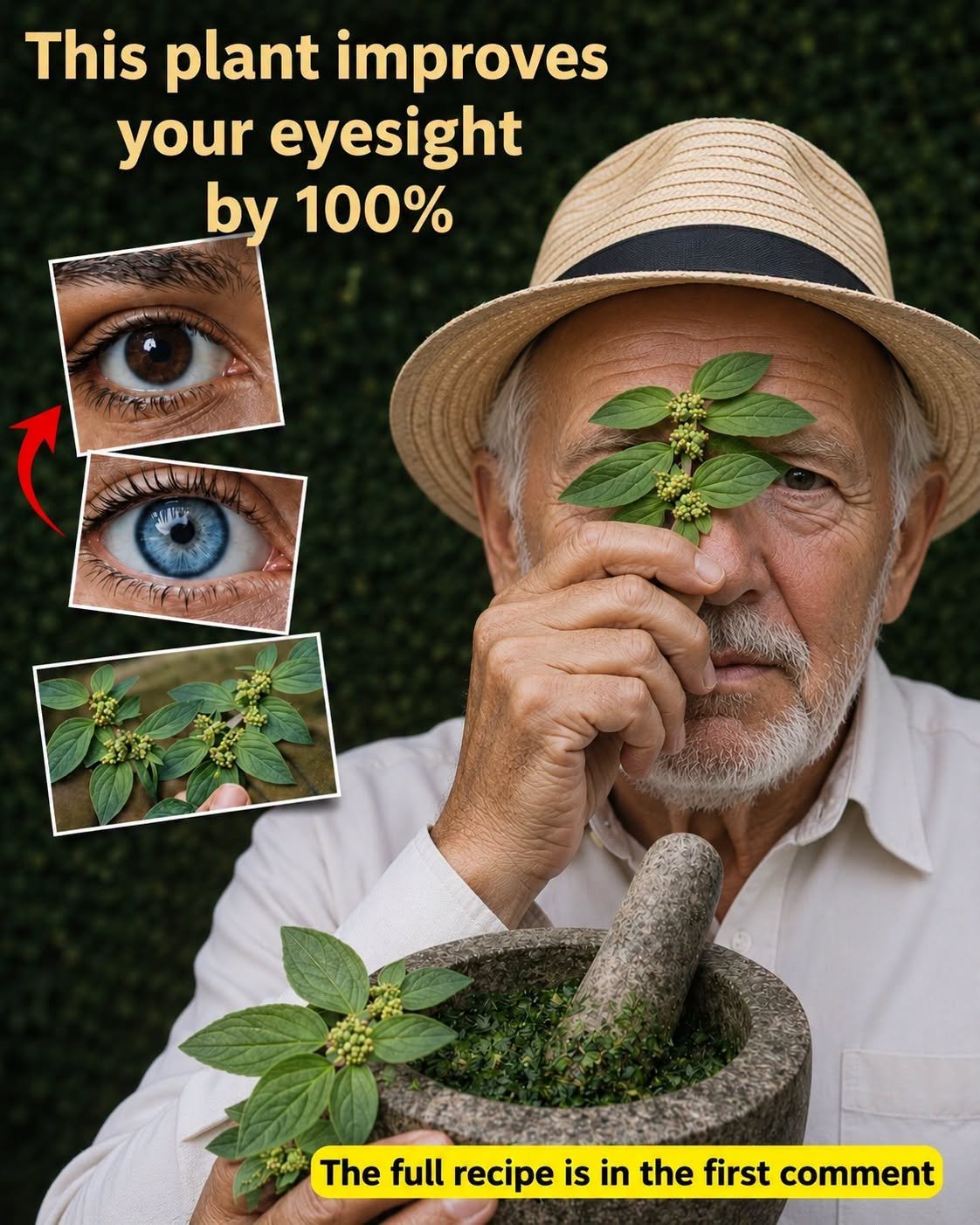
Euphorbia hirta, sometimes called the asthma plant, is a low-growing annual herb found throughout tropical and subtropical regions of Asia, Africa, and the Americas. It commonly grows along roadsides, in gardens, and in open grassy areas.
It can often be recognized by:
- Broad oval leaves covered with tiny hairs
- A noticeable reddish or purple central vein
- Small clusters of greenish flowers
- Pinkish to reddish stems
- White milky sap released when the stem or leaves are broken
Although many people consider it an ordinary weed, it has been valued for generations in various traditional herbal systems.
Why Has This Plant Been Used Traditionally?
In several traditional healing practices, Euphorbia hirta has been used as part of external herbal routines intended to promote comfort around tired eyes.
Traditional herbal knowledge suggests the plant may provide:
- A soothing sensation
- A cooling effect on the surrounding skin
- Support for relaxing the area after prolonged visual tasks
An Important Safety Note
The plant’s milky latex can be irritating to the skin and eyes.
For this reason:
- It should never be placed directly into the eyes.
- Traditional preparations focus only on external application around the eye area, never inside the eye.
Some ethnobotanical reports mention diluted external preparations being used traditionally to support comfort during minor eyelid irritation, but these practices should not be considered medical treatment.
Potential Properties Studied by Researchers
Although modern human research specifically focused on eye comfort remains limited, laboratory and animal studies have explored several natural compounds found in Euphorbia hirta.
1. Natural Antioxidant Compounds
The herb contains plant compounds such as:
- Flavonoids
- Polyphenols
- Other naturally occurring antioxidants
These compounds are being studied for their role in protecting cells from oxidative stress.
2. Anti-Inflammatory Activity
Some experimental studies suggest the plant contains compounds that may help moderate inflammatory processes under laboratory conditions.
However, these findings do not prove that the herb treats eye diseases or improves vision in people.
3. Cooling and Soothing Traditional Reputation
Across various traditional herbal practices, Euphorbia hirta has been described as providing a gentle cooling sensation when carefully prepared for external use.
Many people have historically used it as part of relaxation routines after long periods of visual work.
Traditional Ways the Plant Has Been Used
Always consult a qualified healthcare professional before trying any herbal preparation, especially around the eyes.
1. Warm Leaf Compress
One of the most common traditional methods involves:
Ingredients
- Fresh, clean leaves
- Warm water
Preparation
- Wash the leaves thoroughly.
- Warm them gently until comfortably warm—not hot.
- Place them over closed eyelids.
- Leave in place for about 10–15 minutes.
Traditionally, this method has been used to help relax tired eyes after extended screen time or reading.
2. External Leaf Paste
Another traditional practice includes:
- Crushing freshly washed leaves into a soft paste.
- Applying a small amount only to the temples or the bony area surrounding the eyes.
Never apply the paste inside the eye or near the eyelid opening.
3. Mild Herbal Infusion
Some traditional systems also prepare a very diluted tea from dried Euphorbia hirta.
Rather than targeting the eyes directly, it has traditionally been consumed as part of broader wellness practices.
Scientific evidence supporting this use for eye health remains limited.
Traditional Preparation Comparison
| Traditional Method | Traditional Purpose | Typical Duration | Ease of Use |
|---|---|---|---|
| Warm leaf compress | Relax tired eyes after screen use | 10–15 minutes | Easy |
| External leaf paste | Cooling sensation around the eye area | 10–20 minutes | Moderate |
| Mild herbal infusion | General wellness support | Once daily | Easy |
Why Did This Plant Become Popular Online?
Toward the end of 2025, numerous social media posts claimed that Euphorbia hirta could dramatically improve eyesight in a very short time.
These viral claims attracted widespread attention, but many overstated what the plant is actually known for.
At present:
- There is no reliable scientific evidence that Euphorbia hirta permanently improves vision.
- It has not been proven to cure eye diseases.
- Traditional use focuses on supporting comfort, not restoring eyesight.
The growing popularity reflects people’s interest in natural wellness approaches, but sensational claims should be viewed critically.
How to Explore This Herb Responsibly
If you are interested in learning more about Euphorbia hirta, consider these precautions:
✅ Identify the Plant Correctly
Look for:
- Hairy oval leaves
- A reddish center vein
- Pinkish stems
- White milky sap
Proper identification is essential, as many wild plants resemble one another.
✅ Perform a Patch Test
Before any external use:
- Apply a very small amount to the inner forearm.
- Wait 24 hours.
- Discontinue use if irritation develops.
✅ Choose Clean Plant Material
Collect only plants growing away from:
- Busy roads
- Industrial areas
- Pesticide-treated land
Wash thoroughly before handling.
✅ External Use Only
Avoid placing any part of the plant:
- Inside the eye
- On the eye surface
- Near the tear ducts
The plant’s latex may cause irritation.
✅ Combine With Proven Eye-Friendly Habits
Natural wellness works best alongside evidence-based practices, such as:
- Following the 20-20-20 rule (every 20 minutes, look 20 feet away for 20 seconds)
- Staying well hydrated
- Taking regular screen breaks
- Getting enough sleep
- Scheduling routine eye examinations
✅ Consult a Qualified Professional
If you experience:
- Persistent eye pain
- Blurred vision
- Redness
- Light sensitivity
- Sudden changes in vision
Seek evaluation from an eye care professional rather than relying on home remedies.
Final Thoughts
Euphorbia hirta may appear to be just another common roadside weed, yet it has a long history within traditional herbal practices aimed at supporting everyday comfort around tired eyes.
Its naturally occurring antioxidant compounds and experimentally studied anti-inflammatory properties make it an interesting subject of ongoing research. However, current evidence does not support claims that it can permanently improve eyesight or replace professional eye care.
When approached responsibly, this traditional herb can be appreciated as part of cultural herbal knowledge—not as a miracle cure.
Frequently Asked Questions
Is Euphorbia hirta safe for everyone?
Not necessarily. Its milky sap may irritate sensitive skin, and it should generally be avoided during pregnancy, breastfeeding, or by individuals with known allergies to plants in the Euphorbia family unless advised otherwise by a healthcare professional.
Can it permanently improve eyesight?
No. Current scientific evidence does not support claims that Euphorbia hirta restores vision or corrects refractive errors. Traditional use is associated with supporting comfort, not curing eye conditions.
Where does it grow?
It naturally grows throughout many tropical and subtropical regions and may also be available through reputable herbal suppliers.
Disclaimer: This article is intended for educational and informational purposes only. It is not medical advice and should not be used as a substitute for professional diagnosis or treatment. Always consult a qualified healthcare provider before using herbal remedies, particularly for eye-related concerns. Individual responses may vary, and some plants can cause irritation or allergic reactions. Never place herbal preparations directly into the eyes without professional supervision.